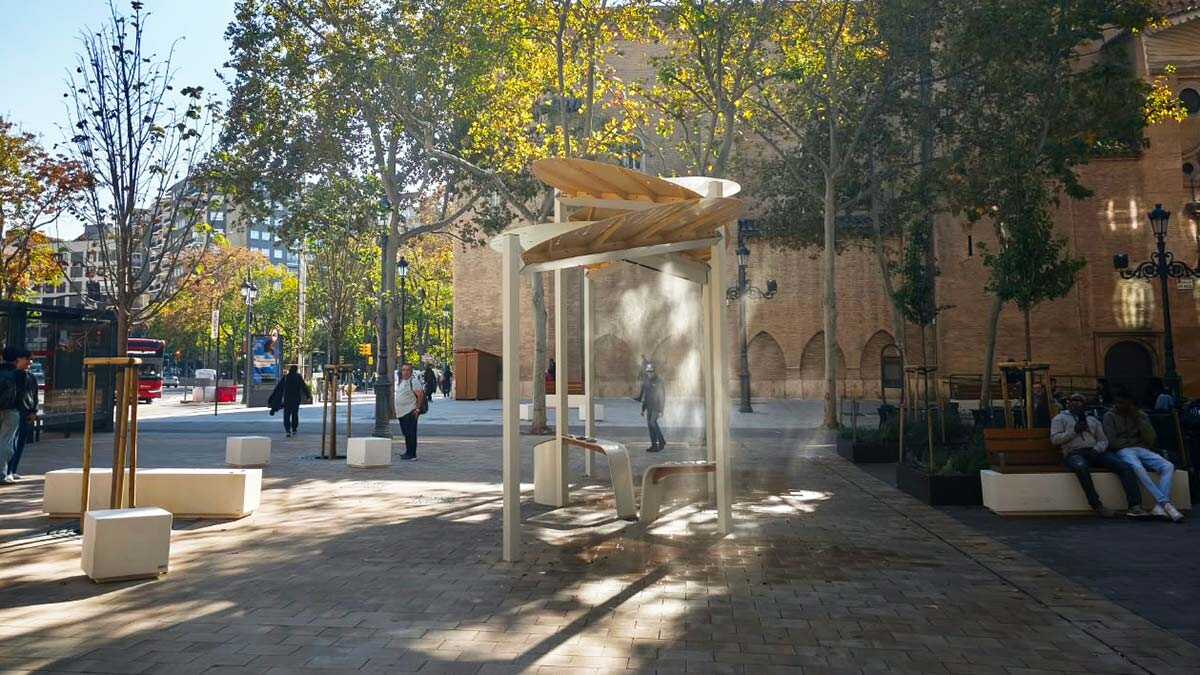
The system is designed as a climate shelter for the hottest months. It works by misting water: tiny droplets that, as they evaporate, absorb some of the ambient heat and help cool the surroundings. According to the bioclimatic studies supporting the project, this solution can lower temperatures by several degrees, with reductions of up to ten degrees under certain conditions.
But how is it activated? When the infrastructure was unveiled, it was explained that the artificial rain would operate on demand, using a push button, so it would only be used when necessary. A woman who regularly passes through the square at midday after finishing work says she usually finds the misting system switched on at lunchtime, when she is heading home. However, she does not know whether someone presses the button every day or whether these are tests being carried out for the next summer season.
WHAT WILL HAPPEN WHEN THE COLD ARRIVES
The system being switched on in the middle of autumn has also raised some questions among people who frequent the area. A man watching the device from one of the terraces believes that, if its activation depends on a push button, it should be disabled during the winter months. "Imagine if the sprayed water freezes on the ground in the cold," he remarked to another person at a hospitality venue.
The installation replaced the initial idea of adding an ornamental fountain and was designed to provide more features while using less water. In addition to cooling the surroundings, the pergola provides shade and has a roof fitted with solar panels to power the LED lighting at night. All of this is part of the transformation of the square, which has also gained new green areas and accessibility improvements.