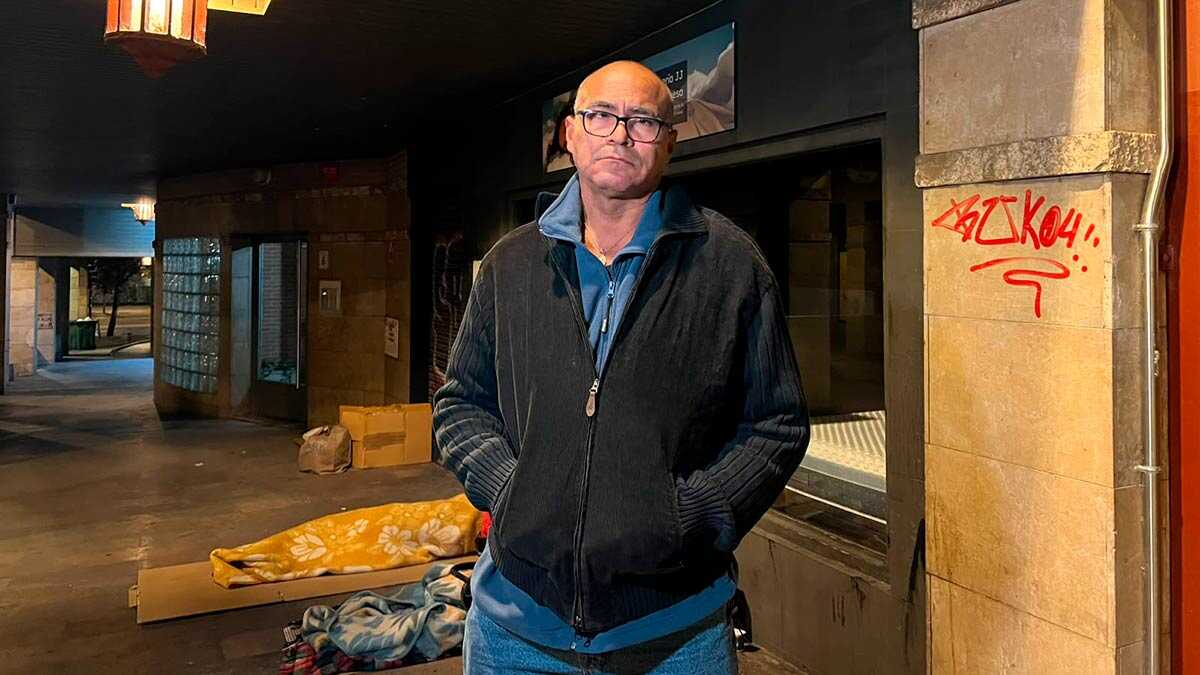
His story also has a personal sense of disappointment that he does not try to hide. He acknowledges that he went through difficult times, lost trust in some people and did not know how to deal with the problems that piled up. "I became bitter, I got frustrated and I was disappointed by many people, and I ended up like this," he explains. But he also points to the difficulties he now faces in starting over. "Because of your age, you cannot find a job so easily; you do not know anyone, you have no contacts and it is complicated," he laments. He has relatives in Santander and A Coruña, although he says they are also facing difficult financial circumstances and he does not want to become a burden to them.
For José Luis, finding a job and renting a room are two goals that seem to depend on each other. He has lost his physical documents and is waiting for a new passport to be issued, although he says he has authorization to work. However, even if he found a job tomorrow, he would still have a difficult problem to solve. "Do I go to work? Where do I leave my things? Where do I stay?" he asks. He explains that every morning he has to make arrangements to leave his belongings somewhere safe before going out to look for a job opportunity. "The first thing is to find somewhere to stay, because if you do not have somewhere to stay, you cannot work," he insists.
Housing is another obstacle, and he says room prices have been unaffordable in the various Spanish cities through which he has passed and that, without an income, he cannot consider renting. "If you have no money, you cannot rent anything; you cannot get anything," he says. Despite everything, he remains hopeful of leaving the streets and regaining his independence. "I do not want to live on benefits or social assistance," he states, grateful for the food he receives but convinced that he needs to earn a living again. He knows exactly what he wants: to find a job, have a room and regain peace of mind.
ABDULA, A YEAR SLEEPING ON AVENIDA NAVARRA AND A FAMILY WAITING IN MOROCCO
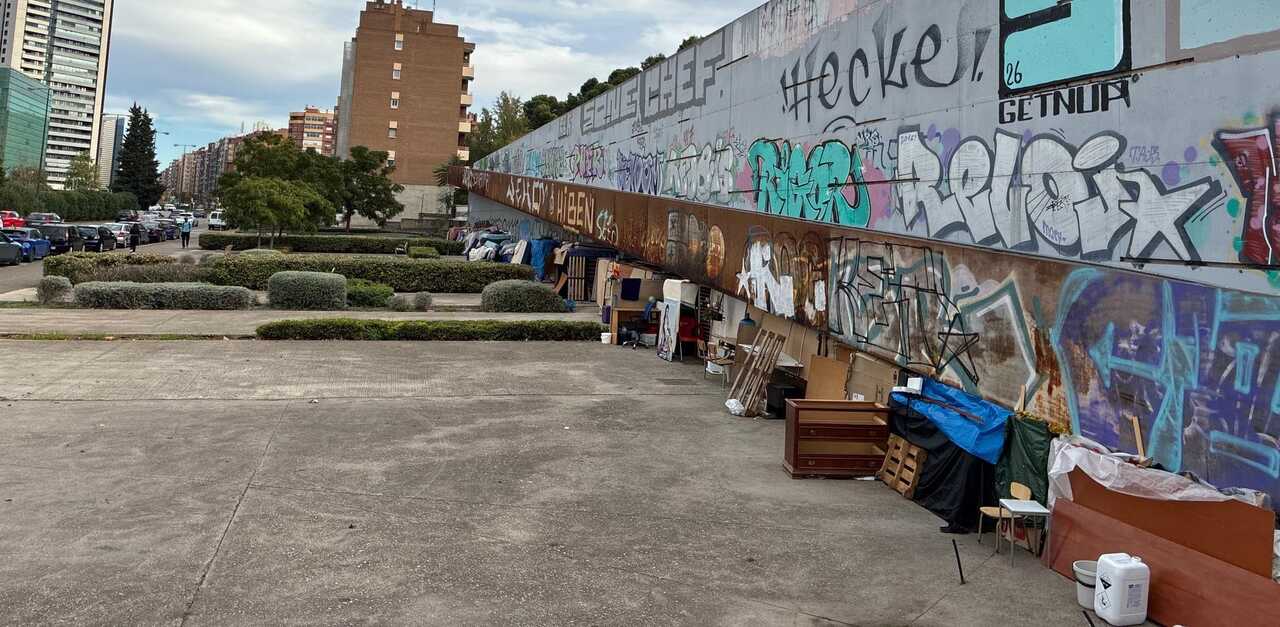
A few kilometers away, in the area around Avenida Navarra and Castillo Palomar Park, Abdula has been living for approximately a year in a settlement alongside other homeless people. He is Moroccan and first arrived in Spain in 2021, although various difficulties forced him to return to his country before trying again. In Morocco, he worked as a skilled tile installer, a trade he would also like to pursue in Zaragoza. During a visit by Red Cross volunteers, with the help of a female volunteer who translates his answers, he explains that finding housing is especially difficult because of prices and his employment situation.
Abdula will begin a course to learn Spanish next November.
Abdula acknowledges that he is cold and hungry, although he has found some companionship among the men who share the settlement. Most of those sleeping in his section are also Moroccan, while another nearby area is occupied by people of Algerian origin. He says they get along well and try to help one another because they are all facing similar difficulties. He has been in the same place since returning to Zaragoza and points out that one of the main forms of assistance he receives is the food periodically distributed by Red Cross volunteers.
Language is another major barrier for him. Finally, after months of waiting, he will begin Spanish classes in November through an association, an opportunity he considers essential to getting around more easily and finding work. He is also awaiting an administrative response related to his documentation, after, according to his account, an earlier application was closed. Until he resolves that situation, his chances of entering the labor market remain limited. Nevertheless, he intends to work in construction, drawing on the experience he had before emigrating.
Behind that goal lies a particularly important reason for Abdula: his children, who still live in Morocco. He wants to find a job, leave the settlement and have a home so he can reunite with them in Spain. He explains this through the person helping him with translation during the Red Cross visit. He does not dare set a date for achieving it, although he hopes it will happen as soon as possible. Like José Luis, he is among the people who shared their stories during the nighttime count, in which 350 volunteers visited 51 areas of Zaragoza to find out how many people sleep on its streets and what difficulties they face in leaving them.