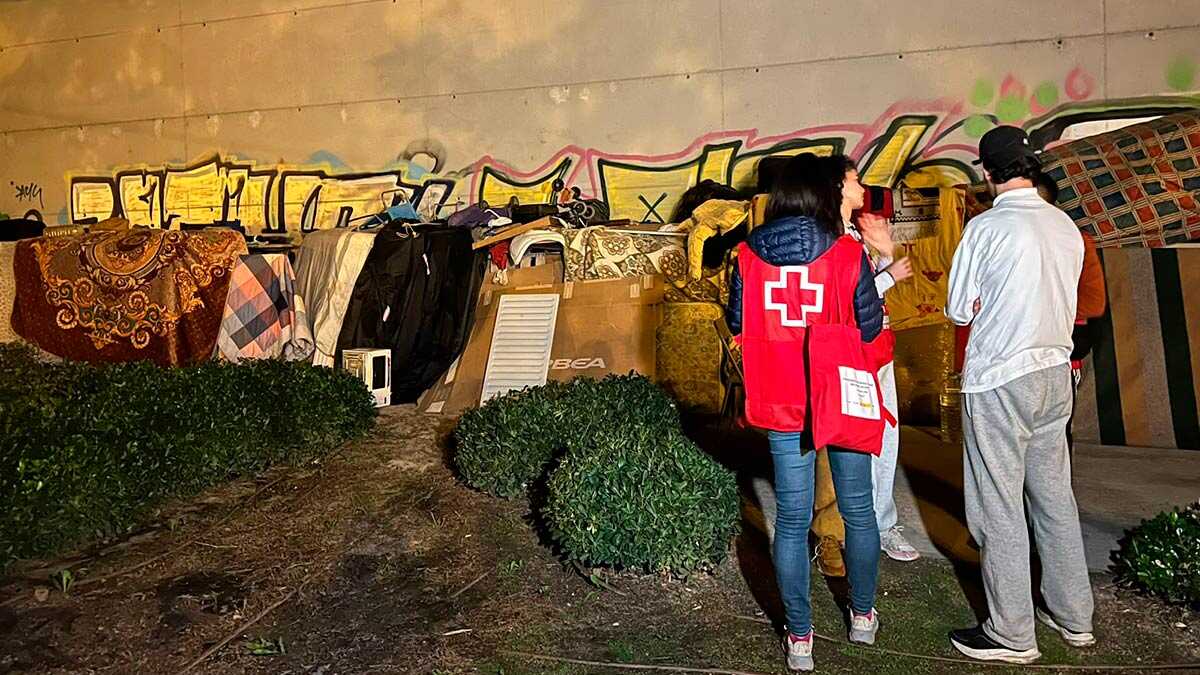
However, the difference is even more significant compared with the figures recorded in 2023, when a total of 166 people were counted. In other words, there are currently 216 more people living on the streets.
According to the study, the profile remains similar to that recorded in previous years, with 35 women (11%) and 285 men (89%) living in this situation. In the remaining 62 cases, representing 16.2% of the total, it was not possible to determine the individuals’ sex. Regarding nationality, 70% are foreign nationals (78 Spanish and 173 foreign). The Maghreb accounts for 40% of nationalities, followed by sub-Saharan Africa (14%), the rest of Europe (9%) and Latin America (3%).
People experiencing homelessness are predominantly from Algeria, with 60 individuals, and Morocco, with 42, followed by Romania, with 16, and Mali, with 10. The count also included six people from Ghana, six from Senegal, five from Nigeria, four from Guinea, three from Ukraine, two from Ivory Coast and two from Portugal.
IMMIGRATION, HOUSING AND WAGES
Among the causes, Social Policies Councillor Marian Orós highlights “migration chaos, the housing crisis and the clear impoverishment of people on precarious salaries, which are increasingly common at present.” For Orós, these are the three “fundamental factors” behind the increase in the number of homeless people in the city.
The councillor also stressed that this is a “structural” problem present in every city in Spain, and therefore considers it a priority for the relevant public authorities to work together to find solutions to this situation. Zaragoza City Council is working to provide 15 more places in the women’s section of the shelter and four homes to accommodate between 15 and 20 additional people.
Meanwhile, the Red Cross provincial coordinator explained that they were able to conduct in-depth interviews with 164 people who agreed to participate. Through these interviews, they hope to understand the circumstances of people experiencing homelessness and work on addressing them.