Roundabouts, tree pits, vacant lots, sports facilities and areas located several kilometers from the urban center are reportedly among the surfaces included in the municipal calculation. The Árboles Vivos Huesca platform is questioning this methodology and, after analyzing the available data and applying exclusion criteria, estimates that the area could be reduced to approximately 100 hectares, bringing the ratio down to 17.76 square meters per resident.
The organization also maintains that there is no uniform national classification that would make it possible to rank Huesca ahead of other Spanish cities using exactly the same criteria and methodology. For this reason, it is calling on the City Council to make public the complete inventory used to calculate those 150 hectares.
One of the main points of disagreement is precisely which spaces are considered green areas. According to Árboles Vivos in a statement, the calculation would include roundabouts—some with artificial grass—tree pits, vacant lots, traffic islands and the route running along the former railway tracks.
One of the main points of disagreement is precisely which spaces are considered green areas
It also identifies spaces farther from the urban center, such as Alberca de Cortés and the Valdabra reservoir, as well as Loma Verde, the area around the Hermitage of Salas, the CRTI and the Municipal Slaughterhouse.
The list also includes the bullring, the Ciudad Deportiva sports complex, the plot occupied by the care home next to the Textil Bretón parking area and the vacant lot between the Official School of Languages and Las Mártires.
ALBERCA DE CORTÉS, VALDABRA AND LOMA VERDE
The inclusion of Alberca de Cortés and the Valdabra reservoir is one of the aspects questioned by the organization, both because of their distance from the urban center and because their bodies of water are included in the calculation.
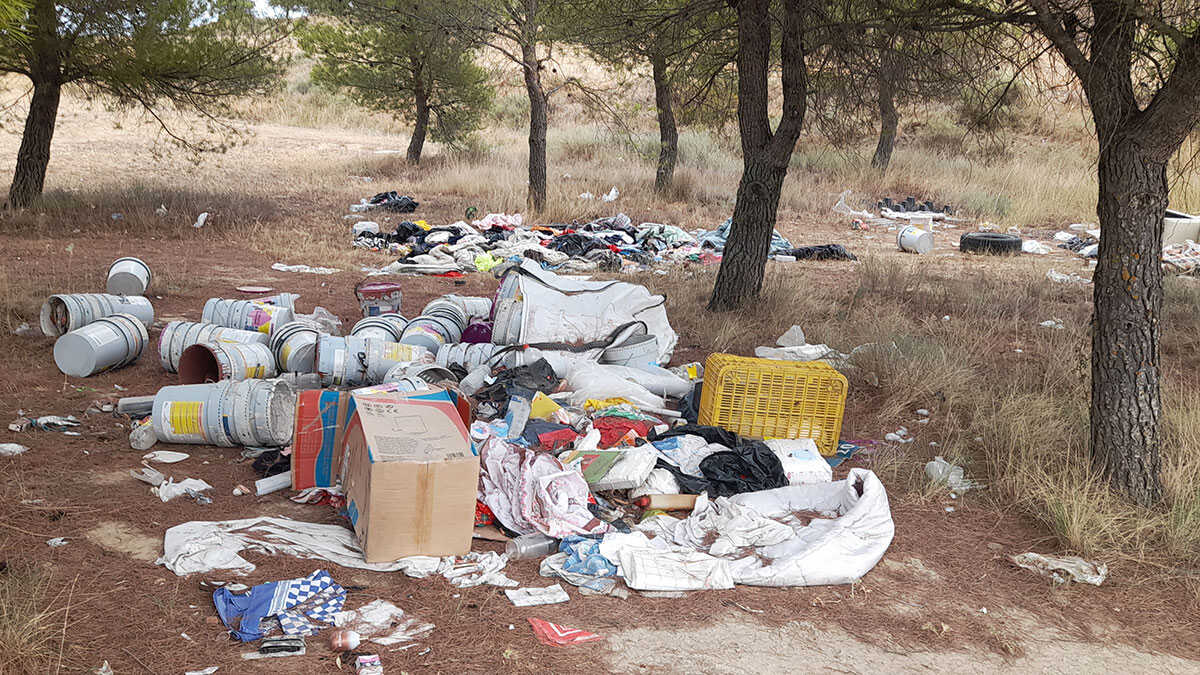
The organization also focuses on Loma Verde. According to its calculations, 19.87 hectares of this area are counted as green space, equivalent to 13.13% of the total attributed to the city. Árboles Vivos maintains that fewer than 12 hectares would actually correspond to wooded land and also denounces the presence of waste and pollution in the area.
GREEN AREAS AND GREEN INFRASTRUCTURE
Another issue raised is the use of the concepts “green area” and “green infrastructure.” The organization points out that they are not necessarily equivalent and notes that the concept of green infrastructure used by the Ministry for the Ecological Transition and the Demographic Challenge goes beyond the sum of parks and gardens.
This term refers to a planned network of natural and semi-natural spaces intended, among other functions, to provide ecosystem services and promote ecological connectivity. Árboles Vivos considers that Huesca’s green areas have not been planned as a whole in line with these criteria.
FROM 150 TO AROUND 100 HECTARES
After excluding spaces whose status as urban green areas it questions, the organization calculates that the total would fall from approximately 150 hectares to around 100.
The difference would also affect the area available per resident. Compared with the 26.64 square meters per resident reportedly used by the City Council, the organization’s calculation puts the ratio at approximately 17.76 square meters.
These figures come from a study carried out by Árboles Vivos using its own exclusion criteria and therefore do not constitute an official review of the municipal inventory.
In light of this difference in criteria, the organization is calling on Huesca City Council to make public all the information needed to verify how the figure of 150 hectares was obtained.