The paintings, created using the grisaille technique and originally located in the convent’s former refectory, were discovered in 1999. For years, they remained in their original location, covered by a tarpaulin, until they were removed from their support in 2025 to ensure their conservation. Their condition is delicate: they show a high degree of fragmentation, and the original mortars have lost adhesion to the pictorial layer, making specialised intervention necessary to recover and stabilise the fragments.
THE CONVENT BECAME A SYMBOL OF RESISTANCE AGAINST THE FRENCH
The history of these paintings is linked to that of a building that bore the full brunt of the devastation caused by the Sieges of Zaragoza. Founded by the Augustinians in the 13th century, the convent became a strategic point in the city’s defence against French troops. Fighting reached the inside of the church, where every chapel and room was contested. That resistance was immortalised in works by painter César Álvarez Dumont, such as “Defence of the Pulpit in the Church of San Agustín Convent”, held at the Zaragoza Museum.
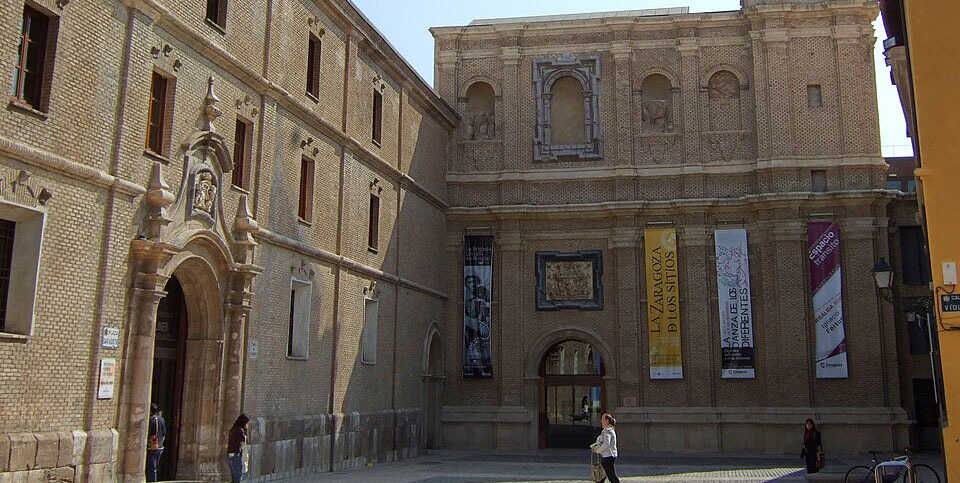
Little remains of the former Baroque complex beyond the church façade and one convent wall, now integrated into the surroundings of San Agustín Square, where the Centre for History and the María Moliner Library are located. The restoration of the paintings will make it possible to work on a less visible part of that historical legacy, recovering remains that, after years in the building and their subsequent removal, require care to prevent further deterioration.