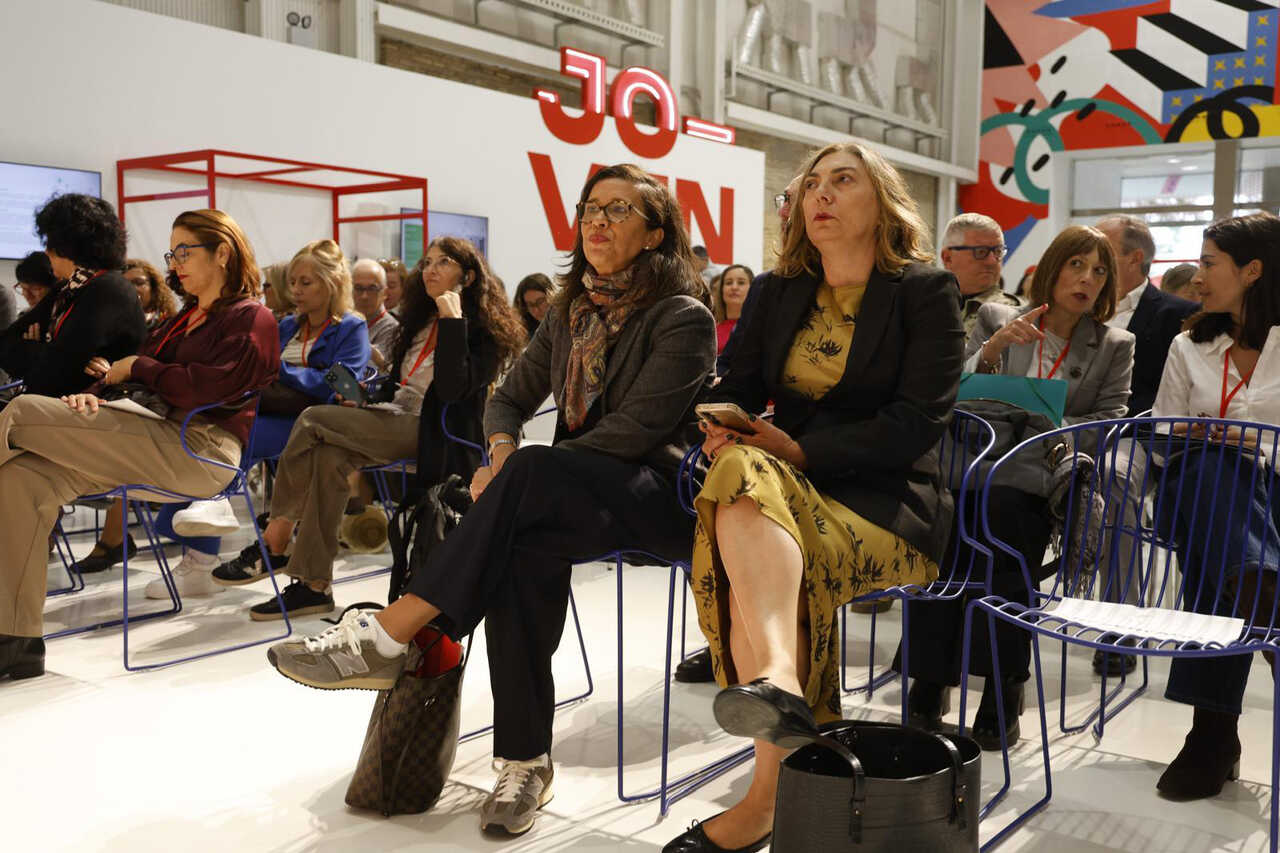
The councillor for Social Policies, Marián Orós, opened the conference this morning and defended the use of the plural. “That is why we wanted to talk about loneliness in the plural. Because recognizing this diversity is the first step toward understanding it and providing appropriate responses,” she said. Orós noted that unwanted loneliness can affect people of any age and stressed that it is not only an individual issue, but also depends on opportunities to socialize and feel part of a community. Among the factors that can contribute to it or make it persist, she cited working conditions, accessibility barriers, difficulties accessing care, the digital divide and the way neighborhoods are designed.
The first session, entitled "Understanding loneliness: conceptual framework and public policies", examined the different dimensions of the phenomenon, the tools used to measure and assess it, the importance of community action and the relationship between loneliness and social risk. Strategies and policies developed in different areas were also reviewed, with contributions from the national, Aragonese and local levels.
SECOND DAY
The second day, tomorrow, Wednesday, October 28, will focus on “Taking action on loneliness: experiences and collective development”. It will begin with a panel on municipal service initiatives and continue with three projects by Zaragoza social organizations: ‘Zaragoza + Humana’, by ASAPME Aragón; the project addressing unwanted loneliness in Delicias, by the Manuel Viola Neighborhood Association; and the strategies of the Oliver Community Center, run by the Adunare Foundation. Experiences from other cities will also be presented, including Pamplona’s Older People’s Networks, the Madrid Salud program and the CRECE project by the Spanish Red Cross.
The morning will conclude with a collaborative workshop divided into four working areas. Its contributions, together with the conclusions of the conference, will serve as a starting point for defining common lines of action. The coordinating group made up of the six services within the Department of Social Policies, which is organizing the conference, hopes the future strategy will gradually include other administrations, organizations and community stakeholders.