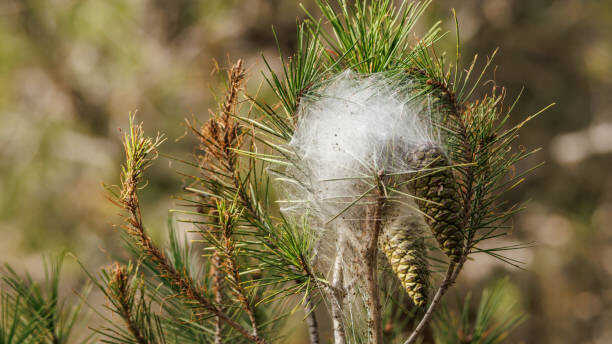
To this end, it has already put the contract out to tender with a budget of 18,145 euros, and the expected execution period will be eight weeks from notification of the contract award. The intervention aims to reduce processionary moth populations to a minimum and help both preserve the health of the trees and lessen the nuisance and risks associated with the presence of this pest in public spaces. Priority will be given to areas where its presence has been detected or where there is a greater risk of infestation.
The contract is being proposed as a specific action for these locations. The municipal report justifies the need for it on the grounds of the importance of preserving the trees and reducing the impact of the pest in areas used by the public, especially where people may face greater exposure.
THE CONTROL STRATEGY
Planning for 2027 takes into account the fact that the presence of this pest can vary considerably from one year to the next, as its biological cycle is closely linked to temperatures. Measures implemented by the Green Infrastructure Service include manually removing nests during the winter months, before the caterpillars descend to the ground. Another action is the installation of pheromone traps, which help reduce the pest’s reproduction and provide information for planning subsequent interventions.
These measures are complemented by the installation of capture rings on the trunks of more than 50 pine trees that cannot be reached using a platform and are located in sensitive areas where the processionary moth may be present. In addition, signs are placed in green spaces where numerous pine trees and pets are present to warn users and remind them of the need to take extra precautions.
The municipal strategy also includes measures aimed at encouraging the presence of natural predators of the processionary moth. More than 80 nest boxes are regularly installed in urban parks to encourage insect-eating birds and mammals such as bats, which help control populations of this pest.