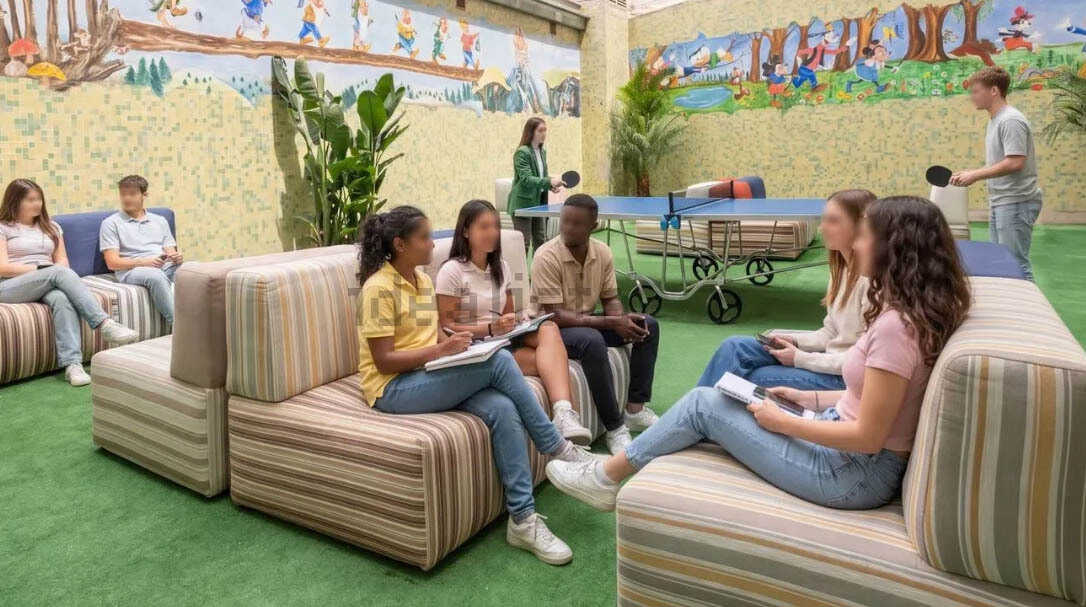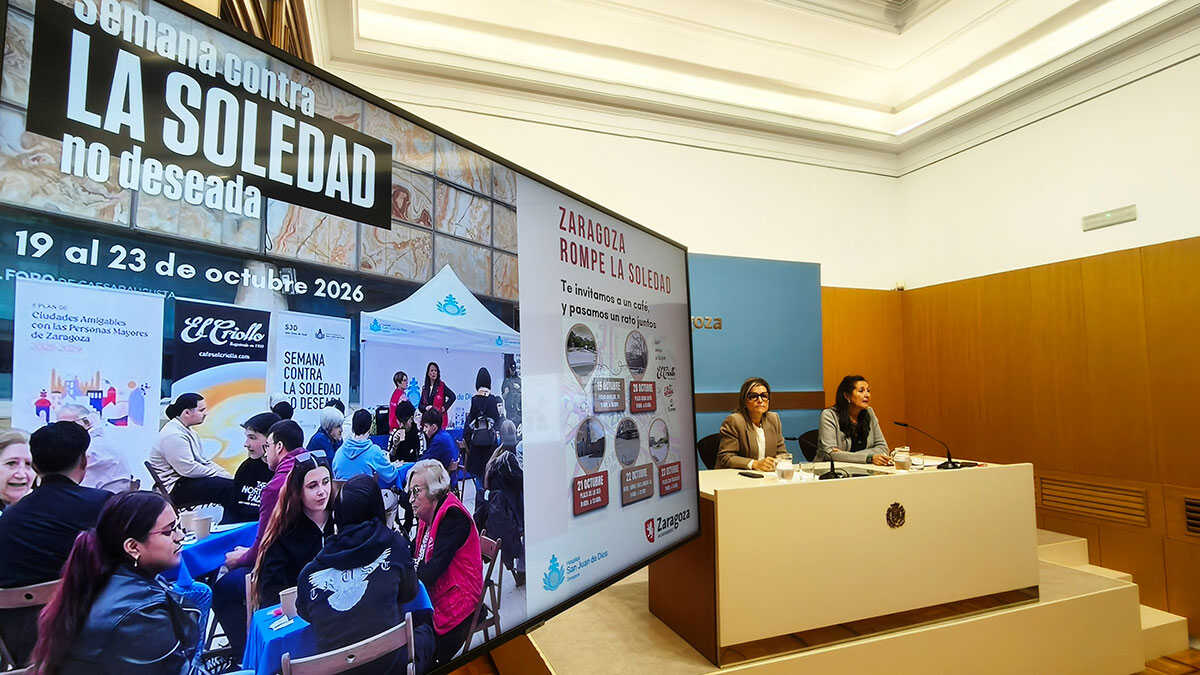
The initiative, now in its third year, aims to bring these meeting spaces closer to local neighborhoods and bring together people from different generations. The solidarity coffee meetups will take place from 9:00 a.m. to 1:00 p.m. at 24 Paseo de Cuéllar this Monday; Plaza Reina Sofía on Tuesday; Plaza de la Seo on Wednesday; 55 Avenida de Gómez de Avellaneda on Thursday; and Plaza de San Francisco on Friday. Volunteers and professionals from the city council and the hospital, as well as students from schools in Zaragoza, will take part, sharing conversations with attendees to foster empathy and strengthen ties between young and older people.
Paloma Espinosa, the city councillor responsible for Older People and Family Affairs, said that caring for older people is a priority for the municipal government and recalled that Zaragoza now has, for the first time, a specific action plan to address unwanted loneliness. "No older person should feel alone in a city like Zaragoza," she said. She stressed that tackling this problem requires anticipating and preventing it, but also involving society as a whole, because although it particularly affects older people, loneliness is also present among younger people.
A COFFEE TO BUILD INTERGENERATIONAL BONDS
Berta Sáez, managing director of San Juan de Dios Hospital in Zaragoza, stressed that loneliness is not only about being without company, but also about feeling disconnected and experiencing emotional distress that affects quality of life. She therefore defended the need for a coordinated response involving institutions, professionals and social organizations. "Caring is not only about treating an illness; it also means listening, accompanying people and building bonds," she said.
The campaign also includes awareness talks at primary and secondary schools, as well as educational projects focused on unwanted loneliness among children and teenagers. In addition, on October 27 and 28, Zaragoza will host the conference Building a Shared Strategy to Address Loneliness, designed to exchange experiences and move toward coordinated responses for people of different ages.