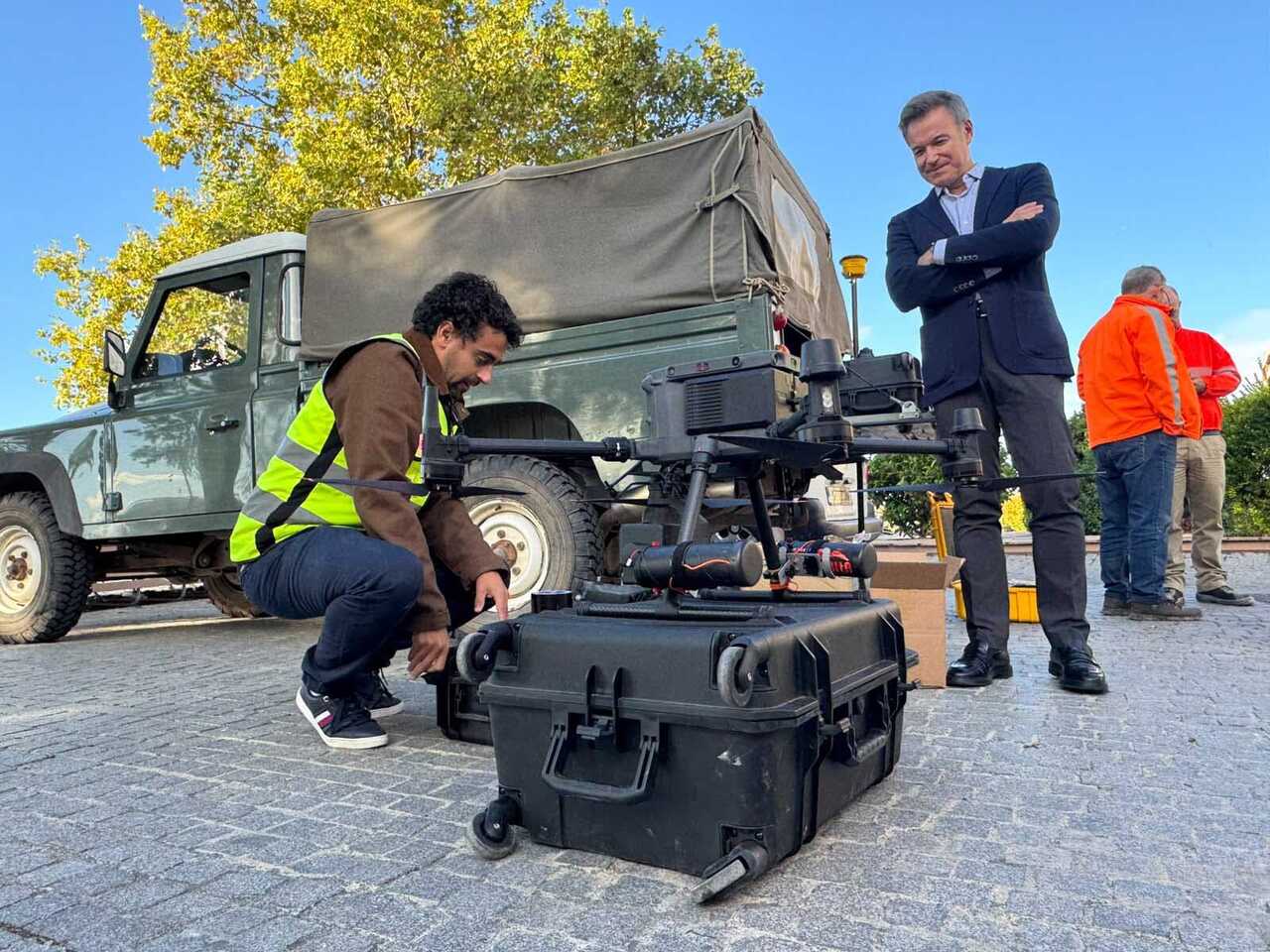
Zaragoza's municipal planning official, Víctor Serrano, explained that the study is part of a €200,000 overall contract to analyze five bridges in the city and prepare future conservation work. In the case of Puente de Piedra, the work has an investment of around €40,000 and will make it possible to create a digital twin of the structure, arch by arch and ashlar by ashlar. “It will allow us to analyze every crack in 3D,” Serrano said, highlighting the precision of a technology capable of detecting details that escape the human eye.
The project seeks to identify the cracks, damage and deterioration affecting the stone over time. Although the bridge's current condition does not compromise safety, the city council considers action necessary to halt its degradation and plan a restoration appropriate to its historic value. Puente de Piedra is a Property of Cultural Interest (BIC), as well as a key part of Zaragoza's transport infrastructure, used by five urban bus routes.
THE CITY COUNCIL PLANS A RESTORATION SUITED TO ITS HISTORIC VALUE
Deterioration on Puente de Piedra. Photo: Guillermo Pemán
The use of the drone will make it possible to examine both the upper and lower parts of the bridge, including its arches, without having to install auxiliary equipment to give technicians access to the most difficult areas. Serrano emphasized that this is the first digital twin of its kind created in Zaragoza by flying this technology over an infrastructure. The study will also focus on vegetation that has grown on the structure and on the colonies of swifts nesting in its arches, whose protection will have to be taken into account during future work. “They are now fellow Zaragoza residents on Puente de Piedra,” the planning official said.
The city council now has four months to draw up the rehabilitation project. It will then have to approve it and put the works out to tender, as well as obtain authorization from the Provincial Heritage Commission, given the bridge's protected status.
Serrano estimates that, taking these procedures into account, the work could be carried out over an approximately one-year period. The project will also have to adapt to the swifts' nesting periods, so technicians will study how to combine the restoration with the protection of these birds.