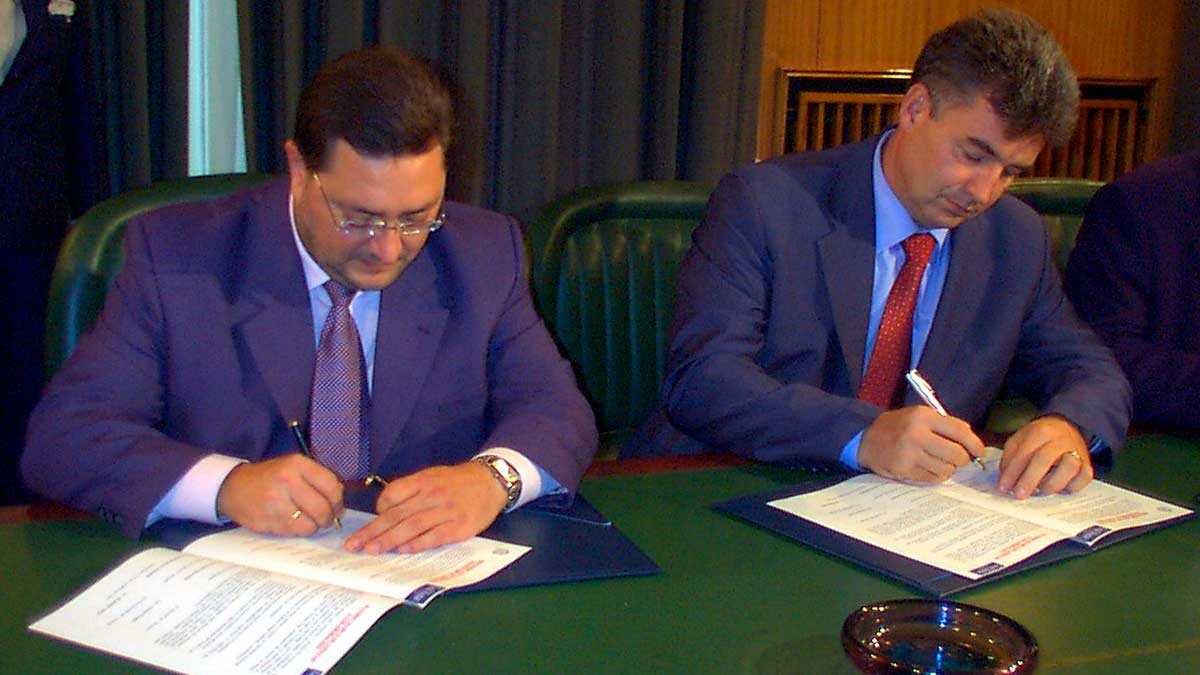
"Today we have formalized the friendship between our two cities," Tomic said during the ceremony, where he expressed particular thanks for the help Zaragoza and Spain had provided to Bosnian refugees in previous years. The agreement aimed to turn that solidarity into a lasting relationship through culture, education and sport.
Among the first initiatives planned were bringing exhibitions of paintings and sculptures by Bosnian artists to Zaragoza and having groups from Mostar take part in the September 2002 Folklore Festival. For its part, the Aragonese capital pledged to bring performances by its ballet company to Bosnia, promote student exchanges, establish a library with Spanish-language materials and send teachers to teach the Spanish language and Spanish customs.
Zaragoza’s then mayor, José Atarés, recalled that the city had already played an active role in the reconstruction of the Balkans. Through organizations such as the Movement for Peace, Disarmament and Freedom (MPDL), 17 projects had been developed with an investment of more than 300 million pesetas.
Peace was another central message of the day. "Peace is not something that falls from the sky; it has to be built day by day," Manuel Ramírez said. Along the same lines, Zaragoza City Council was working to create a network of European cities committed to lasting peace, having already established contacts with municipalities in France, Germany and Sweden.
One of the most symbolic moments came when the mayor of Mostar presented José Atarés with a painting of the old bridge in the Bosnian city, which was undergoing reconstruction at the time.
That agreement represented the desire to preserve the ties born from solidarity with refugees and turn them into shared cultural projects. This is how Aragón Digital reported it 25 years ago, in the original story about the alliance between Zaragoza and Mostar to promote culture and peace.