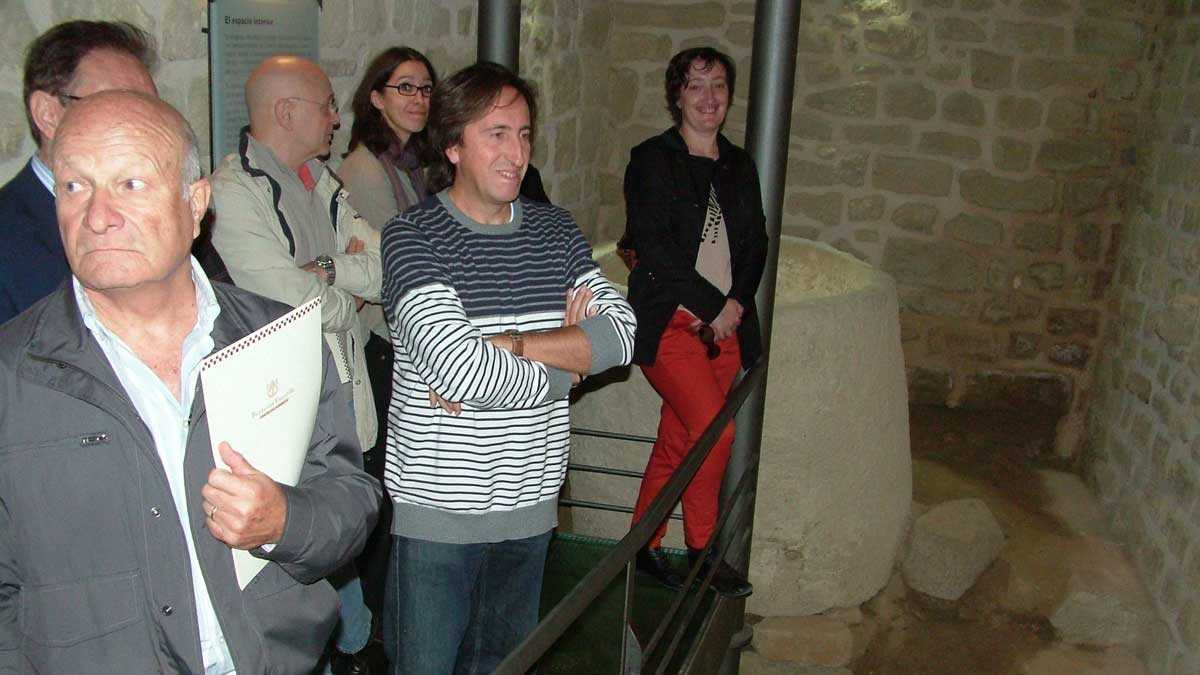
The discovery stood out especially for the excellent condition of its structures. In a 60-square-meter space, doors, columns and various original pieces had been recovered, along with a large stone vessel used to press wine. Most remarkably, all these elements remained in the same place where they had been built centuries earlier.
The recovery began with the purchase of the property by the Uncastillo Foundation in 2004. After seven years of administrative procedures and excavation work that began in 2009, the project had involved an investment of nearly 200,000 euros, funded by the Government of Aragon, the Zaragoza Provincial Council and the Town Council.
The then director of the Uncastillo Foundation, José Francisco García, highlighted the care with which the work had been carried out: "We have not touched absolutely anything; everything is in its place," he said.
The building’s identification as a former synagogue was supported by several pieces of evidence. On the one hand, oral tradition, which had referred to the property as "la sinoga" or "la sinagoga" since at least the late 18th century. On the other, the discovery of pottery bearing the Star of David in a medieval layer, together with the arrangement of aligned columns and two symmetrical doors.
To publicize the discovery, the foundation had organized an open house for October 22, with visits in groups of 15 people. It also planned to include the site in a route through the Jewish quarters of the Cinco Villas, including Biel, Luna and Tauste.
The preserved medieval structures and evidence of the Jewish presence made it possible to recover part of Uncastillo’s history. This is how Aragón Digital reported it 15 years ago, in the original article about the discovery and restoration of its former synagogue.