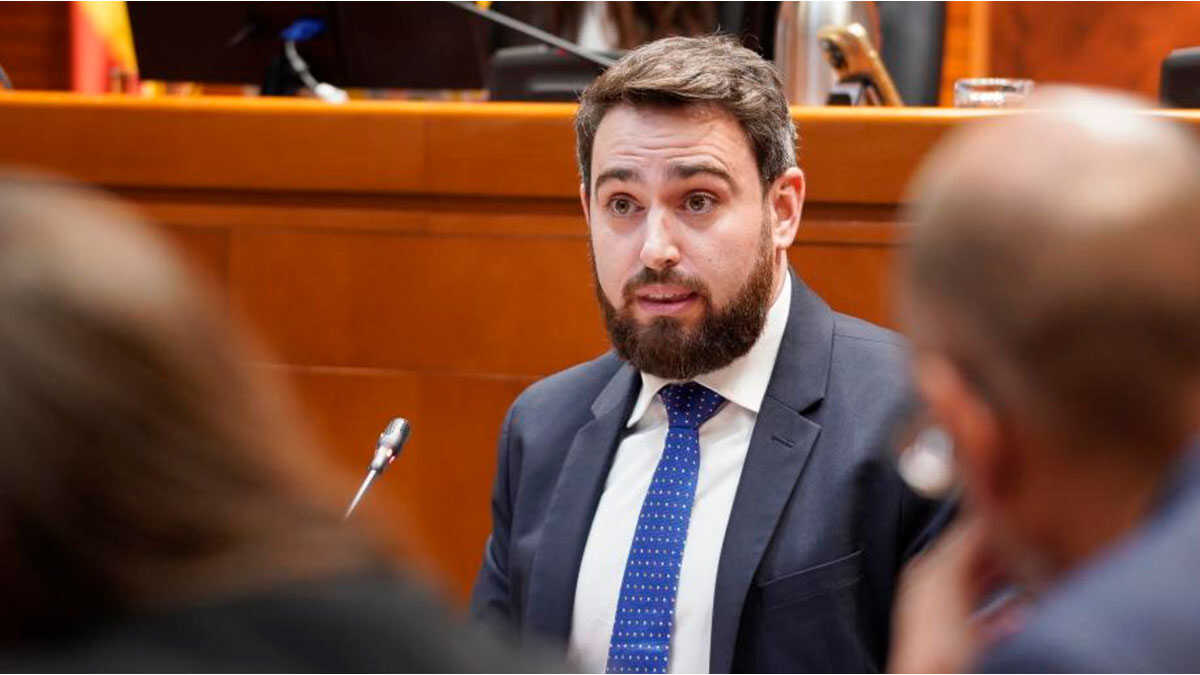
In his address, he placed students at the center and as the reason for the existence of the education administration: “One might ask why we have an extensive machine operating every day,” he said, “but the question is not ‘why,’ but ‘for whom,’ and the answer can only be for the thousands of students in our education system.” Ferrando argued that students in Aragón are and will remain “the guiding principle” of all the actions undertaken by this Directorate General, which is attached to the Department of Education, Science and Universities.
Among the new measures planned for the 2026/27 school year, he highlighted the strengthening of the Teacher Support Unit, which was created as a “pioneering” project at the national level to guarantee the comprehensive protection of teachers in Aragón. The unit will add new services during the first quarter of 2027 with the aim of “improving the emotional well-being and legal security of our teachers” so that “their only concern is teaching.”
The service will be organized around two new advisory services, one focused on legal guidance and advice and the other similarly focused on emotional support. Both will be staffed by specialized professionals through separate agreements with the Council of Bar Associations of Aragón and the College of Psychologists of Aragón. The aim is for teachers to have immediate tools to resolve legal questions arising in the performance of their duties and to manage situations involving conflict or psychological strain in their professional work.
Throughout his appearance, the director general outlined to the parliamentary groups a comprehensive strategy focused on students in response to the decline in PISA indicators, the increase in mental health protocols in classrooms and the need to modernize the school meal and curricular materials grants reaching more than 20,000 families this school year, among other issues.
CARING FOR MENTAL HEALTH TO SAFEGUARD EQUITY
The director general of Educational Policy described intervention in emotional distress at schools as “urgent” and called the increase in open protocols for suicidal ideation during the 2025/26 school year compared with the previous one “alarming.” Specifically, the figure rose by 42.86%, from 847 to 1,210 cases—a figure updated at the end of last June, once the school term had ended—alongside a 56.63% increase in bullying cases, bringing the total to 593.
“Working to care for our students’ mental health means safeguarding the present and future of educational equity,” he said, referring to the consolidation of the Mental Health Technical Unit. This team was reinforced this school year with a psychiatrist and a nurse, in collaboration with the Department of Health, and is being established as “an irreplaceable safety net on the ground, responding to extreme situations, critical events and highly complex cases.”
STREAMLINING GRANTS, INCLUSION AND NEW CONTENT
In the area of equity, the director general defended attention to diversity as the backbone of the education system and announced several measures for the more than 20,000 families receiving school meal and curricular materials grants. Work is therefore underway to remove bureaucratic obstacles, bring forward the calls for applications and advance the digitization of files.
Regarding the textbook bank, he explained that it “has operated completely normally for families in all publicly funded schools during this 2026/27 school year,” providing coverage for 66,486 students. He also confirmed that work is underway on a new decree to regulate it.
Ferrando referred to the nine new centers authorized this school year to offer the inclusive learning and curricular diversification programs. There are 137 centers enrolled in the PAI program and 147 in the diversification program. He also mentioned the addition of nearly 90 support professionals in vulnerable schools through PROA+ and after-school support at 150 centers through the AUNA program; the opening of new language immersion classrooms in Huesca and Albalate del Arzobispo; and the processing of an order for the assessment and certification of basic skills in Adult Education Centers (CPEPA).
He also welcomed the extension of the bilingual model to 117 centers across Aragón and the continuation of the language assistant program in the regional education network, despite the “obstacles from the Government of Spain, through the Ministry of Labor,” which have led to the assistants arriving one month later than scheduled. A total of 104 assistants from 13 different nationalities will join the program, bringing their countries of origin and languages to classrooms in 106 centers across Aragón: 21 in Huesca, 14 in Teruel and 71 in Zaragoza.