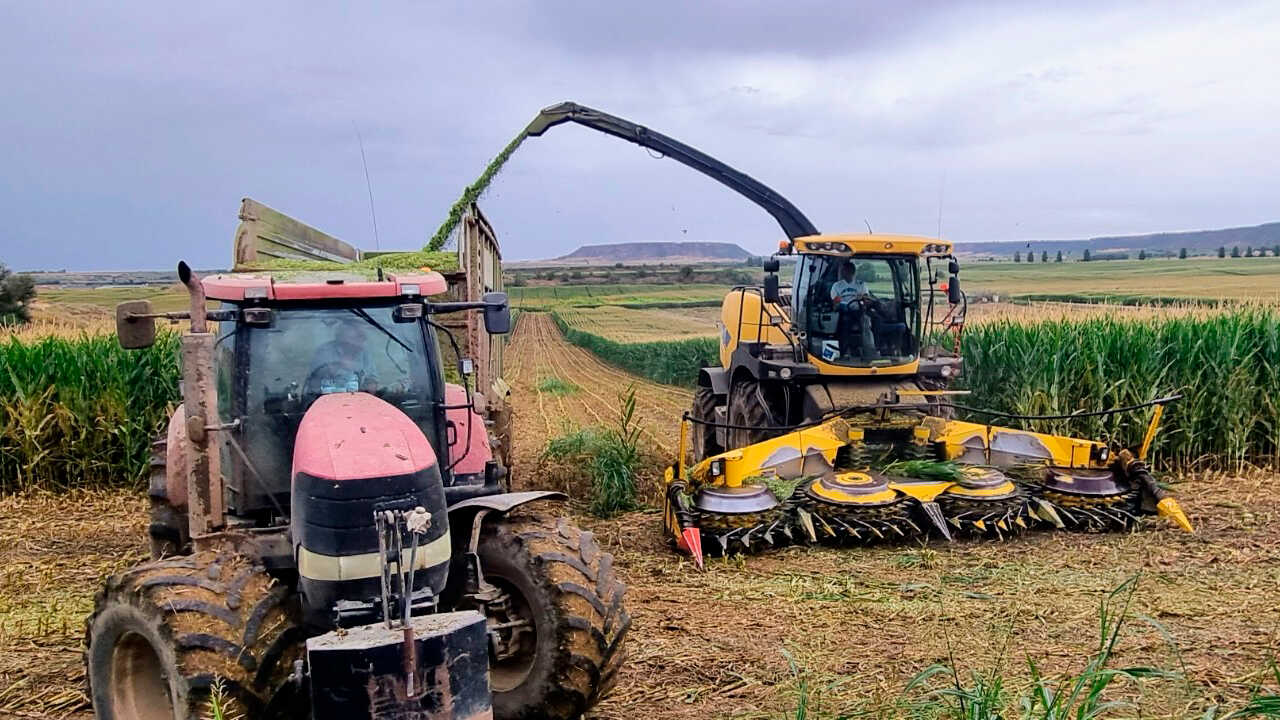
The area planted this year stands at around 92,000 hectares, compared with 97,000 in 2025. Approximately 45,000 hectares correspond to the first crop and another 47,000 to the second. With the first harvest well under way and the second already started, Asaja forecasts production of between 920,000 and 960,000 tonnes and estimates the crop loss at up to 200,000 tonnes.
RED SPIDER MITE WORSENS THE DROP IN YIELDS
The reduction in acreage explains part of the decline, but the main problem lies in lower field yields. According to Asaja, around 140,000 tonnes of the shortfall are linked to falling productivity, worsened by the presence of red spider mite. Damage caused by this pest, combined with production costs, is leaving many farmers without a profit margin and increasing uncertainty over the coming campaigns.
LOWER COSTS AND MORE TOOLS TO COMBAT PESTS
To restore profitability, Asaja is calling for lower raw material and production costs, access to more productive and better-adapted seeds, and effective plant-protection tools. Its demands include authorizing abamectin to combat red spider mite. The organization is asking the authorities for solutions to protect crops and maintain activity on farms.
“If urgent measures are not adopted to enable production with guarantees and secure a decent return, corn in Aragon is bound to stop being planted,” warns Fernando Luna, president of Asaja Huesca. The organization recalls that Huesca is one of Spain’s main producing areas, along with the Ebro Valley and León, and that corn supplies activities including human food, animal-feed manufacturing and the cosmetics industry.