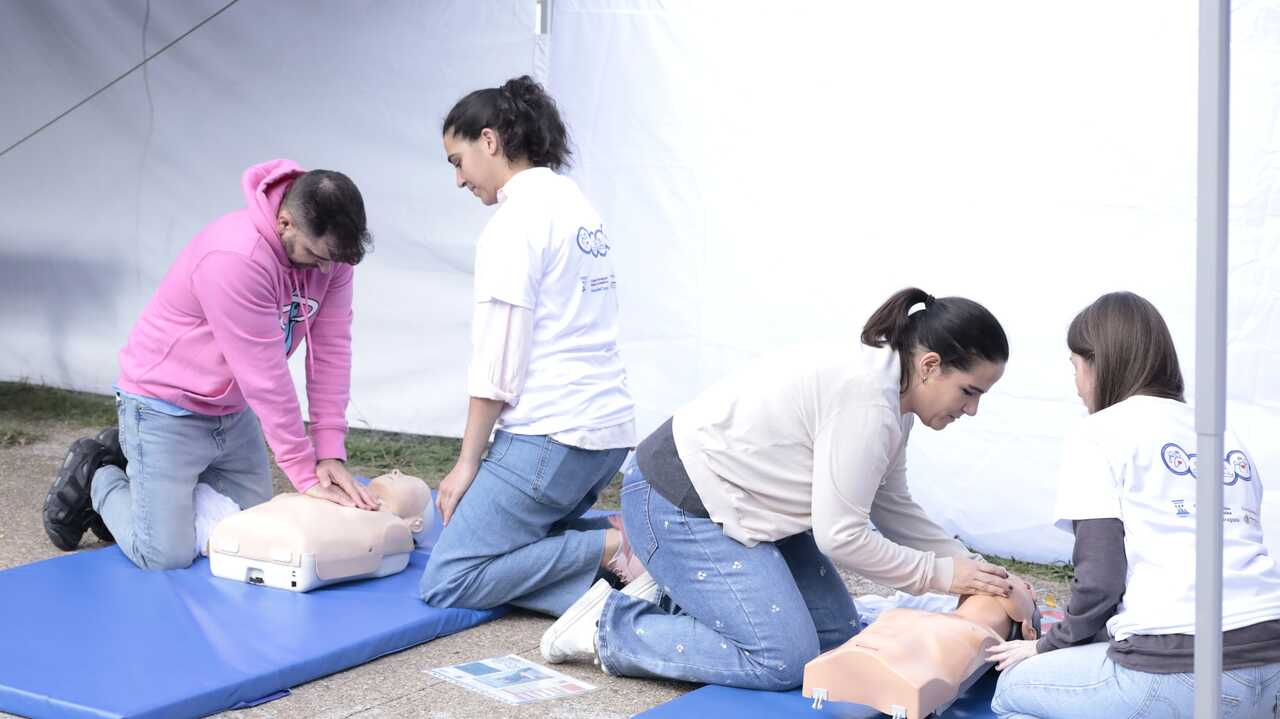
When a person suffers cardiac arrest, the heart stops pumping blood effectively and the brain quickly begins to suffer the consequences of oxygen deprivation. Every minute counts, and the actions of those who witness the emergency are crucial. You do not need to be a healthcare professional to start resuscitation, call for help and try to keep the person alive until emergency services arrive.
Resuscitation started promptly by bystanders can double or even triple the chances of survival. Acting during the first few minutes also improves the prospects for neurological recovery and for returning to an independent life. For this reason, the event aimed to bring these techniques to schoolchildren, university students, patient associations and citizens in general.
HOW TO RESPOND TO CARDIAC ARREST
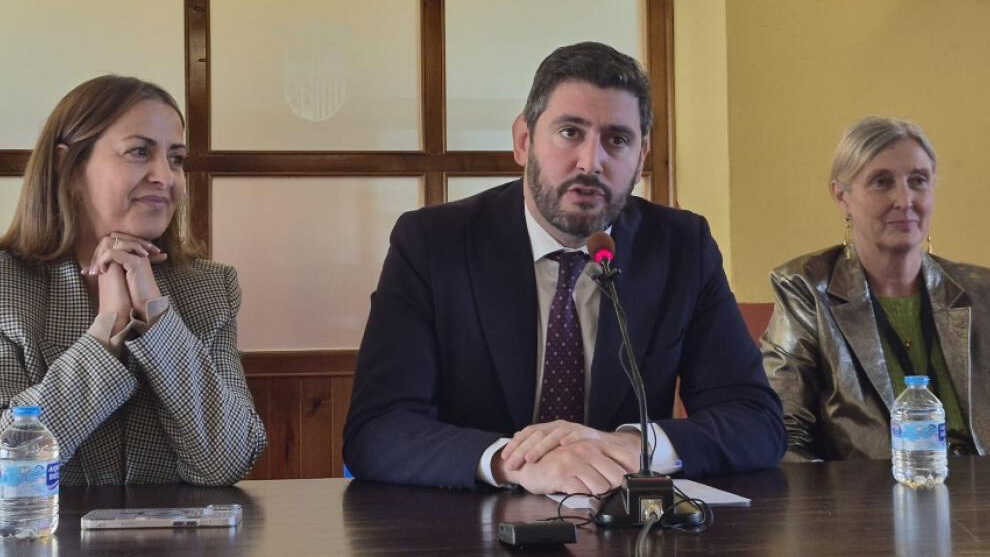
Aragon’s Regional Minister of Health, Ángel Sanz, visited the tents set up on the San Francisco Campus alongside representatives of the University of Zaragoza and healthcare professionals. The initiative was organized by the intensive care unit at Miguel Servet University Hospital, in collaboration with the University of Zaragoza, 061 Aragón and professionals from several hospitals across Aragon.
Sanz encouraged the public to learn these skills because anyone may find themselves facing such a situation. “We can all help save lives, and we would all like someone to help us if we found ourselves in a situation like this,” the minister said, thanking the professionals who make the initiative possible each year.
During the workshops, held from 9:00 a.m. to 2:30 p.m., participants learned how to check whether a person responds and is breathing normally, call 112, perform chest compressions and use an automated external defibrillator. These devices can be used by people without medical training because they provide voice instructions and analyze the heart rhythm before indicating whether a shock is needed.
FIVE OUT OF 10 PATIENTS SURVIVE SIX MONTHS LATER
A study conducted at Miguel Servet University Hospital in Zaragoza, analyzing the progress of 198 people treated after cardiac arrest, shows that approximately five out of 10 patients treated following an out-of-hospital cardiac arrest survive six months later. Among survivors, more than nine out of 10 also achieve good neurological and functional recovery.
The head of the Intensive Care Department at Miguel Servet, Andrés Carrillo, stressed that the first few minutes are decisive. “No matter how quickly emergency teams arrive, in many cases the first opportunity to save that person’s life is in the hands of whoever is beside them,” he explained. The aim, he added, is for every citizen to know how to recognize cardiac arrest, call for help and begin chest compressions without fear.
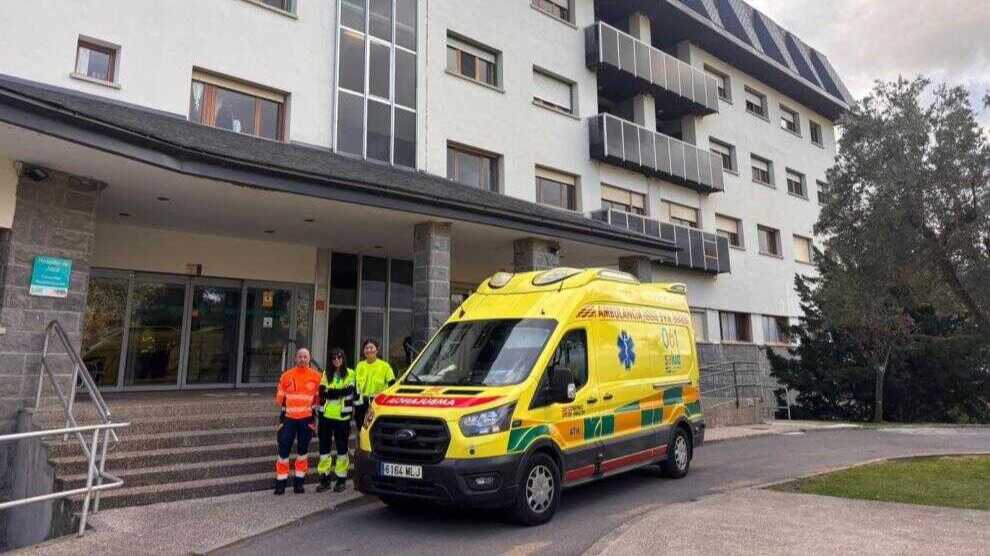
The event is being held under the slogan "Your Hands Save Lives" and has also included 061 Aragón life-support ambulances and, as a new feature, an intensive care unit bay explaining the care patients receive after cardiac arrest. The activity, linked to World Cardiac Arrest Day on October 16, was moved this year to October 23 because the usual date coincided with the Fiestas del Pilar.