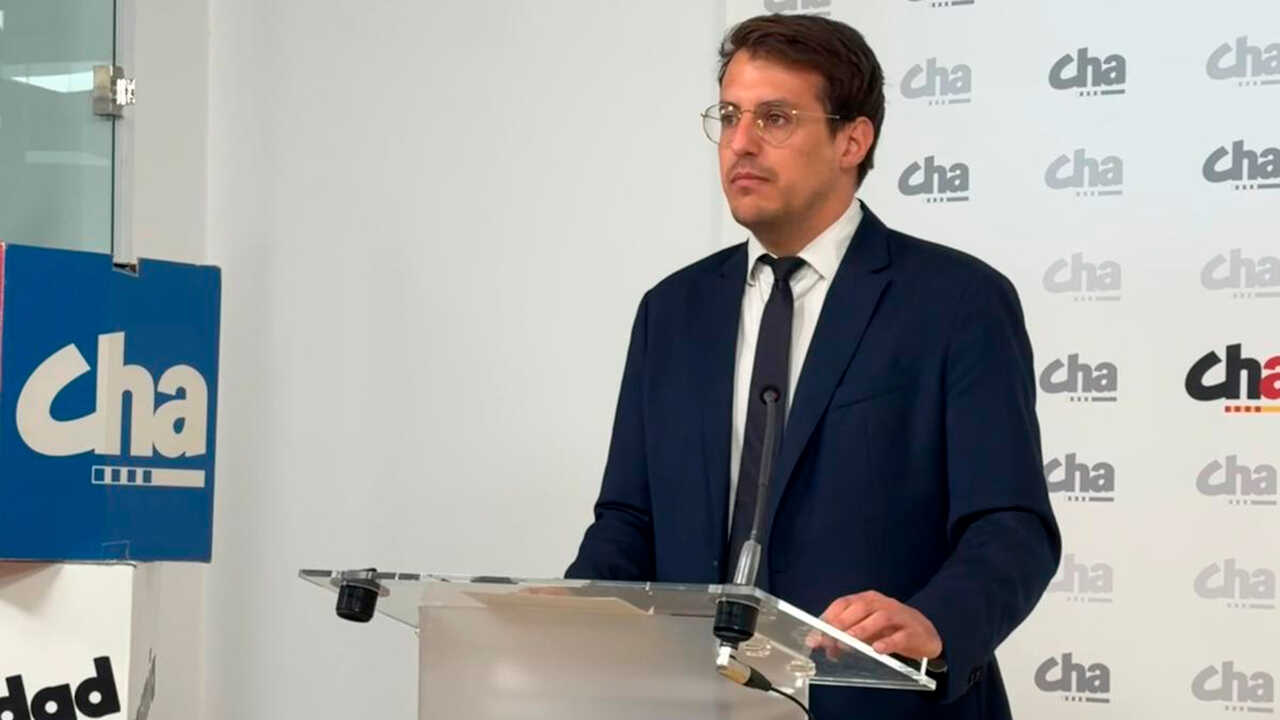
CHA president Jorge Pueyo has questioned the lack of information about the combined impact of these facilities on water and electricity consumption. “We do not know how much electricity and water they will need, how much land they will occupy or what consequences they will have for Aragon as a whole,” he warned. He also called for an assessment of resource availability, discharges and drought scenarios: “What will happen when water or electricity runs out? Who will the restrictions apply to?”
TAX BENEFITS AND QUESTIONS OVER THE RETURNS
The party has denounced the fact that processing projects as being of general interest in Aragon provides tax benefits without guaranteeing sufficient economic and social returns. Pueyo echoed warnings from the mayor of Villamayor de Gállego, José Luis Montero, and estimated that these exemptions could cost municipalities between 50 million and 60 million euros in lost revenue. “They are also coming because of the advantages offered by a model that socializes costs and reduces their tax obligations,” he criticized.
Pueyo also warned of the risk of a speculative bubble leaving facilities obsolete or unused and questioned the opacity of the procedures and confidentiality agreements. The party leader argued that Aragon’s energy production should help strengthen its industry and create opportunities in rural areas. “We cannot mortgage our natural resources and energy capacity to put them at the service of large multinationals,” he said.
CALL TO JOIN THE PROTESTS
CHA has called for public digital sovereignty under the control of the Government of Aragon to protect institutional, tax and health data. “Aragon needs to decide what digital model it wants, what resources it is willing to commit and what benefits it will receive in return,” Pueyo said. The party urged people to attend Friday’s protests at 6:00 p.m. in Huesca and Saturday’s at 12:00 noon at Zaragoza’s Paraninfo. “Defending water, energy, the land and the future of our villages is a shared responsibility,” he concluded.