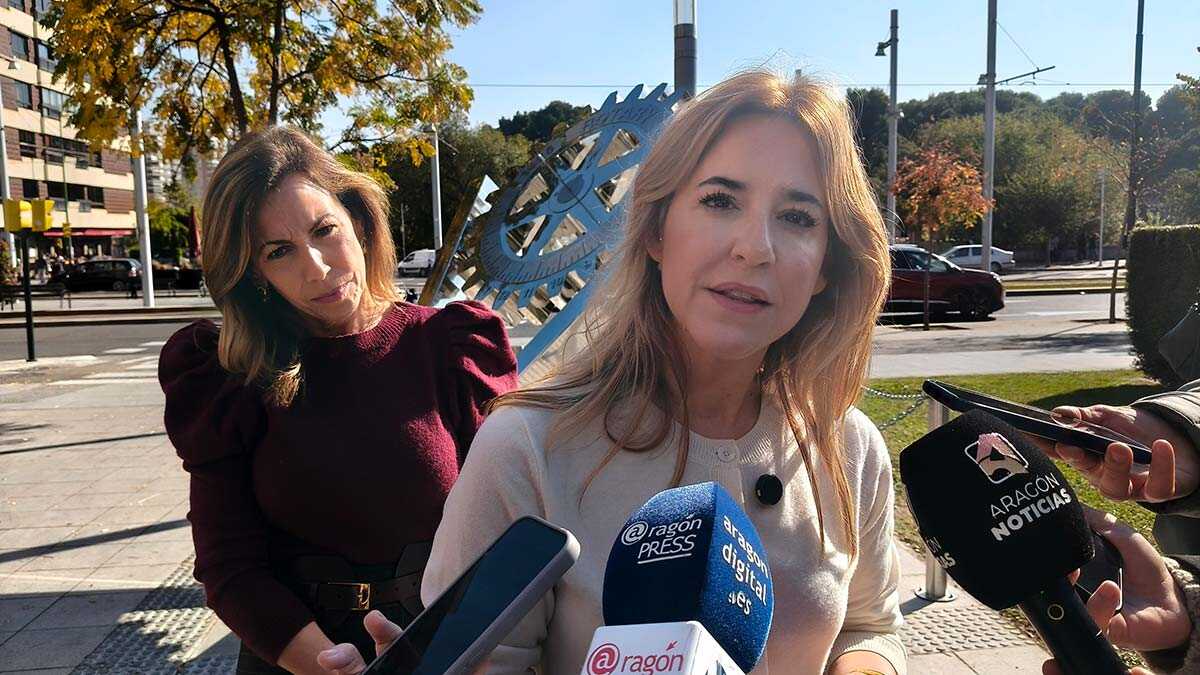
The People's Party candidate said citizens are living with greater insecurity than a few years ago and referred to vandalism, home squatting and concerns about safety in the streets. Among the measures proposed by her party, she cited an anti-squatting law allowing homes to be evicted within 48 hours of a complaint, a law against repeat offending and more resources for the National Police and Civil Guard. She also called for both forces to be recognized as high-risk professions and criticized the closure of Civil Guard stations in municipalities such as Quinto and La Muela.
Chueca, for her part, argued that Zaragoza is one of Spain's safest major cities. According to data provided by the PP, the city has a rate of 11.3 criminal offenses per 1,000 inhabitants, compared with 22.9 in Barcelona. The mayor used these figures to contrast the municipal administration with the central government's actions and insisted that local policies also need the state's support.
MORE THAN 400 NEW LOCAL POLICE OFFICERS AND 311 CIVIC ORDINANCE FINES
She highlighted that the city council has added more than 400 officers to the Local Police since the PP took office. "Since the PP took office, we have added more than 400 local police officers," she recalled. She also detailed that 44 surveillance cameras have been installed in troubled areas, helping to resolve around 50 criminal incidents over the past year, and that a further 200 are scheduled to be installed over the next four years.
Another measure she highlighted was the Civic Ordinance, which, according to municipal data, recorded 311 violations during its first week in force for behaviors such as urinating in public, abandoning waste, drinking alcohol in the street or creating noise. Chueca also defended free legal advice for people affected by squatting, which has handled 525 cases since 2021, and the ALZA program, funded with 750,000 euros to bring vacant homes onto the affordable rental market.
Both also agreed that municipal measures should be complemented by legislative changes at the national level. "A homeowner who has worked all their life to own a property cannot find their home occupied and then have to wait years for someone to rule in their favor," Chueca said. Dívar, for her part, insisted that the PP wants citizens to "feel safe in their cities and towns" and called for accountability over the investigations affecting the management of railway infrastructure.