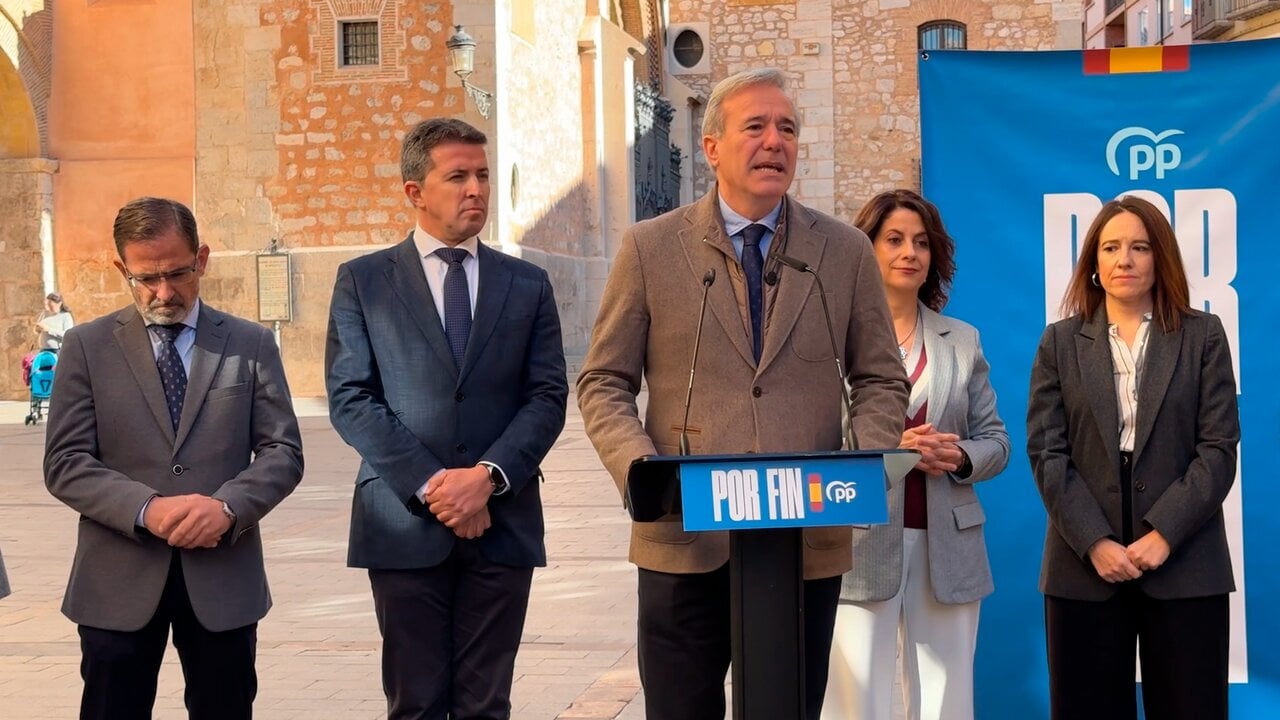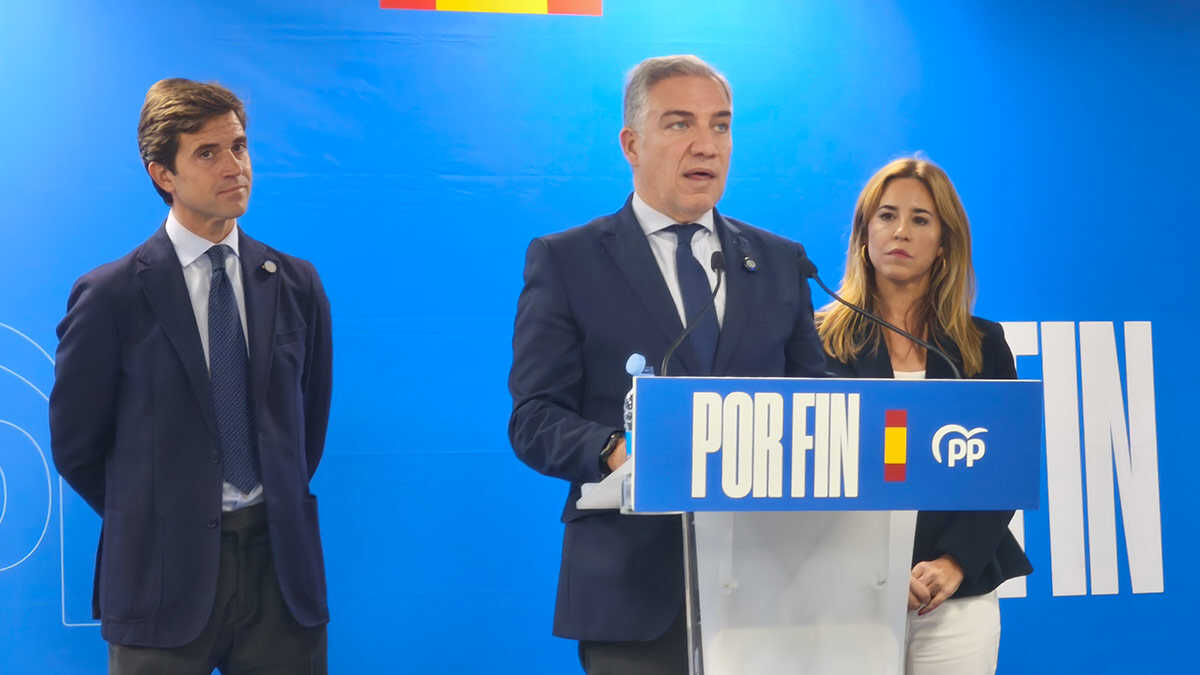
Accompanied by Congressional candidate Rocío Divar and provincial president Ramon Celma, Bendodo devoted much of his speech to criticizing current Transport Minister Óscar Puente over the accidents in Adamuz and Urda, calling him “irresponsible.” He also referred to his predecessor, José Luis Ábalos, who is serving a 24-year prison sentence, accusing him of stealing “the money intended for train safety.”
THE PP, “RESPECTFUL BUT FIRM” OVER URDA
“The Adamuz accident already exposed the state of neglect affecting the rail network in our country, and the Urda accident has definitively confirmed the collapse of a system and a dark period during which Pedro Sánchez has been at the helm of the Spanish government,” the Popular Party politician said. He assured that the PP would be “respectful but firm” so that the victims’ families learn the truth, adding that the party would also join the legal proceedings.
Elías Bendodo criticized the government for first “selectively leaking edited audio recordings, with sections cut out, in an attempt to make an Adif controller a scapegoat.” He therefore called on Puente to resign during his appearance before the Permanent Deputation on Tuesday, or for Pedro Sánchez to dismiss him.
“The windows of the ministries in our country must be opened wide, so that fresh air and management can come in,” said the PP’s deputy secretary for regional policy, citing Zaragoza Mayor Natalia Chueca and the government led by Jorge Azcón as examples. He praised the latter’s ability to attract investment and his commitment to housing: “That is something every autonomous community envies.”
USE OF ADIF
For her part, candidate Rocío Divar said that, despite “being quite tough,” her group had ultimately been proven right to bring multiple initiatives before both chambers concerning the state of roads in Aragon and railway infrastructure, following two serious train accidents in less than a year. In this regard, she criticized the government for replacing experienced engineers and professionals at Adif with people holding membership cards for the PSOE and Más Madrid.
She also demanded that Minister Óscar Puente provide “data and information” on whether the Madrid-Calatayud section was being considered for closure and on its current condition. She also reproached Socialist Congressional candidate and former delegate Fernando Beltrán for failing to comment on the matter: “Why is Mr. Beltrán keeping quiet? Does he have any information about the state of the railway network that the rest of us need to know?”
Finally, provincial president Ramón Celma said that, after visiting much of Zaragoza province and speaking with its mayors, he had found concern about the state of infrastructure and the lack of security. On the latter issue, he advocated strengthening and updating the Civil Guard workforce, which, he explained, has not been done in Caspe for 20 years despite population growth.
“Citizens are demanding competence and solutions to problems, and the Popular Party is here to offer that with prepared people,” Celma said, tasking his party with fixing what “the Sánchez government, unfortunately, has failed to address in recent years.”