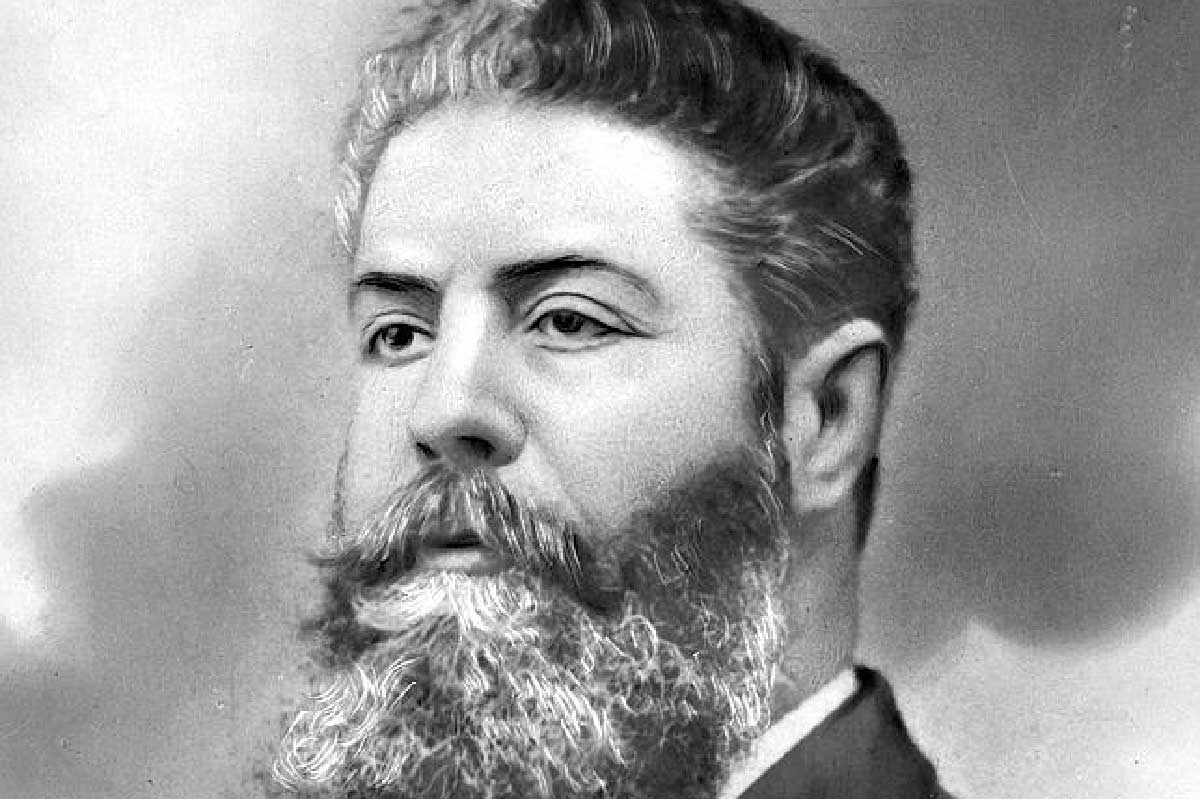
From an early age, Costa stood out for his lectures, articles and essays on various aspects of Spanish society. These established him as a populist, critical and astute intellectual linked to Krausism, a philosophical movement based on the ideas of Karl Krause. The agricultural crisis at the end of the 19th century and the loss of the colonies in the war against the United States in 1898 shook Spain's national consciousness and fueled Costa's attacks on the established order and his search for proposals for change.
Costa advocated the recovery of the agrarian economy and society through Spanish traditions, as well as a policy of economic promotion. He believed this would lay the foundations for rebuilding the country and securing its place among the European powers. Despite his republican convictions, he did not participate actively in politics until the 1890s. From then on, he criticized the dominance of caciques in rural areas, which corrupted elections and distorted the parliamentary system.
Aware that cacique practices affected all the parties of the Restoration regime, Costa channeled his political activity through organizations such as the Ribagorza Taxpayers' League and the Upper Aragon Agricultural Chamber. These institutions merged in 1899 to form the National League of Producers, which then joined Basilio Paraíso's Assembly of Chambers of Commerce in 1900, giving rise to the National Union. However, this regenerationist group proved ineffective, and Costa decided to leave it in 1903.
Costa's criticism of the oligarchic Restoration regime expressed the frustration of Spain's middle classes at the country's poverty and its inability to establish a modern political system. Although he placed his trust in an "iron surgeon" to dismantle caciquismo, his vision anticipated the authoritarian solution that would come with Miguel Primo de Rivera's dictatorship. For this reason, Costa has been linked to the origins of fascist thought. Despite his influence and contributions, Joaquín Costa died in 1911 in Graus without seeing many of his proposals for change in Spain become reality.
WHAT IS AN ANNIVERSARY?
An anniversary is an important date or event that is celebrated or remembered on a particular day of the year. It generally refers to anniversaries of historical events, important discoveries, the birthdays of famous figures, religious dates or commemorations of national events.
Anniversaries can be commemorative, educational or simply informative. Some are of global importance, while others may be more relevant at a local or regional level. Anniversaries are an important way to remember our past and reflect on its significance for the present and the future.


