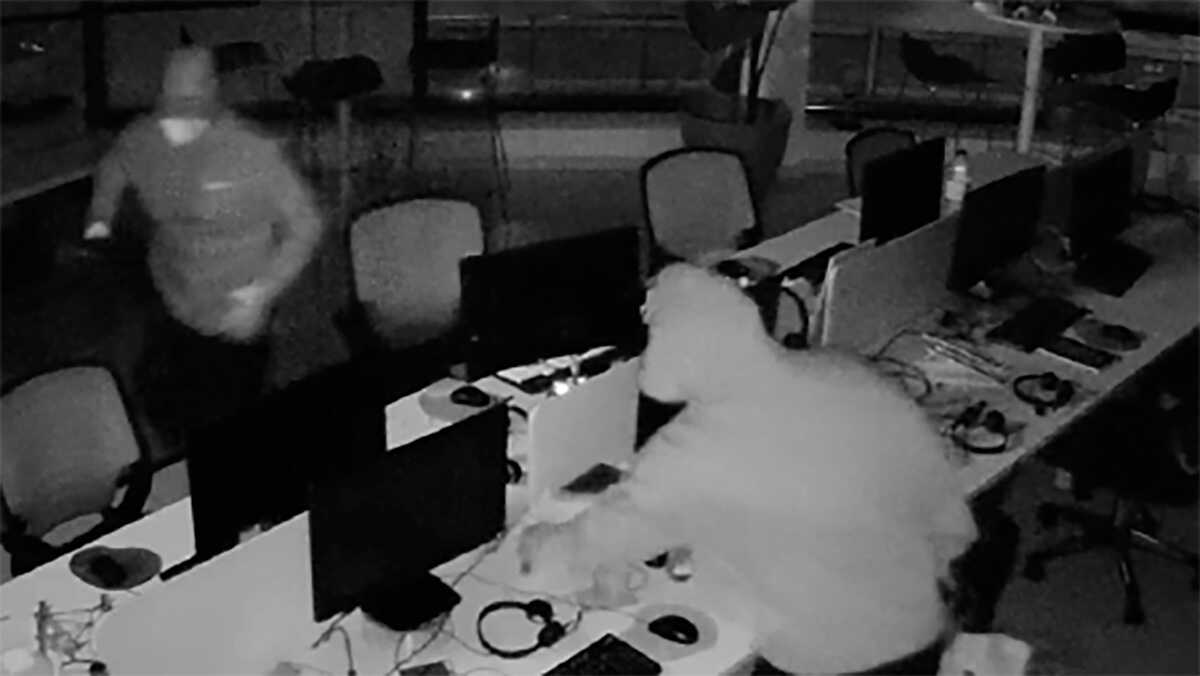
The Guardia Civil and the Mossos d’Esquadra have arrested four men allegedly belonging to a criminal group blamed for 72 burglaries at businesses in Aragon, Catalonia and the Valencian Community. The incidents under investigation include nine break-ins in the province of Huesca and seven in Zaragoza.
Investigators attribute 72 counts of burglary, four document fraud offenses and one offense of belonging to an organized criminal group to the suspects. The stolen goods, mainly mobile phones, computers and tablets, are worth around 700,000 euros.
The burglaries took place between October 2025 and July 2026 at businesses in the provinces of Huesca, Zaragoza, Lleida, Barcelona, Girona, Tarragona and Castellón.
NIGHTTIME BURGLARIES AND RENTAL VEHICLES HIRED USING FALSE IDENTITIES
The investigation identified a common pattern in the different break-ins. According to the Guardia Civil, between three and four people usually took part in each robbery. Two or three of them entered the businesses at night after forcing open the doors, while another member stayed outside acting as a lookout.
They used rental vehicles hired with false identities to travel and completely covered their faces during the robberies in an attempt to avoid identification.
Investigators also highlighted the speed with which they operated and their prior knowledge of the establishments’ access points and vulnerable areas. The group showed a high degree of geographic mobility and intense criminal activity.
The organization also allegedly relied on third parties to quickly dispose of the stolen computer equipment, making it more difficult to locate and recover.
ARRESTS IN BARCELONA AND SANT BOI DE LLOBREGAT
The arrests took place on September 1 in Barcelona and Sant Boi de Llobregat. The four suspects are men aged between 25 and 53, all residents of the province of Barcelona.
The proceedings and the detainees were placed at the disposal of Court of First Instance and Investigation No. 1 in Monzón, which ordered their release subject to precautionary measures.
The investigation was carried out through cooperation mechanisms between the Guardia Civil and the Mossos d’Esquadra because of the group’s high mobility and the commission of crimes in several autonomous communities.


