The protests had been sparked by a fire that destroyed two carriages on September 10 that year, just a few meters from the station building. Although the flames were brought under control, residents feared the incident could have turned into a catastrophe affecting both the building and the town center.
"This time, the fire was brought under control quickly, but it could have been much more serious," Marta Gamero, a spokesperson for the platform, warned at the time. Residents also complained that restoration work had been halted for two years, while the surrounding area continued to accumulate materials they considered dangerous.
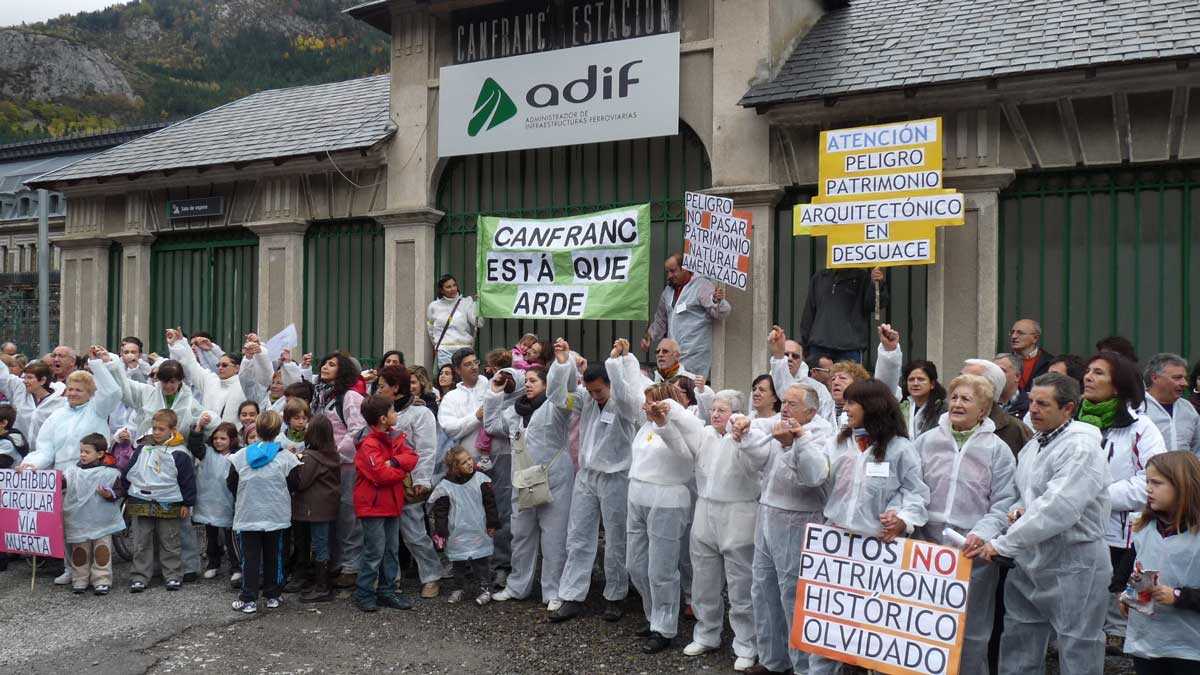
The protest began at noon on the bridge leading to the station. The participants, dressed in white coveralls, formed a human chain at the entrance to the railway complex. After a manifesto was read, the demonstration ended with Canto a la Libertad, by José Antonio Labordeta.
The platform, which emphasized its civic nature and independence from political parties, also organized a petition drive to demand that Adif carry out cleaning and maintenance work.
The then-mayor of Canfranc, Fernando Sánchez, attended the gathering and acknowledged that, although Adif was primarily responsible, the institutions also had to do their part. The town council had already sent a report requesting the cleanup after the fire, but, he explained, it had not received a response.
The human chain and the white coveralls became the defining image of a neighborhood protest demanding safety for one of Canfranc's most recognizable sites. This was how we reported it in Aragón Digital 15 years ago, in the original article about the demonstration demanding the cleanup of the area around the International Railway Station.