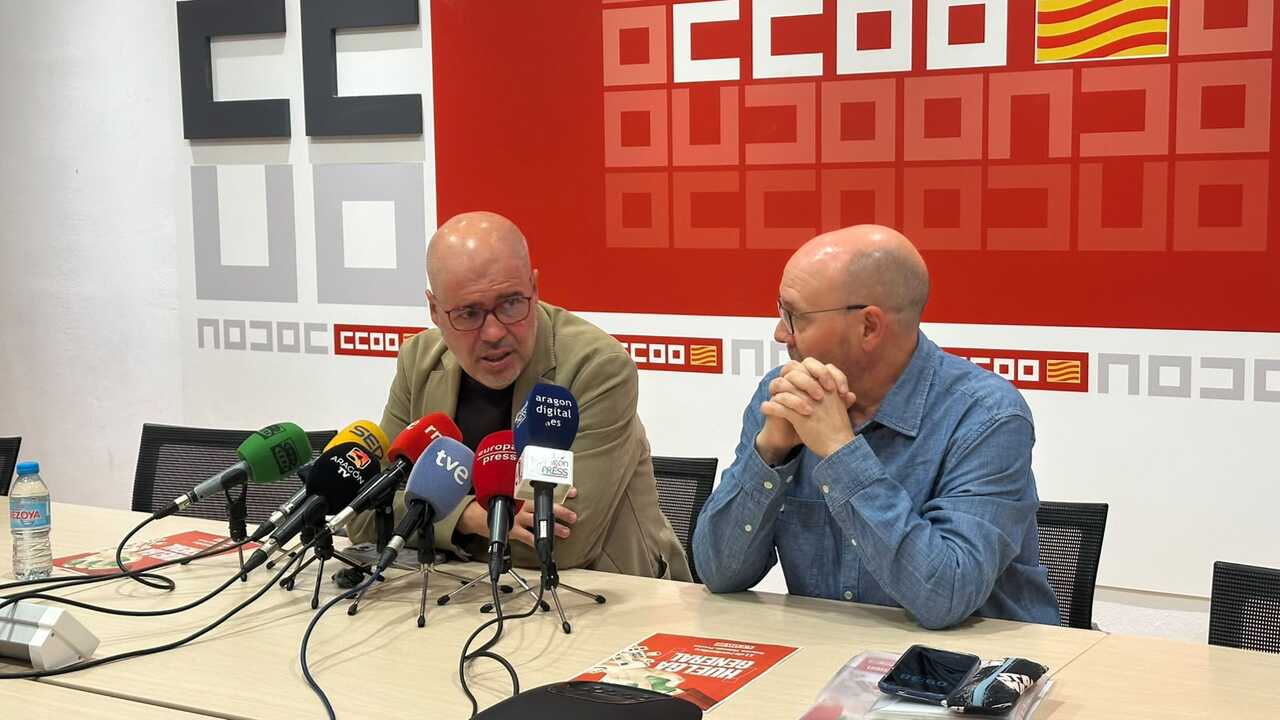
CCOO Aragón has organized meetings at companies and in counties to prepare for the day of action and has announced a joint meeting with UGT for November 9. Manolo Pina explained that Sordo’s visit included a meeting for public employees in Plaza del Pilar, as well as meetings at Máster D and in a residential care facility. The aim was to take the demands to different sectors and also give prominence to care work.
SOCIAL HOUSING AND WAGE INCREASES
Sordo called for at least 1% of GDP to be invested over a decade to promote at least 1.5 million homes at protected prices that would permanently retain that status. The union leader said measures such as limiting rents in stressed areas and preventing abusive increases were necessary, but argued that they must be accompanied by a sufficient stock of public housing. “Access to housing for millions of workers in Spain is the major socioeconomic divide affecting our country,” Sordo said.
The CCOO secretary general also called for wage increases of between 4% and 7% and a 7% increase in the statutory minimum wage. In his view, these demands are compatible with the economic situation of a large proportion of companies. He also warned that families must devote more resources to meeting healthcare, education and long-term care needs because of shortcomings in public services. “We do not need less government; what we need is more government,” Sordo said.
PICKET LINES AND MARCH IN ZARAGOZA
Manolo Pina announced information pickets, morning rallies and afternoon demonstrations for the strike day. In Zaragoza, CCOO and UGT have planned a route between Puerta del Carmen and Plaza de Europa, which was used during previous general strikes. The CCOO Aragón representative also announced rallies in Zaragoza, Huesca and Teruel and explained preparations to extend the calls to other towns, such as Monzón and Calatayud.
Pina regretted that the Zaragoza mobilization would not be a joint one with the Tenants’ Union and other organizations. He explained that attempts to reach agreement on the call had failed and that the media had learned some details before the trade unions. “I think it is a shame that a historic event such as a general strike should not end in a united mobilization,” Pina said, adding that they had seen growing participation in the meetings.
RAILWAY SAFETY AND RESPONSE TO FEIJÓO
Sordo also called for a thorough and transparent investigation into the railway accident, as well as investment to strengthen infrastructure and safety systems. The CCOO secretary general rejected focusing the explanations solely on a possible human error and called for all the causes to be clarified before technical and political responsibilities are determined. He also recalled the union’s demands for improvements to the railway over many years and did not rule out further mobilizations.
The union leader rejected Alberto Núñez Feijóo’s criticism of the call and argued that its demands address business leaders and all administrations with relevant powers. “No one has said that this strike is being called against the opposition,” Sordo stressed. In this regard, he maintained that decisions by Congress, the autonomous communities and town halls on housing and labor rights could also be the subject of trade-union protests.