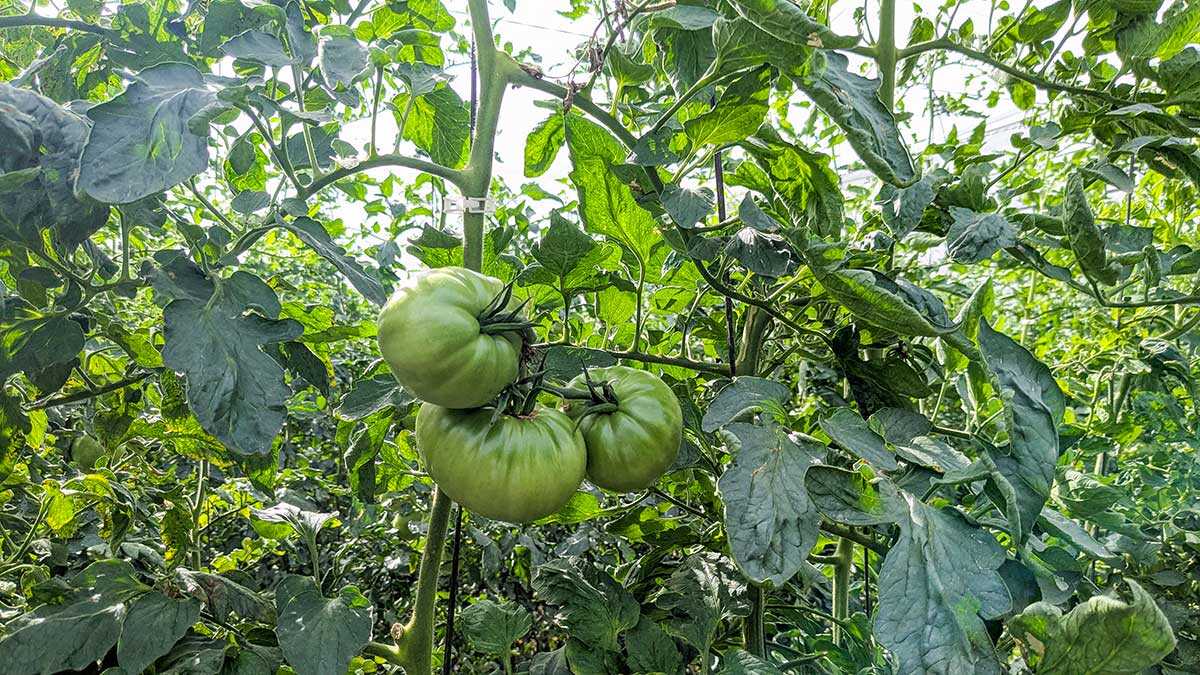
The multiple heatwaves that have hit this summer have harmed the development of the tomato plants. The company expects its production to fall by between 25% and 30% compared with previous seasons. Despite this decline, Frías is confident they will maintain good quality and estimates a yield of around 90,000 kilos per hectare.
The lack of rainfall also characterized this summer’s weather in Aragón. However, it has not caused any problems in this case, as the company has irrigation. “For tomatoes, rain in summer is often worse than better,” Frías explains, due to the risk of disease and other problems caused by humidity.
The production of this crop is “at a crossroads,” the producer said, explaining that output falls every year, prices remain the same and, above all, production costs are higher. Frías regrets that rising costs affect everything: fertilizers, labor, taxes and fuel.
12 YEARS GROWING BARBASTRO PINK TOMATOES
Terra Agronómica has around 22 hectares of pink tomatoes in Barbastro, where it began operating 12 years ago, and complements its production with another 50 hectares in Almería, where it started just three years ago. Between the two locations, it has two production centers and two packing facilities, employing more than 400 people.
This dual-location setup allows the company to maintain supplies throughout the year by overlapping the seasons in both areas. According to Frías, the same plant material is used in both territories to preserve the product’s characteristics. “We want it to have the same flavor and the same texture,” the owner said.
Terra Agronómica has plantations in both Barbastro and Almería, allowing it to maintain pink tomato production throughout the year. Photo: Diego Sanz
These two plantations have grown especially over the past three years, thanks to the commercial relationship with Mercadona, Terra Agronómica’s main customer, which accounts for approximately 85% to 90% of the company’s production and guarantees the supermarket chain a supply of pink tomatoes 365 days a year.
The company has also begun diversifying its operations with the Mundo Manzana sweet onion. It has revived this native Barbastro product, which is grown outdoors alongside the tomatoes. Production is still limited, although it is being well received in the local market.
Both products stand out for their quality. Regarding the pink tomato, firmness and flavor are, in Diego Frías’s view, two of the main features that distinguish it from other varieties intended for eating. The Mundo Manzana onion, meanwhile, stands out for its “fleshy texture” and its flavors.


