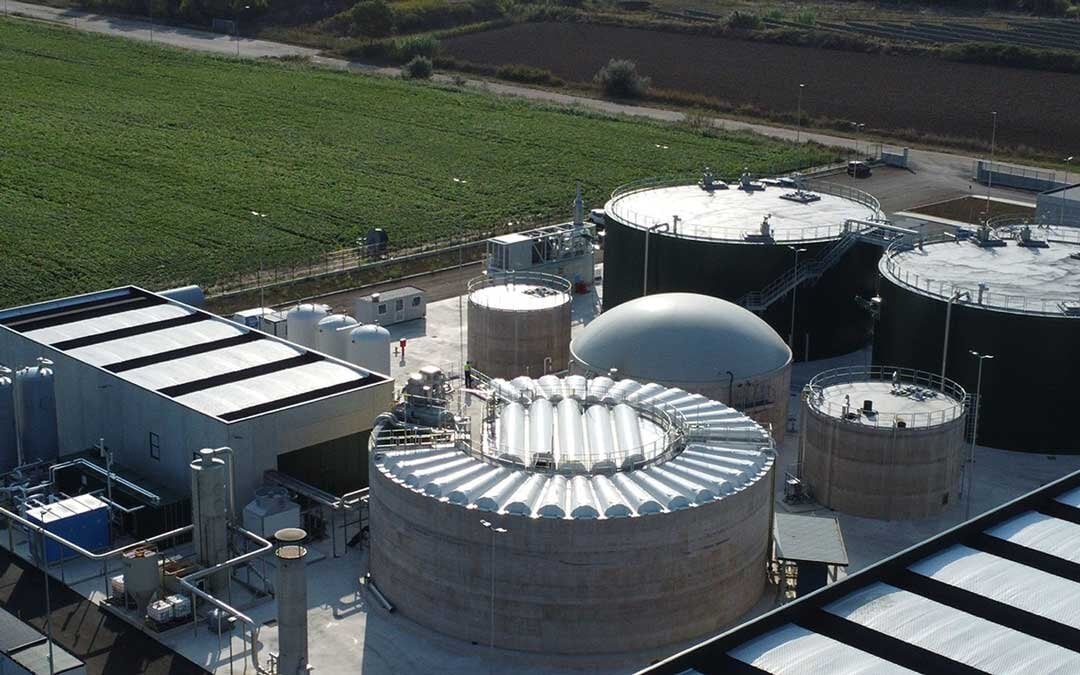
The three plants will have a combined capacity to process 537,000 tonnes of organic waste annually. The project involves a total investment of 58.7 million euros and will enable the development of three facilities for recovering waste generated mainly by livestock farming and the agri-food industry.
The facilities will produce biomethane, a renewable gas fully compatible with existing natural gas infrastructure. They are being promoted by BDP Bioenergy VIII S.L., BDP Bioenergy IX S.L. and BDP Bioenergy XII S.L., companies belonging to the ABEI Energy business group.
A 58.7 MILLION-EURO INVESTMENT ACROSS ARAGON'S THREE PROVINCES
The facilities will be located in Caspe, La Puebla de Hijar and Fraga and will represent a combined investment of 58.72 million euros. Of this amount, 19.99 million euros will go to the Caspe plant, 19.02 million euros to the La Puebla de Hijar plant and 19.70 million euros to the Fraga plant.
Nearly 90% of the investment will be carried out between 2026 and 2028. The Caspe plant is expected to begin operating in June 2028, the La Puebla de Hijar plant in August 2028 and the Fraga plant in October 2028.
Around 180 direct jobs are expected to be created during the construction phase, while 48 permanent positions will be generated once the plants are operational. These will be joined by around 90 indirect jobs linked to auxiliary activities such as transport, maintenance, logistics and specialized services.
Overall, the studies included in the application estimate that the initiative could generate a total impact of up to 462 jobs, including direct, indirect and induced employment, during the construction and operational phases.


