The aim is to move away from a model in which each company operates independently and toward a common structure that makes better use of all their capabilities. The event was closed by the councillor for the Economy, Competitiveness and Employment, Eva Valle, who highlighted the role of these companies in making Aragón “more competitive, more productive and more attractive for investment, growth and job creation”.
Valle stressed that public companies “are instruments serving Aragón’s economic and social development”. To achieve these objectives, she identified three principles that should guide their work: “Efficiency; coordination and an overall vision; and good governance”.
FROM A COLLECTION OF COMPANIES TO A BUSINESS GROUP
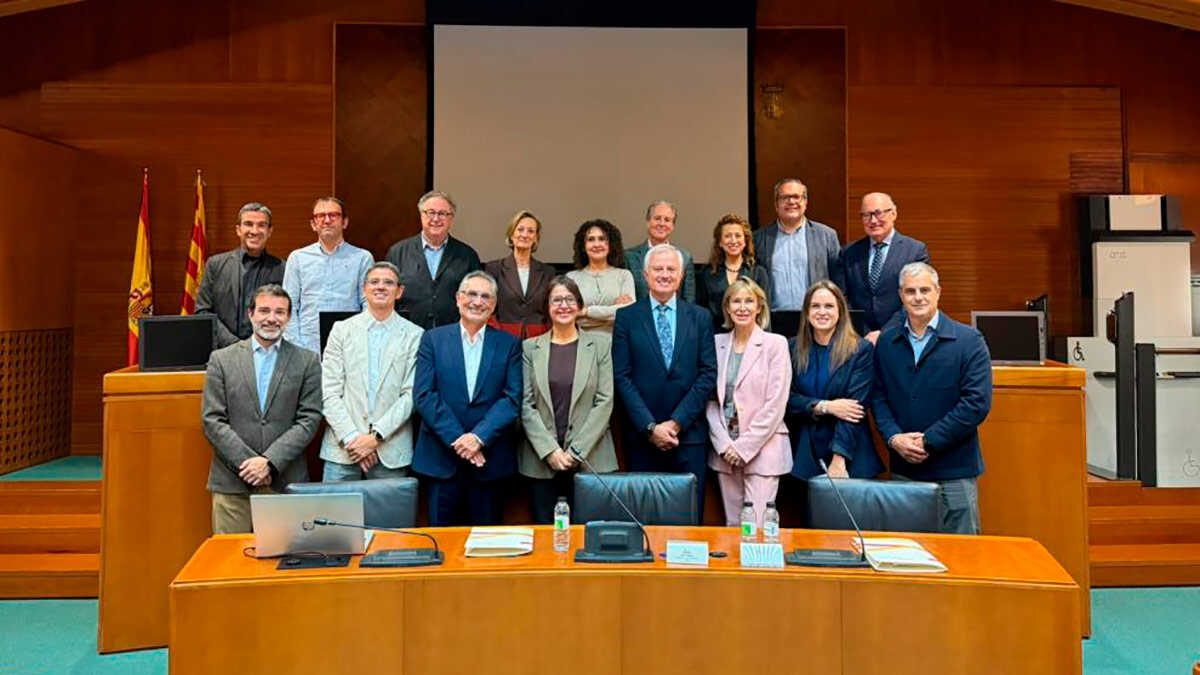
The convention, opened by the president of the Parliament of Aragón, María Navarro, brought together executives from Aragón Plataforma Logística, Aragón Exterior, Aragersa, CEEI Aragón, Motorland Aragón, Expo Zaragoza Empresarial, Parque Tecnológico del Motor, Parque Tecnológico Walqa, Promoción de Actividades Aeroportuarias, Sarga, Sodecasa, Sodiar, Suelo y Vivienda de Aragón, Turismo de Aragón and Aragón Cultura y Deporte, the latest company to join. The Corporation itself also took part as the umbrella organization.
During his speech, Suárez explained that the new strategic plan would seek to “move beyond a dynamic in which each company operates independently and advance toward an organization that makes use of the capabilities, knowledge and resources of all its companies”.
The proposal seeks to move “from a collection of companies to a genuine business group”. As the CEO clarified, this transformation is not intended to reduce the companies’ autonomy or alter their responsibilities, but to provide them with more tools and opportunities through a shared strategy.
"We do not want public companies that work alongside one another. We want public companies that work together," Eloy Suárez insisted, positioning this idea among the pillars of CEPA’s new direction.
This change in corporate culture will translate into greater coordination, the use of synergies and the reduction of duplication. It will also make it possible to share services, information systems, knowledge and professional capabilities, as well as strengthen joint negotiating power and improve the response to new economic and technological challenges.
SPENDING CONTROL, ARTIFICIAL INTELLIGENCE AND EVALUATION
Another central issue at the meeting was CEPA’s contribution to the Autonomous Community’s financial sustainability. In this area, Suárez stressed that “the Corporation wants to strengthen its role in the efficient use of public resources and contribute to controlling the regional deficit”.
To achieve this, he deemed it essential to review management processes, avoid unnecessary spending, make use of available resources and assess the return on initiatives. However, he qualified this by saying that “the new direction is not intended merely to reduce costs. It seeks to achieve better results with existing resources. Efficiency must become a cross-cutting requirement for all the companies, without undermining the fulfillment of their functions or the quality of the services they provide”.
Along these lines, the CEO advocated implementing a genuine “culture of evaluation”. As he announced, “it will not be enough to know how much is invested or spent; it will also be necessary to measure the results achieved, how many jobs are created, what economic activity is generated, what territorial return investments produce and what their social impact is”.
Digital transformation and, in particular, artificial intelligence will also play a prominent role in this process. CEPA wants to use these technologies to change the organization of work, streamline procedures, improve information and facilitate decision-making.
To this end, the Corporation will promote a common data and artificial intelligence agenda to prevent each company from having to develop separately solutions that could be shared. Professional training, information security and human oversight will be essential elements of this process.
Finally, the convention examined the legal possibilities for collaboration between the different public companies through cooperation agreements. These agreements will make it possible to “share capabilities, resources and knowledge, as well as carry out joint initiatives with greater agility and legal certainty”. The Corporation thus seeks to make better use of public resources and prevent organizational differences from becoming obstacles to cooperation.