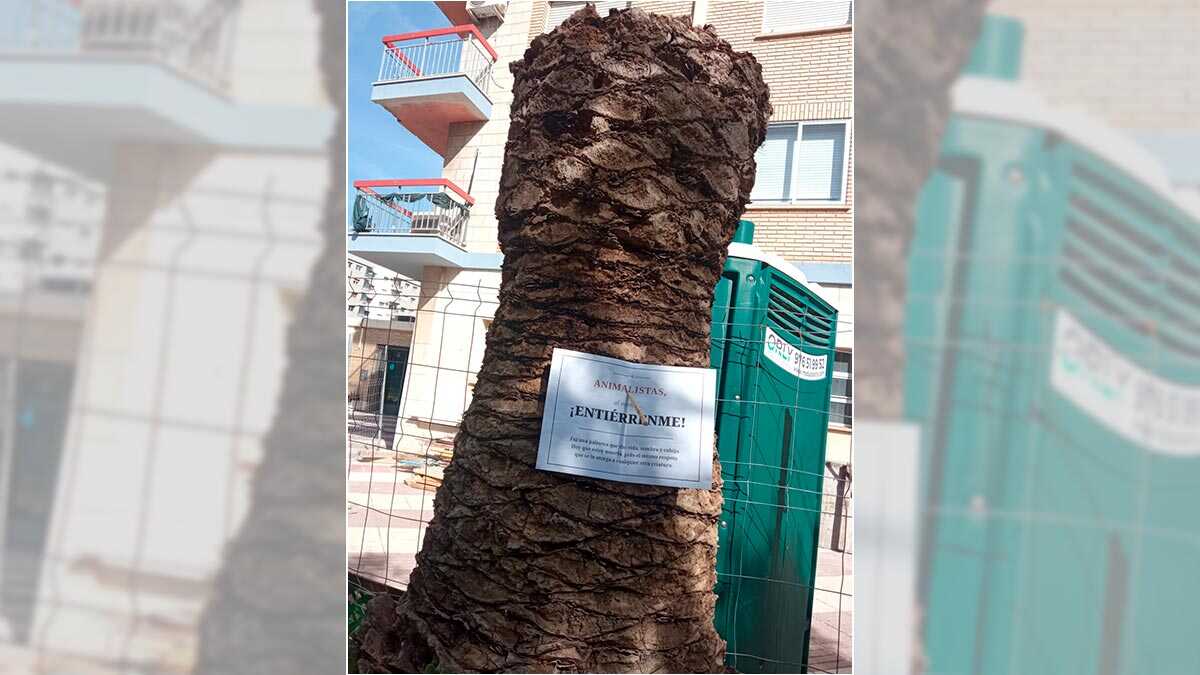
The tree has been in this condition for at least two years, without the trunk being removed, according to some local residents. The situation also coincides with the presence of construction materials which, according to the complaint, are contributing to the deterioration of an area described as leafy and healthy.
The request for its removal also focuses on the palm tree standing next to it, whose condition residents want inspected to determine whether it may be affected by the same pest. The complaint thus highlights the need to act on the dead tree and prevent the problem from spreading to other nearby trees.
ZARAGOZA CITY COUNCIL CANNOT ACT IF IT IS PRIVATE PROPERTY
Zaragoza City Council points out that, since the palm tree is located within a residential community, “it is the owners’ responsibility to remove it.” The council therefore distinguishes between trees located in public spaces, whose maintenance and protection fall to municipal services, and those standing on private land.
The area has several palm trees, some of them still with leaves | Photo: Google Maps
In recent years, the city’s palm trees have been affected by the red palm weevil, a particularly harmful insect that can kill them. In 2023, the pest forced the felling of five palm trees, among others, in José Antonio Labordeta Grande Park, around the Neptune Fountain, after the various treatments applied by municipal technicians failed to save them. The trees had also lost their apical meristem, the part that enables the plant to grow.
Municipal sources also stress that the fight against this pest does not depend solely on municipal action. In some cases, a lack of preventive measures by the owners of palm trees in private communities can help the red palm weevil spread to other nearby trees. For this reason, they emphasize the importance of private owners also becoming involved in detecting and preventing this threat.