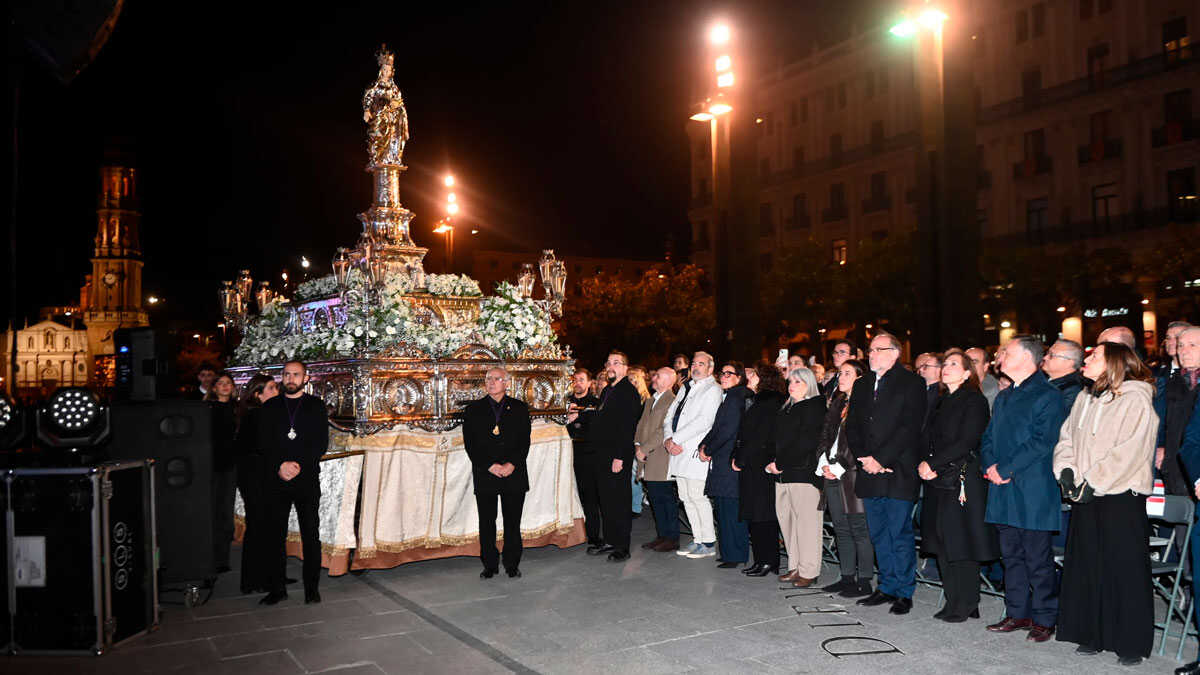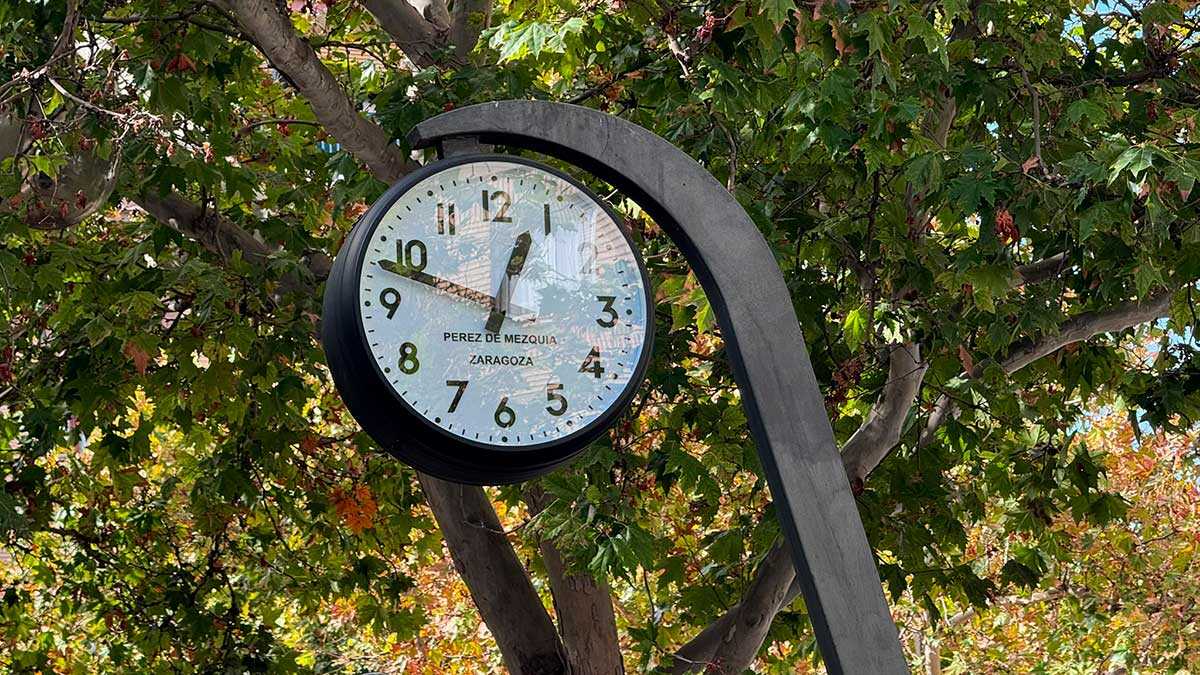
The time change will be possible thanks to the modernization of its mechanism, refurbished at the workshop of the historic Pérez de Mezquía clockmaker’s shop. Zaragoza City Council used the intervention to adapt this 1975 landmark to current technology and make maintenance easier. "We have adapted the technology so that the clock now operates with GPS and the latest technology," Mayor Natalia Chueca explained during its installation.
Its return also carries sentimental value for the neighborhood. For more than a decade, the clock remained stopped despite residents’ demands, as they had incorporated it into their daily routine in the square. It is now telling the time again, but with one important difference from its previous period: its hands will no longer need to be adjusted manually when the time changes.
A 1970S CLOCK READY FOR THE FUTURE
In the early hours of this Sunday, clocks will have to be set back one hour: when it is 3:00 a.m., it will become 2:00 a.m. in mainland Spain. The Canteras clock is ready to adapt automatically to the change thanks to its GPS system, an improvement designed to keep it showing the exact time without relying on manual adjustments.
The overhaul also addressed other problems that had affected the installation. Its electrical supply and support structure were renewed, a backup battery was added to prevent it from stopping during a power outage, and LED lighting was installed so the time can also be read at night.
The project involved a municipal investment of 10,769 euros. After being removed this summer and taken to the Pérez de Mezquía workshop, the clock returned this past Thursday to the square where it was installed in 1975.