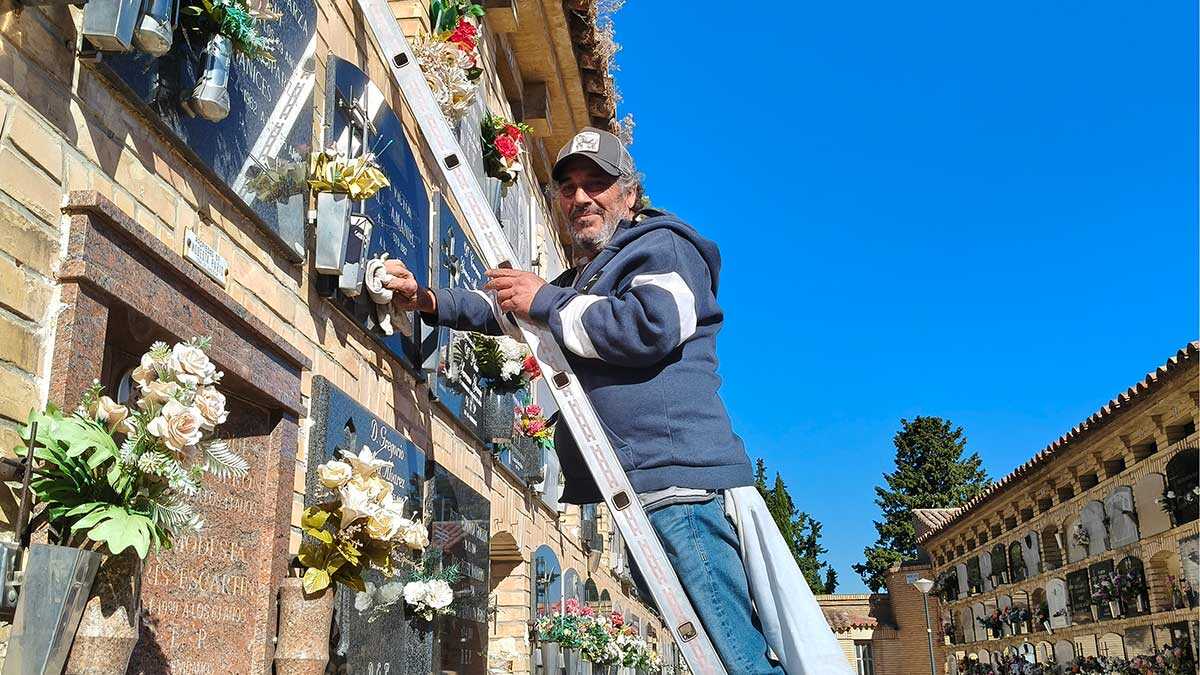
"I have been here for 40 years, but fewer and fewer people come. I do not know what is happening. The older generation is passing away, and when they are gone, young people do not come here," he laments. It is a reality he observes especially on November 1, when he expects to find the cemetery full of families and memories. However, there are corners where the scene is very different.
THE NAMES THAT ARE GRADUALLY BEING LEFT BEHIND
"This place should be full of people today, but there is nobody here. Nobody," he repeats from one of the cemetery's oldest areas, just a few meters from the current entrance to the grounds. Miguel explains that visits tend to focus on the most recent niches, while those holding the remains of people who died longer ago receive less and less attention. "A lot of people visit the newer ones, but not this area. These are people who died longer ago, and since they did not know them, they do not come to see them," he says.
Sometimes, even those who come have difficulty finding where their relatives are buried. "Some arrive with a piece of paper showing the niche number, and they do not even know where it is," he says. He also warns that some niches eventually lose their family connection to the point that the remains are removed when no one looks after them or pays for their upkeep.
Ultimately, these are many years spent watching generations go by, families return every November and names gradually stop receiving visitors. Miguel continues climbing his ladder, cleaning tombstones and placing flowers wherever he is asked. However, this All Saints' Day he once again finds himself facing an image that is difficult for him to accept: places where almost no one stops anymore to remember.