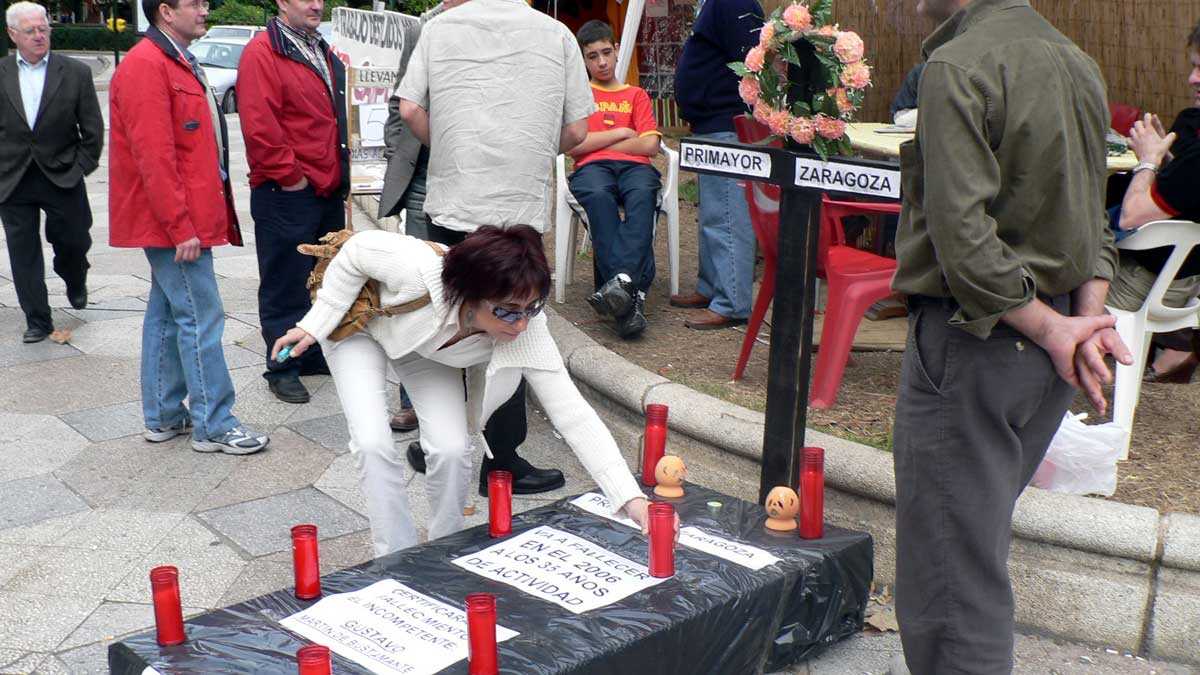
The protest combined the symbolism of the day with their labor demands. "It will die because of the business owners we have," Luis Bordanada, treasurer of the Works Council, said at the time. The employees also used the date to mark their 50 days camping out in an unusual way: they shared a cake and blew out 50 candles.
Far from considering ending the camp, the workers warned that they would continue their protest while the company’s future was being decided. At the time, they were awaiting the end of the negotiation period, scheduled for November 10, followed by a 15-day period to decide whether to approve the employment regulation file (ERE).
One of the main sources of discontent was the lack of institutional support they claimed to be receiving. The employees criticized the Government of Aragon for still not having met with the Works Council in full. Despite the uncertainty, their main demand was to preserve their jobs. The workers’ representatives hoped that another company could take over the business with financial support from the regional government. "We want to know whether we will keep working," the council treasurer insisted.
The coffin, flowers and 50 candles became the symbols of a protest for Primayor’s survival on that All Saints’ Day. That was how Aragón Digital reported the story 20 years ago, when its workers had been camping in Zaragoza for nearly two months to defend their jobs.