The key lies in a site in Galve that was already interpreted in 2015 as a genuine “dinosaur nursery.” Nearly 1,500 fossils from hatchlings less than one meter long were recovered there, including around 250 cranial remains. Finding dinosaur skull bones is already unusual, but the fact that they belonged to such young specimens makes the Teruel assemblage especially exceptional.
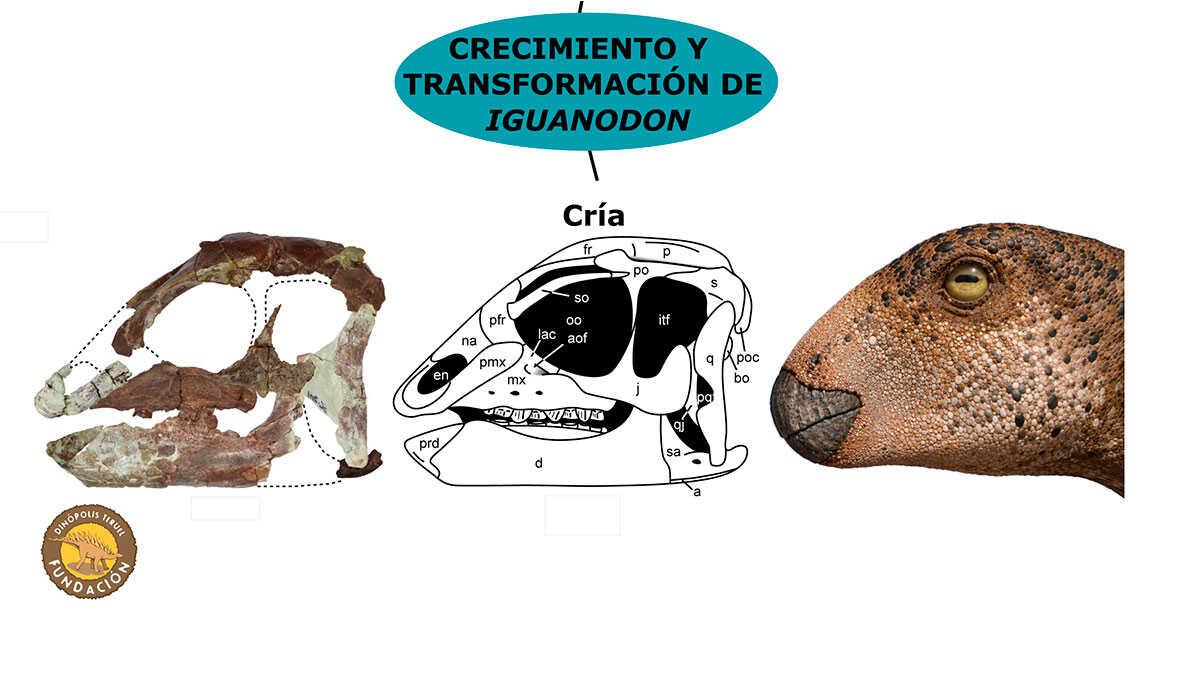
Comparison of some of the skull fossils from hatchling and adult Iguanodon galvensis specimens.
Thanks to these fossils and their comparison with juvenile and adult specimens found elsewhere in Galve and in Belgium, the researchers have been able to track the animal’s transformation as it grew. The study shows that the Iguanodon skull changed significantly, becoming more elongated during development. It also reveals that some features traditionally used to distinguish species could vary among individuals of the same species.
CLUES HIDDEN IN THEIR DENTITION
The teeth of these small hatchlings have also provided clues about their first months of life. Although they had barely begun to grow, they already had a complex chewing system prepared to process plants. In some specimens, the absence of replacement teeth shows that they died before completing their first dental replacement, placing their age below 200 days.
Iguanodon galvensis lived in what is now Teruel between 125 and 123 million years ago. It was herbivorous, had a horny beak, a characteristic thumb spike, and could walk both on all fours and occasionally on two legs.