This category recognizes teams of archaeologists or paleontologists that, in 2025/2026 and with the support of academic institutions or private companies, made a fundamental discovery that marked a turning point in knowledge of culture or civilization in Spain.
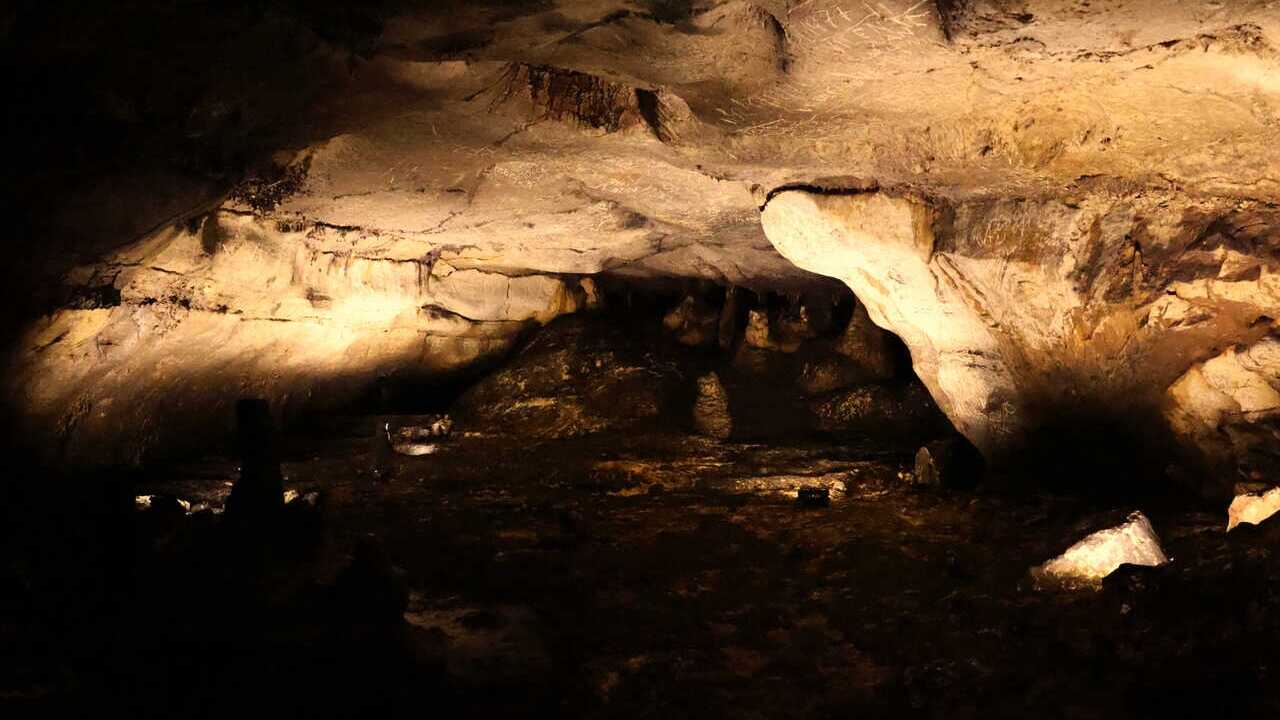
Specifically, Cova Dones contains one of the most important collections of prehistoric rock art on the Iberian Peninsula’s Mediterranean coast. Research led by Aitor Ruiz-Redondo, of the Institute for Research in Environmental Sciences of Aragon at the University of Zaragoza, and Virginia Barciela, of the University Institute of Archaeology and Historical Heritage at the University of Alicante, revealed in 2025 the existence of a 1st-century AD Roman sanctuary inside the cave.
The sanctuary was located in a difficult-to-access chamber more than 200 meters from the entrance, where around 15 Latin inscriptions and a coin from the reign of Emperor Claudius (1st century AD), deposited as an offering, were documented.
In addition, the latest archaeological campaign, carried out in May and June 2026, documented at least 120 Latin inscriptions, most of them dating from the 1st and 2nd centuries AD, compared with the 15 or so known until then. This discovery could establish Cova Dones as the cave sanctuary with the largest number of known Latin inscriptions in both Hispania and the Roman Empire.
The research team also notes that this new evidence provides important information about the presence of women and their active participation in the worship carried out at the underground sanctuary. A group of five votive inscriptions confirms that a goddess was worshipped in the cave during Roman times, reverentially referred to as Domina, “the Lady.” Three of these inscriptions bear the name “Malaci,” an unprecedented epithet for a female deity previously unknown. The team is currently working on the definitive interpretation of this epithet, which could be related to water.
The research, conducted by teams from the University of Alicante, Unizar and other scientific institutions, combines archaeological surveying, three-dimensional documentation and epigraphic analysis to study both the inscriptions and the context in which they were created.


