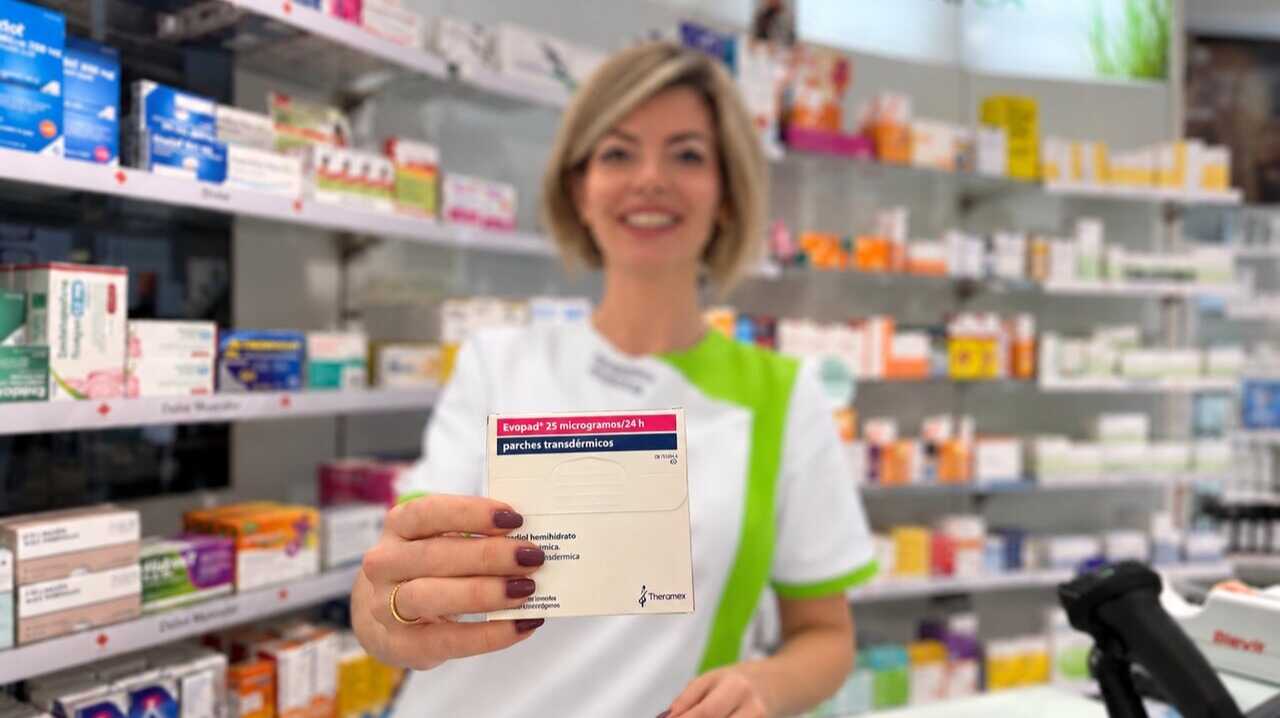
“In Aragon, Evopad was still available last week, and we could find the 75- and 100-milligram versions. As of today, only the 100-milligram version is available, and distributors have very few units left,” Roig says. Lenzetto has also been affected, and according to her, it has been experiencing supply problems for even longer.
The pharmacist links this increase in demand to a change in the way menopause is addressed. “Menopause has become more visible,” she explains. Many women now identify their symptoms more easily and visit their doctor seeking treatment, something that happened less frequently in the past.
Clinical guidelines and perceptions of these types of therapies have also changed. “Very little was prescribed before, whereas now more is being prescribed because these medicines have been shown to be safe,” Roig says, noting that for years there was concern that hormone treatments could increase the risk of cancer.
THERE ARE ALTERNATIVES, BUT A DOCTOR MUST ASSESS THEM
The shortage does not mean that patients will be left without treatment. Other options are available, although at present they are mainly taken orally and require a new prescription.
“What we do at the pharmacy is reassure the patient and tell her that this does not mean she has no treatment options,” Roig explains. In these cases, the patient must see her doctor, who will assess her clinical situation and decide whether to replace the transdermal treatment with an oral one.
The representative of the College of Pharmacists stresses that the change must be made on an individual basis, since the dosage and type of treatment depend on each patient’s medical history.