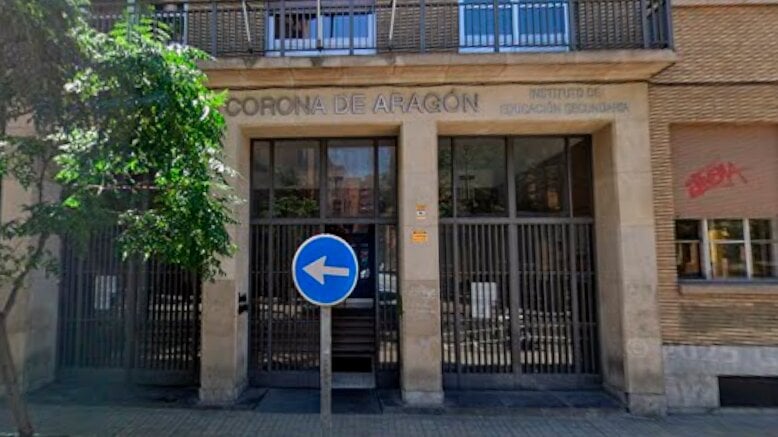
According to the school, it has “a long history of welcoming students from different countries.” To support their learning, integration and participation in school life, IES Corona de Aragón had a Spanish-language classroom, a resource the school considers “essential.” However, it denounces that this resource “is no longer being guaranteed within the necessary timeframes.”
They explained that last academic year the classroom did not open until January, while this year, with 16 students meeting the requirements, they have criticized the fact that “we still do not have access to it.” Some of the students who need this resource, they point out, are even “not literate in their native language.”
AN “INSUFFICIENT” NUMBER OF HOURS
Corona de Aragón has also criticized the number of hours allocated to the service: nine hours of Spanish-language classes per school each week, “regardless of whether needs are much greater.” For the school, “it is clear that nine hours are not enough to adequately support 33 students, much less 50.”
Nor do they consider it “acceptable” for the solution to depend on using resources from other educational programs. “Our school gave up PROA+ years ago because it was incompatible with Aúna, when language support was guaranteed through a specific resource,” they lamented, stressing that the Spanish-language classroom “must have its own funding and staffing, without forcing schools to choose between different educational needs.”
For IES Corona de Aragón, a lack of knowledge of the language “cannot become a barrier to exercising the right to education,” as it makes it difficult for students to understand explanations, follow classes, interact with classmates and adapt to the school. “Meanwhile, teachers are making an enormous effort to adapt materials and teaching methods, but inclusion cannot rest solely on the willingness and excessive workload of those working in classrooms,” they said.
THEIR DEMANDS
For this reason, the school is calling on the public administration to open the Spanish-language classroom “immediately,” with provisional measures until the necessary teachers are brought in. They are also requesting an allocation of weekly hours, reviewing the current nine-hour limit to bring it in line with students’ actual needs.
Finally, the school is asking for its demands to be answered in an "urgent and concrete” manner, with deadlines and the measures to be adopted clearly established. It also wants the resource to receive specific funding from now on to ensure its stability without jeopardizing other programs. “We are not asking for privileges. We demand resources to guarantee rights,” they concluded.