Whether homemade or prepared in a pastry shop, Huesos de Santo, panellets, buñuelos and other desserts help sweeten the memories of families who have lost a loved one. These are five traditional All Saints’ Day desserts:
HUESOS DE SANTO: AN ICONIC SWEET
One of the most iconic and traditional desserts associated with All Saints’ Day is Huesos de Santo, or “saints’ bones.” This sweet is made with a marzipan base, a mixture made from almonds, which is shaped into a rounded, elongated form resembling a bone. The center is filled with egg-yolk cream, giving it a delicious flavor and a soft texture.
This sweet is made with a marzipan base, a mixture made from almonds, which is shaped into a rounded, elongated form resembling a bone. Photo: La Almolda
Huesos de Santo are a true delight for lovers of traditional flavors. They can easily be found in markets, bakeries and pastry shops during All Saints’ Day, including at the La Almolda pastry shop in Zaragoza. You can also make them at home using traditional recipes passed down from generation to generation.
BUÑUELOS: A CLASSIC FOR EVERY CELEBRATION
Buñuelos are another classic of Spanish pastry-making that cannot be missing from All Saints’ Day. Although they are more commonly associated with Holy Week, they can also be found at pastry shops such as Fantoba during this celebration. These delicious treats are made with a light, fluffy fried dough and can be filled with different flavors, such as whipped cream, truffle cream or custard.
Although they are more commonly associated with Holy Week, they can also be found at pastry shops such as Fantoba during this celebration
Buñuelos are a perfect option for sweetening an All Saints’ Day celebration. They can be enjoyed as a dessert or as part of a special afternoon snack with loved ones. If you want to try something different, you can also make them at home using homemade recipes.
ROASTED CHESTNUTS: A TASTE OF AUTUMN
All Saints’ Day also coincides with chestnut season, making roasted chestnuts another classic of the celebration. This fruit is at its peak at this time of year, and enjoying hot roasted chestnuts is a highly recommended option for dessert or a comforting afternoon snack.
All Saints’ Day also coincides with chestnut season, making roasted chestnuts another classic of the celebration
To enjoy roasted chestnuts, simply cut slits into their shells, place them on a tray and roast them in the oven or on a grill until tender and golden. You can serve them with a little salt or enjoy them as they are. They are a true taste of autumn!
PESTIÑOS, THE PERFECT SWEET FOR EVERY CELEBRATION
Pestiños are another traditional sweet eaten during various religious celebrations, including All Saints’ Day. These treats consist of dough made with flour, fried in olive oil and then coated in honey. The result is a bite that is crisp on the outside and tender on the inside, with a sweet and delicious flavor.
These treats consist of dough made with flour, fried in olive oil and then coated in honey
Pestiños are especially popular in Andalusia, where they can be found in pastry shops and bakeries during All Saints’ Day. You can also prepare them at home by following traditional recipes, allowing you to enjoy this typical sweet at any time of year.
PANELLETS, A CATALAN CLASSIC
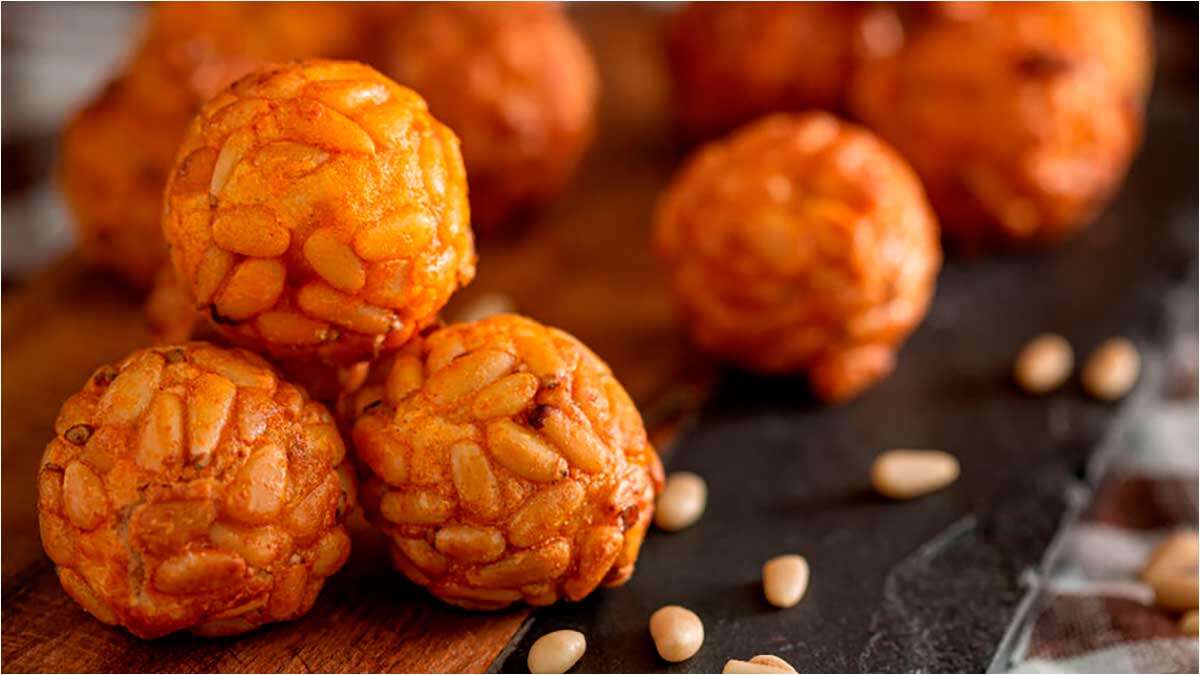
Panellets are one of Catalonia’s most iconic desserts and are also eaten during All Saints’ Day. These sweets are made with sugar, ground almonds, sweet potato or boiled potato, and grated lemon zest. They can be combined with other ingredients, such as pine nuts, coconut, chocolate or coffee, to create different varieties of panellets.
These sweets are made with sugar, ground almonds, sweet potato or boiled potato, and grated lemon zest. Photo: Fontoba Pastry Shop
Panellets are a true delight for the palate and an example of Catalonia’s rich culinary tradition. They can be found at specialty pastry shops during All Saints’ Day, but you can also make them at home and enjoy their unique and delicious flavor.
In addition to the desserts mentioned above, other delicacies and culinary traditions are associated with All Saints’ Day in different regions of Spain. For example, in some places it is common to enjoy quince paste accompanied by nuts such as walnuts or chestnuts. Other specialties include arrope and calabazate, gachas, tostones and original Halloween cookies. Each region has its own customs and recipes, making this celebration a unique culinary experience.
Each region has its own customs and recipes, making this celebration a unique culinary experience. Photo: Fantoba Pastry Shop
All Saints’ Day is a religious celebration that is also closely linked to gastronomy. During the festivities, people can enjoy a variety of traditional desserts that represent Spain’s rich culinary culture. From the iconic Huesos de Santo to delicious buñuelos, roasted chestnuts, pestiños and panellets, each sweet has its own charm and unique flavor. Whether enjoyed at a pastry shop, at home or in the company of loved ones, these desserts evoke the traditions and flavors of this very special celebration.