“Curis” accounts are one of the latest trends young people have created on social media, especially TikTok. These “anonymous” accounts cross the line from jokes and often promote bullying and cyberbullying. The profiles take the name of the school, followed by the word “curis”, and are run by one or more of its students. The “trend” has already reached numerous schools in Aragon.
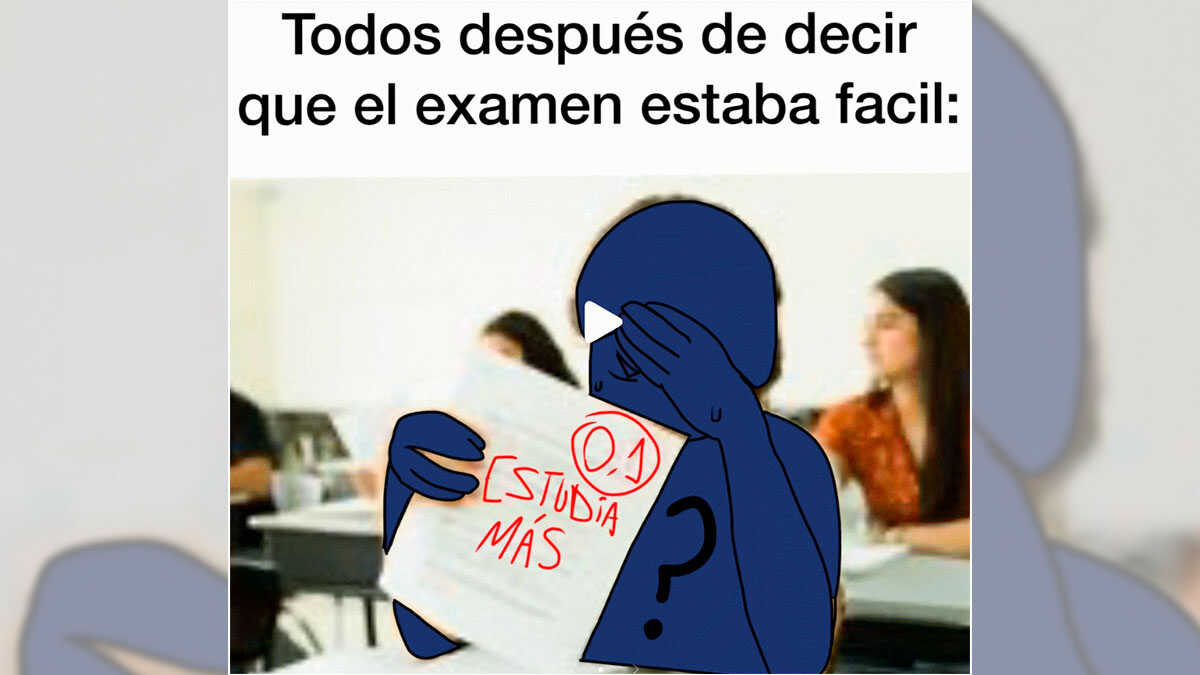
Posts presented as cartoons, drawings or memes depict everyday situations students experience in class. Some are harmless, such as making a “meme” about the “terrible” grades they received on an exam that seemed easy, the commotion in class when the teacher leaves, or how students hope break time will arrive so they can “smoke”.
However, other posts take on a more serious tone, including those that name teachers and mock a situation, their personality or the way they teach. Students are also targeted with “memes” that humiliate or ridicule them through “jokes” about their appearance or rumors, crossing the line into bullying.
GREATER “VISIBILITY” OF BULLYING
But… why has this type of bullying become so popular? For psychologist Diego del Castillo, it is nothing new because the “caricaturing” of teachers and students has always existed. “As social animals, we tend to seek out, connect with and bond with our peers, and sometimes the way I bond more closely with someone is by distancing myself from others. In other words, if the two of us pick on someone, you and I become accomplices and have a stronger connection,” Del Castillo says.
The psychologist explains that, to feel part of “a group”, it is common to “single out the person who is different”. This phenomenon tends to occur during adolescence, when individual and social identities “are so important”.
The distinguishing factor, the specialist explains, is the “visibility” this bullying acquires when it is reflected on social media. “That situation is uploaded to social media, everyone sees it, and the person affected sees it both at school and at home, with a much wider reach,” he emphasizes. As a result, the victim not only experiences bullying at school, but is also pursued in safe spaces such as the home should be.
Public exposure can have consequences that go far beyond the mockery itself. Diego explains that, when a minor feels they have “been exposed to the world” and receives hateful or ridiculing comments, it can affect the way they relate to others, their self-image and their confidence in opening up to other people. He also recalls that children and adolescents still have a limited capacity for emotional regulation, which increases their vulnerability in these situations.
The impact can also carry over into everyday life and academic performance. “The brain is so emotionally overwhelmed that it cannot think clearly, cannot remember things properly or concentrate on studying,” the psychologist says. Social isolation and the development of a negative self-concept can also follow, ultimately affecting different areas of a minor’s life.
THE ACCOUNTS CAN LEAD TO CRIMINAL OFFENSES
The National Police has focused on these anonymous accounts, which in the most serious cases can lead to criminal and civil liability. Specifically, the police distinguish between humorous content that is not offensive and content used to single out or humiliate a specific person. Depending on the seriousness and circumstances of each case, such conduct may constitute offenses against moral integrity or serious insults, in addition to giving rise to civil liability.
Officers also stress another key point: posting from an anonymous account does not protect people from potential liability. Nor is it enough to present the content as a joke or use drawings instead of photographs, since what is analyzed is the content shared and the harm it may have caused.
If a student, teacher or school employee appears on one of these accounts, the recommendation is first to preserve all evidence, including screenshots of posts, comments, dates, profiles and links, while avoiding forwarding the content so as not to give it greater exposure. It is then advisable to report it to the social media platform and block those harassing the person affected. In the case of minors, it is important to inform a trusted adult and the school, and both families and those affected can go to the National Police to report the events.