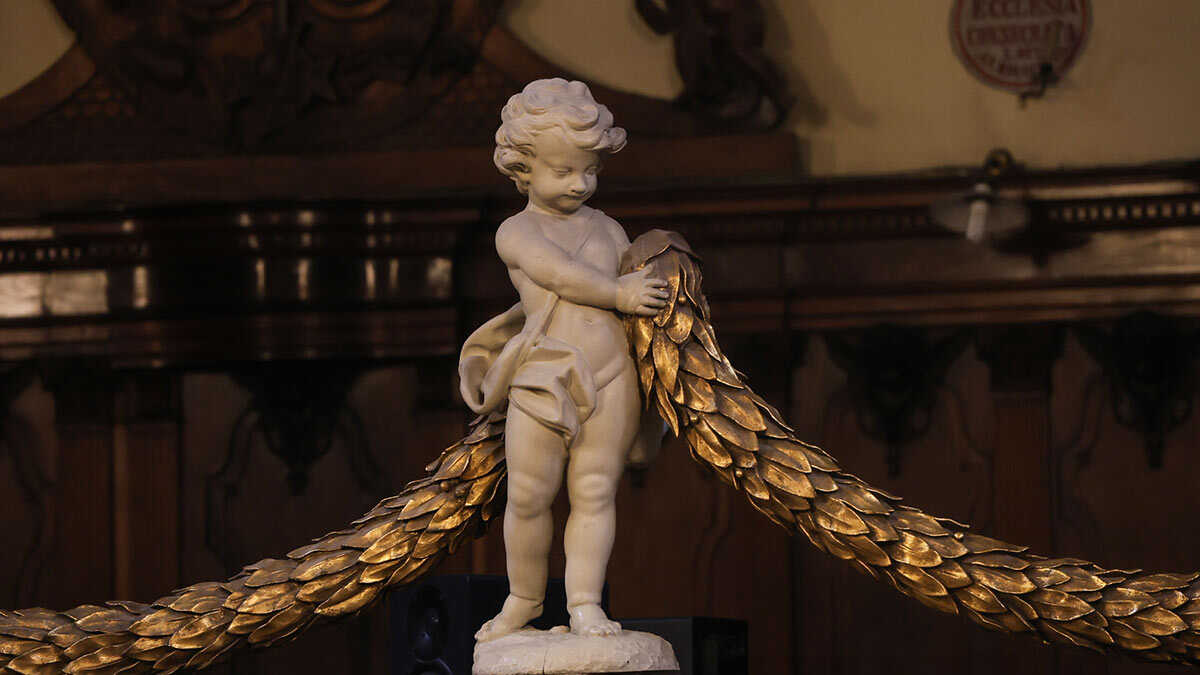
The calendar of saints not only invites us to remember their names, but also to reflect on their lives and the virtues that led them to sainthood. From humility and charity to courage in the face of persecution, todayés saints represent different paths toward Christian faith and devotion.
SAINT CHARLES BORROMEO
Saint Charles Borromeo, archbishop of Milan and cardinal, was born in 1538 into a noble family in Arona, Italy. From a young age, he showed a deep religious vocation that led him to hold important positions within the Church. His participation in the Council of Trent was key to the spiritual and moral renewal of Catholicism during an era marked by the Protestant Reformation.
Known for his strong commitment to charity, he promoted aid initiatives for those most in need and founded educational institutions and seminaries to train the clergy. During a severe epidemic that ravaged Milan, Saint Charles did not hesitate to personally care for the sick, demonstrating boundless dedication and compassion.
He died in 1584, leaving behind a legacy of faith and service. His exemplary life made him a symbol of reform and sainthood, reminding us that spiritual leadership is based on humility, dedication and consistency with Christian values.
SAINT VITALE
Saint Vitale was a fourth-century Christian martyr whose unshakable faith led him to give his life for Christ. He lived in the city of Bologna, where, together with his companion Saint Agricola, he refused to renounce his beliefs during a time of persecution. Despite the threats, Vitale stood firm in his testimony of faith and was ultimately executed for defending his religious convictions.
His example became a symbol of courage and faithfulness. The early Christians venerated his memory as that of a man who preferred death to betraying his faith. Over the centuries, his figure was remembered in the liturgy as an example of spiritual resistance in the face of injustice and oppression.
The Church celebrates his feast today to remind us that authentic faith is demonstrated in the most difficult moments, and that the sacrifice of martyrs is a seed of hope and renewal for all believers.
SAINT AGRICOLA
Saint Agricola, also a martyr of Bologna and Saint Vitale's companion, was a layman who lived his faith with firmness and conviction. According to tradition, he was Vitale's teacher and spiritual guide, encouraging him to remain faithful to Christ even in moments of greatest suffering. Both were executed during the persecutions of the fourth century, witnesses to a Christianity that continued to spread despite the danger.
Agricola represents the Christian committed to truth, a man of faith who does not seek recognition but strives to live according to the Gospel. His serenity in the face of martyrdom testified to his complete trust in the promise of eternal life.
Today, his figure is remembered alongside Vitale's as a symbol of spiritual brotherhood and shared strength. The Church honors both as examples of love for God and faithfulness to the very end.
WHY ARE SAINTS CELEBRATED?
A name day is a way to recognize and honor their spiritual achievements and to seek their guidance and inspiration in our own lives. Saints are venerated as spiritual leaders or figures who have attained a high level of holiness and have lived their lives in the service of God or a particular religion.
Many saints have a special day dedicated to them, celebrated by the faithful around the world. For this purpose, different religious ceremonies are held in each culture, with people reading their teachings or visiting sacred places associated with them.