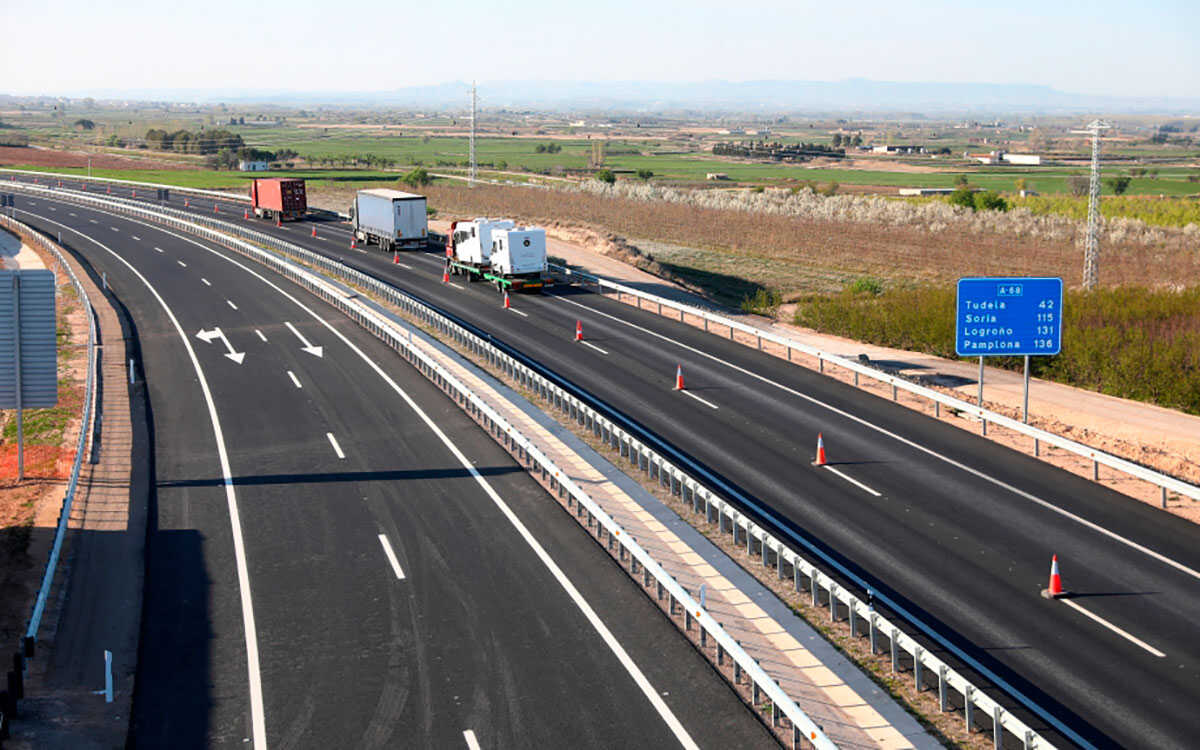
The Ministry of the Interior reminds drivers that, in a traffic jam, vehicles must move aside to create a clear space for ambulances, police and other emergency services to pass.
HOW TO FORM THE EMERGENCY LANE
The new regulation sets out precisely how vehicles must be positioned. When a traffic jam forces vehicles to move at walking pace or remain stationary, drivers will have to move towards the sides of the road to leave space for priority vehicles to pass.
THE MANOEUVRE WILL DEPEND ON THE NUMBER OF LANES
On motorways and dual carriageways with two lanes in the same direction, drivers must leave the space between the two lanes clear. Vehicles in the left-hand lane must move to the left, while those in the right-hand lane must move to the right.
On roads with three or more lanes in each direction, the emergency corridor will be opened between the far-left lane and the lane immediately next to it. Drivers in the left-hand lane must move as far as possible towards that side of the carriageway, while those in the other lanes must move to the right.
This creates a passage through which emergency services can proceed even when all lanes are congested.
THE AIM: GETTING HELP TO ACCIDENTS FASTER
The Interior Ministry explains that the aim of this change is to facilitate access for emergency services when an incident occurs and reduce the time needed to reach victims.
Although the rules already required drivers to make way for priority vehicles, the new regulation defines much more precisely how they must behave when a motorway or dual carriageway is congested. Until now, the regulations generally stated that drivers had to take the necessary measures to facilitate their passage.
The DGT itself had been working on this change for some time. The agency said the purpose was to establish clear guidance for all drivers and prevent ambulances, police and other services from becoming trapped in the same traffic jams as other vehicles.
THERE WILL ALSO BE CHANGES WHEN IT SNOWS
Creating an emergency lane is not the only new measure related to lane use, as the new Article 32 also establishes how vehicles must travel when snow makes traffic difficult on motorways and dual carriageways. In these situations, overtaking will be prohibited and drivers will be required to use the far-right lane.
On roads with three or more lanes in each direction, the adjacent lane may also be used, while the remaining lanes must be left clear to facilitate the movement of emergency vehicles and snowploughs.
OTHER CHANGES IN THE NEW REGULATIONS
The update coming into force on October 1 is part of a broader reform intended to adapt traffic rules to changes in mobility over recent years.
Among other measures, the new regulations introduce specific obligations for users of personal mobility vehicles, motorcyclists and other vulnerable road users, as well as new provisions on traffic and road safety.
Most of Royal Decree 518/2026 will begin to apply on October 1, 2026, although some obligations have different timetables.
With the new emergency lane, Spain is therefore defining a simple but crucial manoeuvre for critical situations: when traffic comes to a standstill on a motorway or dual carriageway, drivers must open up space between the lanes so emergency services can proceed without becoming trapped in the jam.


