One of the main results of this edition has been the organization of more than 50 speed meetings between writers and illustrators and publishing houses, an initiative aimed at facilitating contact between creators and publishing professionals. In addition, ENDEI Norte introduced more than 100 students from three schools and two secondary schools in Zaragoza to the work of an editor through activities held at educational centers.
The event’s coordinator and programmer, Patricia Artero, highlighted “the fulfillment of the fair’s professional and educational objectives.” The event featured 20 publishers from across Spain, with a strong presence from Aragón as well as representatives from other regions, including Andalusia, Cantabria, Galicia, the Valencian Community and Catalonia. The program also brought together four prominent literary figures: Alfonso Mateo-Sagasta, Rosario Raro, Pedro Simón and Marta Robles.
The event combined book presentations with roundtable discussions, conversations about the publishing industry and cultural journalism, poetry activities, and initiatives aimed at children and young people. The closing ceremony took place at the Grupo San Valero headquarters, with Pedro Simón and Marta Robles leading the final literary presentations.
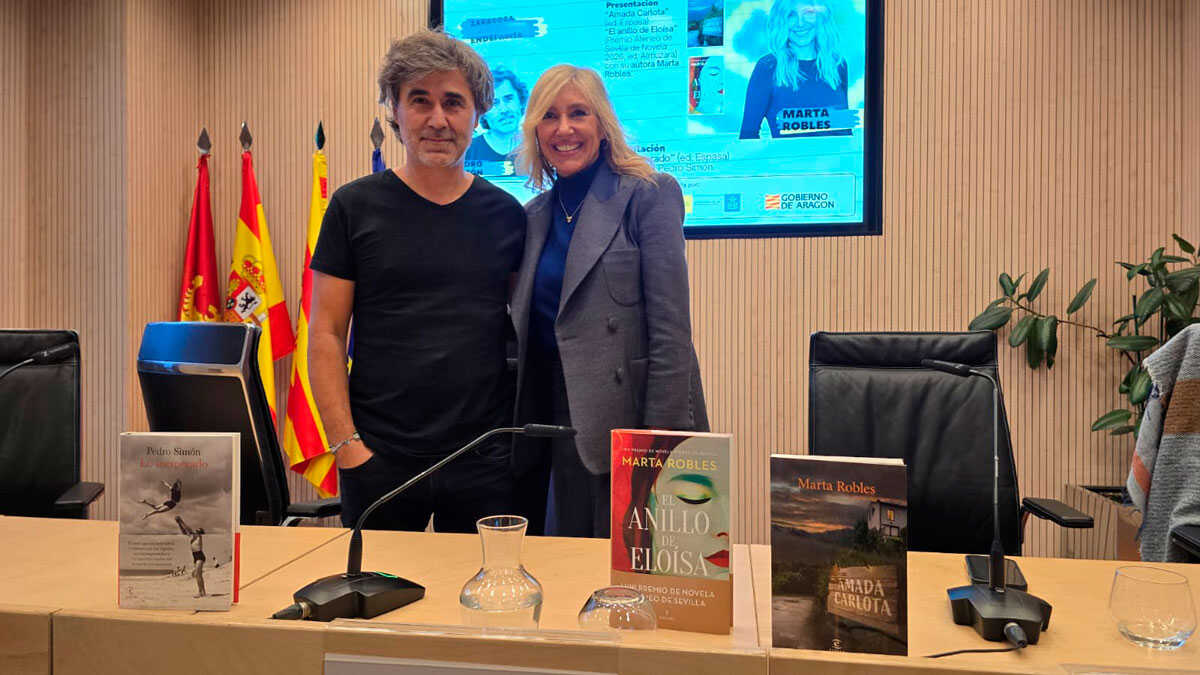
Writer Pedro Simón presented "Los ingratos," published by Espasa, while Marta Robles took part with Amada Carlota, also published by Espasa, and "El anillo de Eloísa," which received the 2026 Ateneo de Sevilla Novel Prize and was published by Almuzara.
During the event, Simón reflected on the loneliness that accompanies the writing process and the satisfaction of sharing the result with readers. “There is a painful part to a writer’s work, which is the loneliness when you are writing. The most gratifying thing is this: being somewhere with the people in front of you who have enjoyed your books,” he said. For the author, meeting readers is one of the most satisfying parts of the creative process.
The writer also spoke about the doubts that accompany his work, even after years of experience. “I always have doubts when I write, and I have more doubts as time goes by. The more years you have, the smaller you become, because you have read more authors,” he explained, while defending insecurity as a natural part of the profession.
For her part, Marta Robles expressed her satisfaction at sharing the closing of the event with a writer she admires. “I am especially pleased to put the finishing touch to this event, which is also so different from many literary gatherings held in Spain because of the subject matter it offers, and to do so with a writer I admire as a professional,” she said.
The author also reflected on the uncertainty that accompanies literary creation and the difficulty of measuring the outcome of creative work. In this regard, she defended the importance of writing “out of the need to live through literature” and not making success the main objective. “Don’t think about success; it is an impostor,” she said, encouraging writers to focus on what they like and need to do.
In addition, Marta Robles will attend the institutional presentation of the 2026 Ateneo de Sevilla Novel Prize this Friday. Regarding the award, the writer said that the recognition represents “a boost to a professional career marked by the uncertainty inherent to literary creation,” in which it is never certain how a work will be received. Robles explained that she continues writing because it is something she has done since childhood and considers essential to her life.