For centuries, eclipses inspired fear, superstition and awe. Today, we can predict them with extraordinary precision and view them as one of nature's most impressive spectacles, as we were recently able to see on August 12. Between these two ways of looking at the sky lies a history of science, culture and curiosity that the University of Zaragoza now invites visitors to discover with "Eclipses: Omen, Science and Spectacle."
Through texts and graphic documents, the exhibition traces the evolution of our view of these extraordinary celestial phenomena, from ancient mythological interpretations to the major advances of modern astronomy.
THREE SOLAR ECLIPSES IN THREE YEARS
The exhibition also arrives at an exceptional moment. Spain will be the setting for three solar eclipses visible in consecutive years: 2026, 2027 and 2028. This circumstance makes these years a unique opportunity to bring astronomy closer to society and revisit the history of those who, long before us, gazed at the sky in awe and tried to understand it.
Aragon holds a prominent place in this history. Eclipses have been scientific and social events capable of mobilizing entire populations. The exhibition particularly revisits observations of the eclipses of 1860 and 1905, which brought international scientific expeditions to our region, eager to take advantage of these phenomena to conduct research into the cosmos.
The exhibition also highlights the research and teaching tradition developed at the Faculty of Science, which has spent more than 150 years looking to the sky, and helps visitors understand how astronomy has formed part of the scientific history of the University of Zaragoza.
SCIENTIFIC INSTRUMENTS AND PIONEERING WOMEN
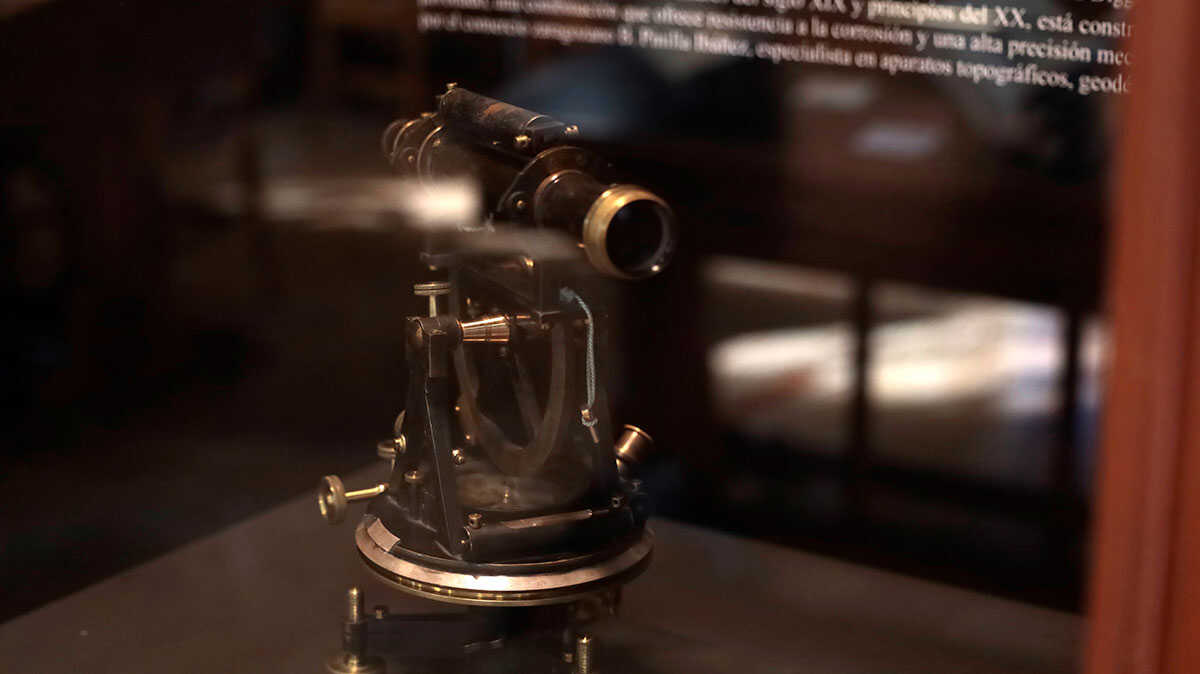
Alongside the books and documents, visitors will find scientific instruments that offer an insight into the technology used to explore and navigate the world by following the stars. They include a theodolite, a sextant and a marine chronometer, all belonging to the Museum of the Faculty of Science.
The books, documents and instruments on display show that knowledge of the sky is not solely part of the history of universal science: it is also part of the scientific heritage of our University and of Aragon.
The exhibition also reserves a space for pioneering women in this field of research in Spain, since, as in so many other disciplines, their work has been eclipsed throughout history in favor of their male colleagues.
Finally, to enrich and complement the exhibition, the lecture series "Three Eclipses in Three Centuries" will be held in the library's own room, with limited capacity and advance reservations required. Each lecture will focus on an eclipse from the 19th, 20th and 21st centuries: those of 1860, 1905 and 2026.
The event was inaugurated by Pilar Pina, vice chancellor for Scientific Policy; Cristina Segui, director of the Library of the University of Zaragoza; and Pedro Miana, curator of the exhibition. The exhibition is organized by the General Historical Library and the University Institute of Mathematics and Applications of the University of Zaragoza (IUMA).


