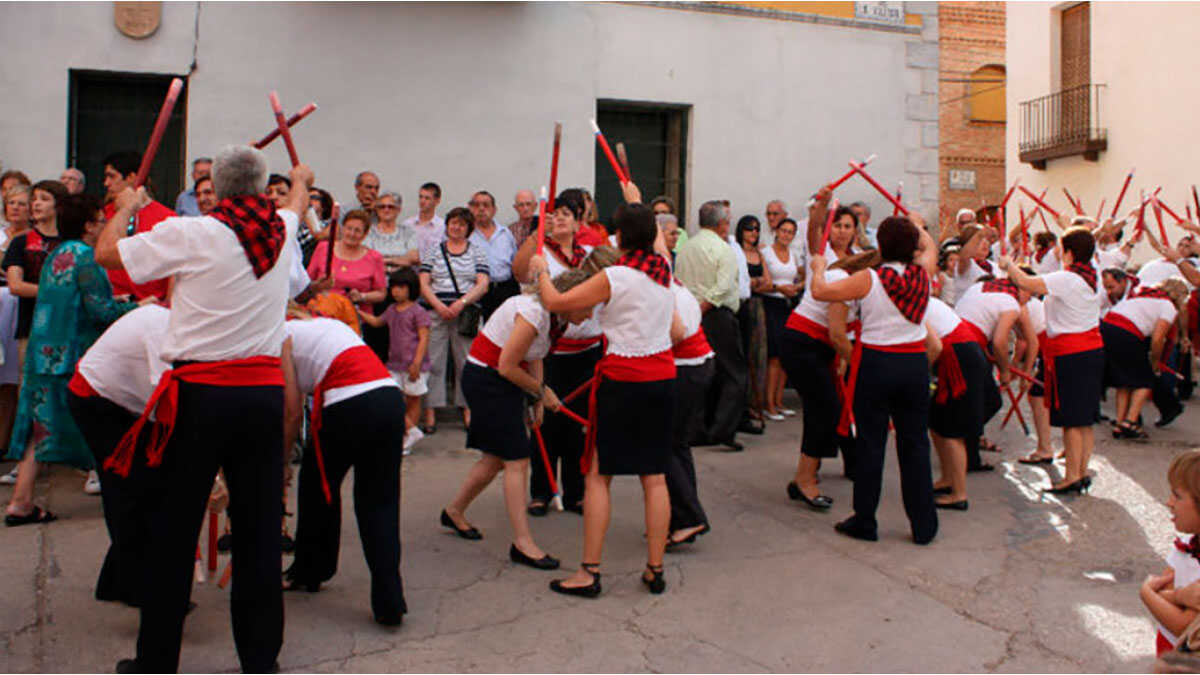
We are talking about Longares and its traditional "paloteao". The dance, held as part of Longares’ patron saint festivities, had its first performance this Wednesday (the feast day of Saint Vincent and Saint Gonzalo). Next Tuesday, September 8 (the feast day of Our Lady of the Gate), will see the second and final performance of the year of this centuries-old tradition.
Some 200 dancers will once again set out next Tuesday from inside the Parish Church of Our Lady of the Assumption. They will form groups of four and perform a series of repeated movements as they make their way along the traditional route. The approximately 400-meter itinerary will be as follows: Plaza de la Iglesia, C/ La Iglesia, C/ Mayor, Plaza de España, C/ Felipe V, C/ Ramón y Cajal and C/ del Pilar, before ending once again at Plaza de la Iglesia and returning to the church.
The climax comes precisely at the end of the dance, when the dancers gradually make their way inside without stopping their stick routine, creating an atmosphere of great emotion among those in attendance.
A 17TH-CENTURY TRADITION
The "paloteao" dates back to 1668, when the relics of the martyr saints Vincent and Gonzalo arrived in Longares. They were brought from Rome by the archbishop of Granada and adoptive son of Longares, D. Diego Escolano. Deeply moved, the town’s residents went out to meet them, and on the way to the church, several locals spontaneously began to dance. The dance has been performed ever since, although it has undergone some changes over time.
Years ago, the goal of achieving maximum uniformity among the dancers was accomplished, since the spontaneous dance originally had no uniform. Today, the dancers wear clothing that identifies them: black shoes, navy blue trousers or skirt, a red sash around the waist, a white blouse or shirt, and the typical red-and-black cachirulo tied around the neck.
At first, only men were allowed to take part in this unique dance, but for many years now men, women and even children of a certain age have all been able to participate. The number of dancers varies depending on whether the celebration falls on a weekend, with an average of around 200 dancers.
The large number of dancers today, along with their low average age, makes it clear that the dance is in very good health and represents Longares’ most vibrant hallmark of identity.


