"Shipwrecks, Underwater Archaeology" will open up that fascinating yet complex world of the seabed until February 7, in an exhibition promoted by the Archaeology Museum of Catalonia. The exhibition focuses on five thematic areas, beginning with the history of underwater archaeology and the evolution of its various techniques, from the ancient diving bell described by Aristotle to modern diving suits.
The exhibition’s central theme is the history of three ships discovered in different parts of Spain between 1984 and 2008. Visitors can see a 3D recreation of how each one sank, as well as various objects found inside them. The first is the Culip IV, a ship discovered in Cadaqués in 1984. Thirty-six recovered objects are on display, highlighting the importance of ceramics in the study of ships.
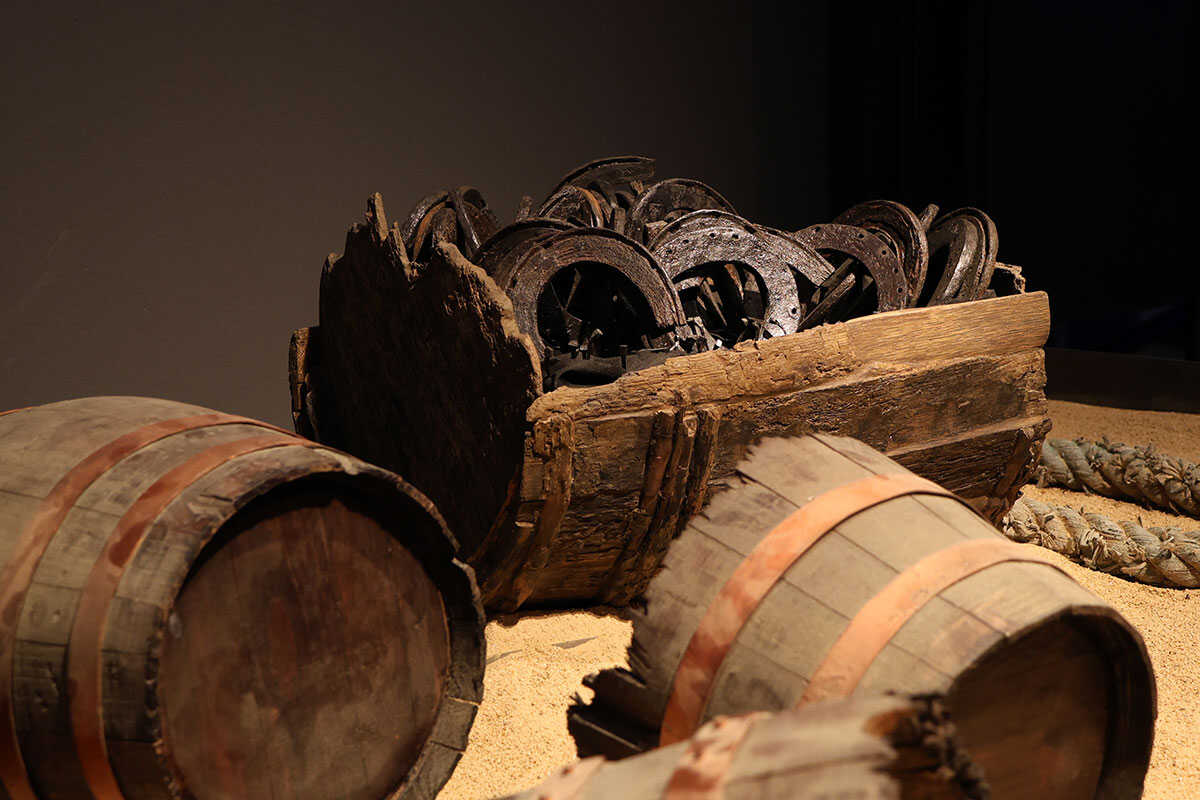
The Deltebre I was discovered in Deltebre in 2008, and the exhibition uses it to show how the sea functioned as a strategic military arena. Visitors will be able to see parts of the ship, including gunpowder barrels, cannon projectiles and more. The final ship is the Cala de Sant Vicenç wreck, an "exceptional Greek vessel," in the words of the curator, discovered in Mallorca in 2002.
AN IMMERSIVE EXHIBITION
With subdued lighting, projections and 3D recreations, the exhibition creates an atmosphere in which visitors will feel as though they are underwater. Sound also contributes to this experience. "For this exhibition, a soundtrack was created by Clara Aguilar, who even came to make recordings during underwater work. The aim is to move away from the idea of a silent world; it is not quite so silent. Sound travels much faster underwater, and we even speak. The idea is for visitors to immerse themselves through sound as well," the curator explained.
The exhibition also seeks to dispel the myth of treasure and archaeology as spectacle. "That is where we address perhaps the less appealing side of underwater archaeology, although it is also extremely important. We also emphasize archaeology’s obligation to preserve heritage," the curator explained. This section recreates a work area, laboratory and storage room where studies and conservation work are carried out.
PARALLEL ACTIVITIES
As usual, CaixaForum will organize educational workshops, family guided tours and various activities, including a film series titled "Ships, Shipwrecks and Life at Sea," featuring screenings of films such as Robinson Crusoe and Gulliver’s Travels.


