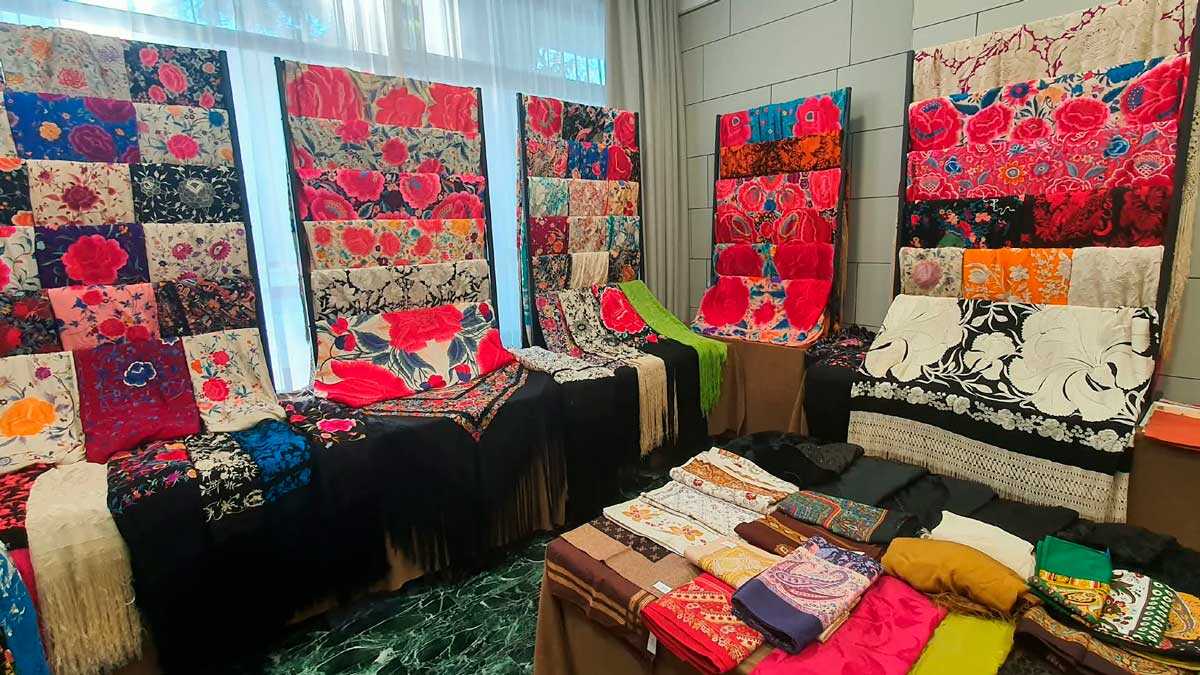
Visitors to the exhibition will find much more than a succession of antique shawls. There will be Elizabethan, Empire-style, damask and grosgrain pieces, as well as Indianas, pelerines and other garments that offer a glimpse into how people dressed more than two centuries ago. The selection will include skirts, blouses, sayas and original outfits from the late 18th century, along with some period jewelry.
The exhibition will also feature men’s clothing, which is increasingly sought after by collectors and traditional dress enthusiasts. Antique silk handkerchiefs, sashes, wool suits, blankets and saddlebags will round out a selection intended not only to be admired, but also purchased and, in many cases, worn again. The exhibition can be visited on all three days from 10:00 a.m. to 2:00 p.m. and from 4:00 p.m. to 8:00 p.m.
FROM TOLEDO TO ZARAGOZA, WITH A PASSION FOR MANILA SHAWLS
Behind this exhibition is María José Gutiérrez, a collector, expert in antique shawls and owner of Tradición, a shop in Toledo where she has spent 15 years searching for, studying and restoring these pieces. Her specialty is Manila shawls, although her increasingly close ties with Aragon have also led her to explore the region’s traditional clothing.
Behind this exhibition is María José Gutiérrez, a collector, expert in antique shawls and owner of the Tradición shop. Image provided
When she began showcasing her work on social media, more and more people from Aragon started contacting her. "I would say that 90% of sales come from Aragon. They make a special trip here to buy. It’s no longer just that they wait for me throughout the year at the exhibition; they come from all over the region to the shop to buy the shawls," Gutiérrez explains.
Although she still primarily defines herself as a shawl specialist, over the years she has delved increasingly deeply into Aragonese clothing to meet what her customers were looking for. Her shop houses around 300 shawls dating from between 1810 and 1920, but other traditional garments and antique Aragonese pieces have gradually gained ground alongside them.
COLLECTOR’S PIECES TO COMPLETE YOUR PILAR OUTFIT FROM 200 EUROS
The Zaragoza exhibition is also a final opportunity for those still completing their outfit for the Pilar festivities, and María José Gutiérrez has been preparing for it for months: "I always set pieces aside. Throughout the year, I reserve specific pieces exclusively for the Zaragoza exhibition because, in a way, I want to reward the loyalty of my longtime customers," she explains. There will be options for a wide range of budgets, with shawls starting at 200 euros this time.
Beyond finding a last-minute piece, the exhibition will also offer a glimpse of what will be seen during this year’s celebrations. Gutiérrez believes the trend is gradually shifting back toward lighter, simpler garments, moving away from some of the large floral shawls that played a major role for years. "I would say that this year people will opt for lightweight shawls, Elizabethan and Empire-style shawls, and lots of grosgrain," she says, pointing to October’s mild temperatures and the increasingly rigorous approach to 19th-century clothing.
That may also be part of the reason why an exhibition of this kind has now reached its 14th edition in Zaragoza. Each year it becomes more difficult to find shawls and antique garments in suitable condition, and the pieces that have survived for one or two centuries are, by definition, limited. A time will come, Gutiérrez warns, when they will virtually stop appearing. Until then, the expert is clear about what to do with those that have made it to the present day: "The best way to preserve a shawl is to use it."


