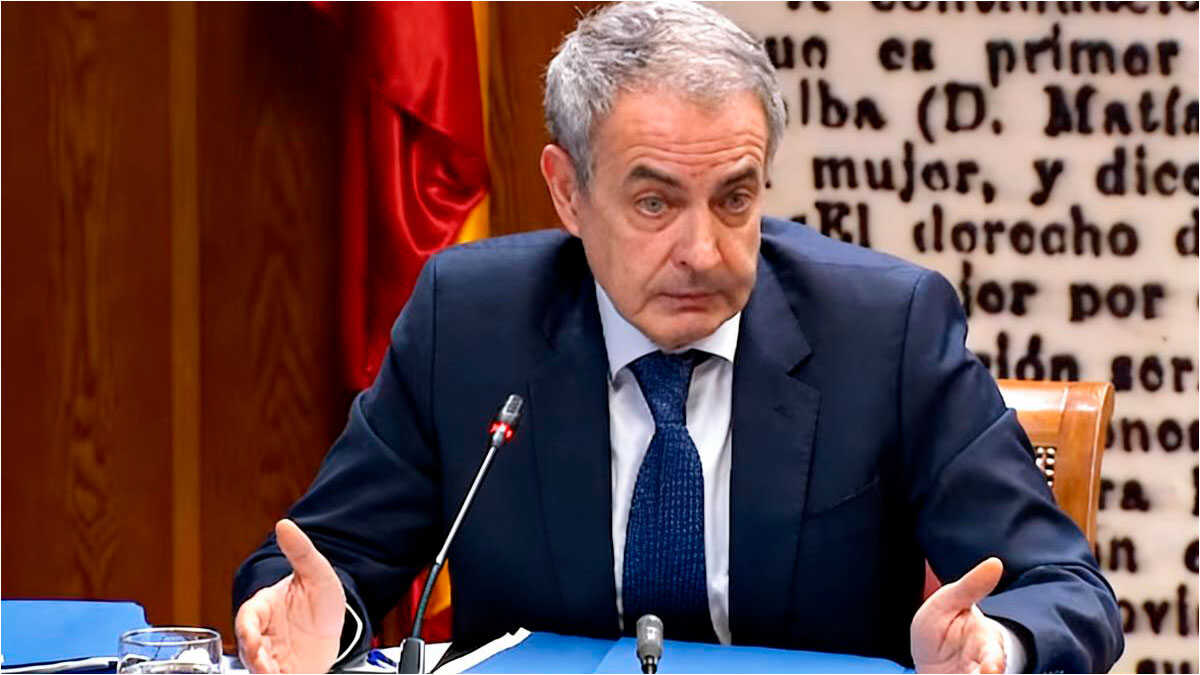
In a written submission known on Wednesday, filed during the three-day period granted by José Luis Calama, the investigating judge in the 'Plus Ultra case', the defense warned that it did not accept the valuation by the Ansorena jewelry and auction house, whose amount is, in its view, "undoubtedly far higher than the actual value of the pieces".
According to the lawyer's submission, the report the judge used as the starting point for the collection of pieces estimated their replacement value at €1,323,915. It highlights that this figure, according to Ansorena's own appraisers, defines the value of a piece of jewelry "on the primary market in June 2026, including taxes".
For this reason, the defense rejects the €1.3 million valuation, an assessment "normally used for inclusion in insurance policies" that "does not determine or establish what the value of the pieces was nineteen years earlier, in June 2007", when, according to its account, the Saudi king gave them to the then prime minister, a fact it asks Saudi Arabia to confirm.
GIFT FROM THE SAUDI KING
According to the defense, the most valuable part of the seized items, accounting for "more than ninety percent of the total value", is a collection of three jewelry sets featuring rubies, emeralds and sapphires. Each set consists of a necklace, a bracelet, a ring and earrings made of 18-karat white gold and brilliant-cut diamonds, with Zambian emeralds in one of them.
The submission maintains that the 12 pieces were a gift from King Abdullah bin Abdulaziz, presented at the family residence in the Moncloa Palace during the monarch's official visit to Madrid on June 18 and 19, 2007. It says this was "a strictly personal gesture", accepted out of courtesy and as a sign of my client's gratitude and respect for the monarch".
It adds that the jewelry remained stored from then on alongside other family heirlooms and gifts from friends, "without any use or purpose, and without awareness of their material value". It attributes the delay in providing this explanation to the time that had passed since the gift, as the former prime minister exercised his right not to testify on the matter last June 18.
On June 16, Zapatero sent a letter through the Saudi Embassy in Madrid to the head of the Royal Court's Protocol Department, describing the gift as "a strictly personal gift" and concluding: "With the sole aim of honoring the truth of what happened, I ask that Court to confirm the veracity of the facts described in whatever manner it deems most appropriate".
REQUEST FOR JUDICIAL ASSISTANCE TO RIYADH
Last August 12, he sent another letter through the same channel to announce that he would seek international judicial cooperation. He now asks the investigating judge, if he considers his explanation insufficient, to obtain from the Saudi Royal Court and its Protocol Department an official certificate confirming the delivery, under Article 193 of the Criminal Procedure Act.
Specifically, he asks Saudi Arabia to certify whether, during that visit, the Royal Court gave the then prime minister a personal gift at the Moncloa Palace and whether it consisted of the three sets described by Ansorena. According to the defense, this step would "definitively resolve the only factual issue that gave rise to these separate proceedings".
Regarding the rest of the items seized during the May 19 search—67 pieces of widely varying value—the submission states that 11 have no value, 25 are worth less than €1,000 and that together they account for "only around 6.8% of the estimated total", as they come from "ancestors and family mementos and form part of the family trousseau".
The judge opened the separate proceedings on June 12 after finding indications of a possible offense against the public finances and another involving smuggling, due to the lack of tax or customs documentation. However, according to the submission, that order offered the former prime minister the possibility of "neutralizing, through documentary or explanatory evidence, the indications currently emerging from the investigation".