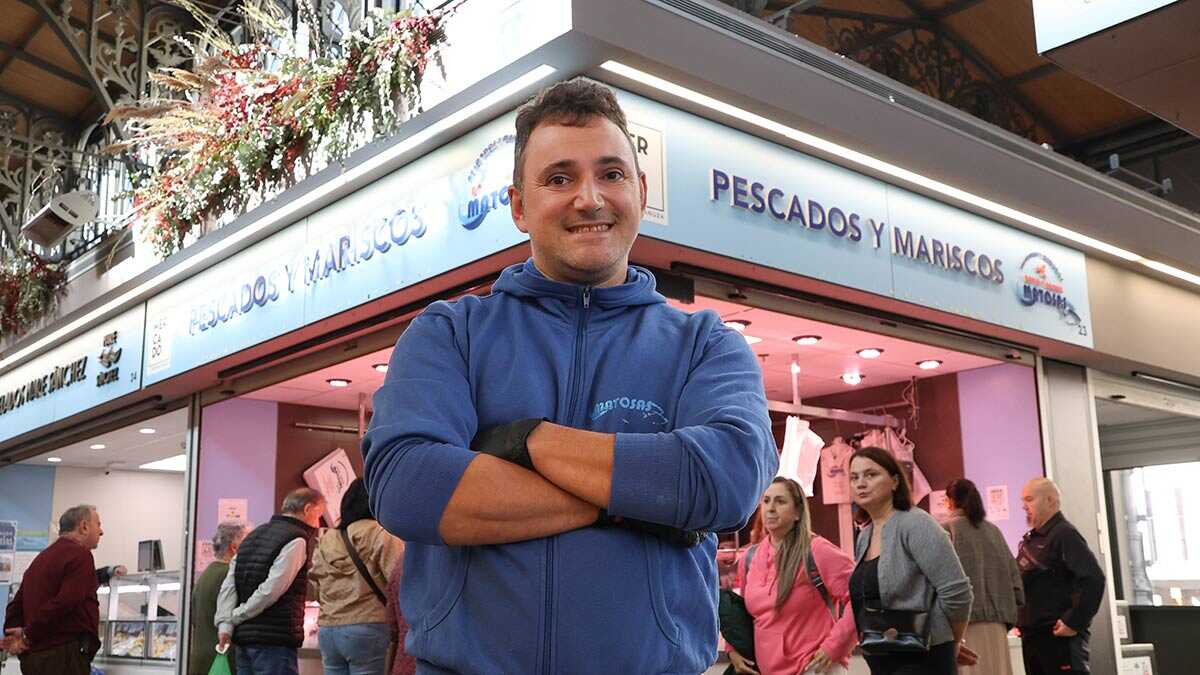
This is the case at Pescados y Mariscos Matosas, where its fishmonger, Dan Martín, explains how they are dealing with the rising cost of raw materials. "The price of some fish has risen by between 20% and 30%, especially those from Denmark and Norway," says the fishmonger. He adds that this increase is compounded by higher fuel prices, which also affect the cost of transporting the goods.
FISH PRICES RISE AS TRADERS ADAPT
With some fish costing up to 30% more, vendors are being forced to adjust the way they work. At Matosas, the solution is to control the amount of product arriving at the counter each day to prevent stock from going unsold.
Dan Martín explains how he adapts his stall's purchases amid increases of between 20% and 30% in certain products. Photo: Pilar Álvarez
"We are maintaining the same quality while putting out less stock, so that less is left over," explains Martín, acknowledging the importance of adjusting purchases to the stall's needs. The aim is to continue offering the same product while working with smaller quantities to avoid accumulating leftovers at the end of the day.
For Martín, working with less fish does not mean providing a poorer service, but quite the opposite. Adjusting purchases makes it possible to renew the product practically every day and prevent stock from building up. "We practically start with new fish every day, so we guarantee the highest quality and ensure our customers take the best home to their tables," concludes the vendor, who is relying on this formula to deal with rising fish prices without giving up product freshness.