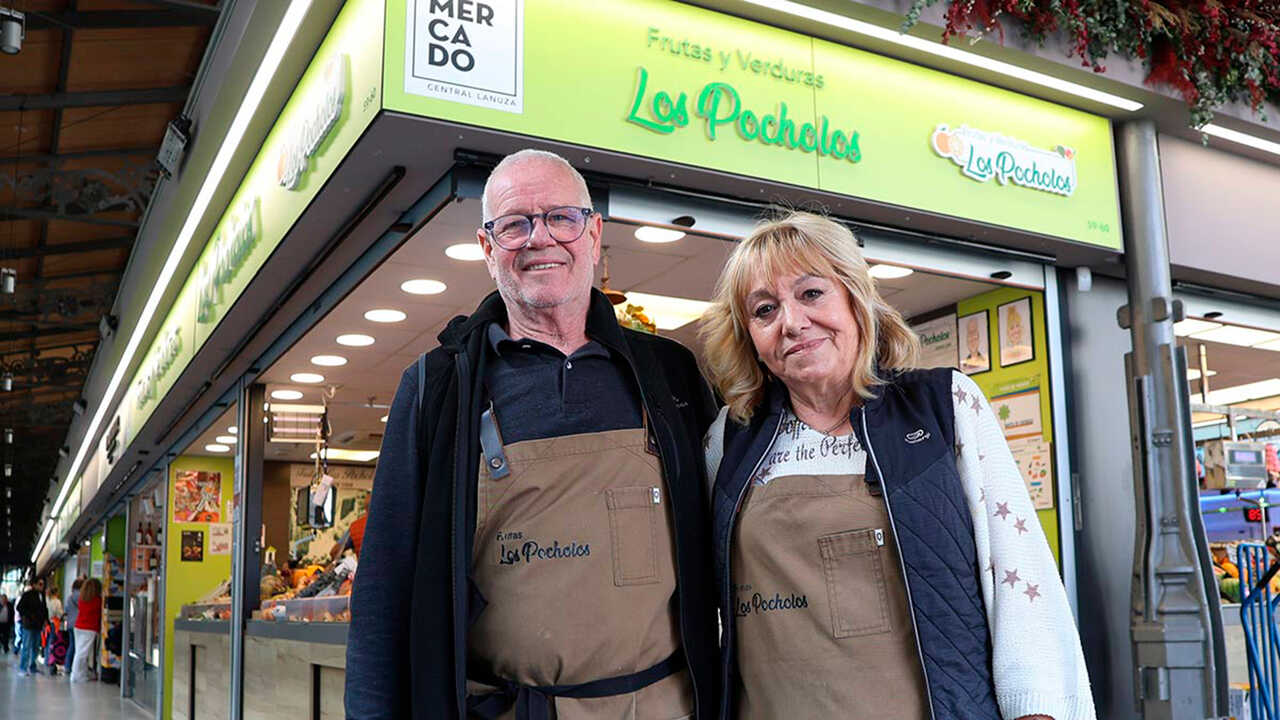
This is the case at Frutas Los Pocholos, where vendor Iñaki Ornad explains that lower production has forced them to adjust prices slightly, although they are trying to avoid major increases. “Both the plants and the trees have suffered greatly from this summer’s heat, which means that, with a smaller harvest, prices have to go up a little, but we try not to raise them too much,” says the fruit vendor.
Prices have risen due to the hot summer. Photo: Pilar Álvarez
Despite these minor variations, Ornad says prices have not experienced a general increase compared with last year. “Well, they haven’t really gone up,” he says. However, what he has noticed is a drop in sales, which has changed how often he needs to restock the products at his stall.
LOWER SALES AND LESS FREQUENT ORDERS
The lower number of shoppers is reflected in the pace of orders. Ornad explains that a year ago he needed to restock every two days, whereas now he can wait one more day because of the drop in sales.
“A year ago, you had to place an order every two days; now, with sales down, you have to do it every three,” he explains. The fruit vendor clarifies that the change is not due to a reduction in the amount of product he buys with each order, but to the longer time it takes before he needs to restock the business.
The impact of high temperatures on agricultural production adds to this situation. “The weather conditions have been very poor,” says Ornad, who stresses that the heat has put stress on trees and plants, affecting this year’s harvests. Nevertheless, he clarifies that these difficulties concern production in the fields, not the quality of the products that reach his stall.