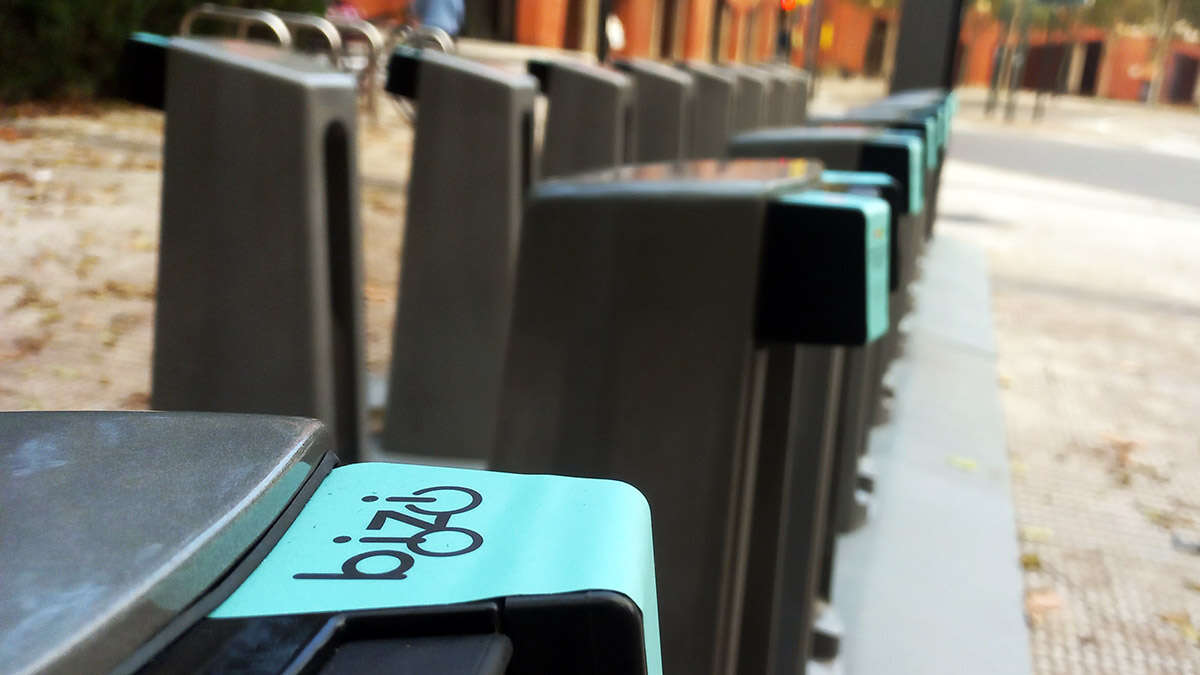
The questionnaire will remain available until representative user participation is reached. It contains a total of 46 questions, although users will not need to answer them all: the first 30 make up the basic section, while the remaining 16 are optional. Users will find both open and closed questions, as well as service ratings on a scale from 1 to 10.
Tatiana Gaudes, councillor for the Environment and Mobility, explained that the aim is to allow users to share their impressions of how Bizi operates directly, and for that information to help guide future improvements. "Through citizen participation," the city aims to continue introducing changes to a system that, she noted, is "constantly evolving."
SAFETY, BIKES, STATIONS AND SERVICE QUALITY
The questions are divided into seven sections: usage profile, access and availability, service quality, safety and comfort, impact and perceived value, overall satisfaction, and a final section for optional additional information. The topics include frequency and reasons for use, travel times and distances, the availability of bikes and stations, and safety.
The expanded section will also allow the council to explore potential service failures, Bizi's development, road safety, coexistence with traffic and how bike lanes operate in greater depth. In this way, the Zaragoza City Council hopes to obtain a more complete picture of how residents use the public bike service and the problems they encounter during their journeys.
The survey comes as Bizi continues to record a high level of use. In 2025, it exceeded 11.3 million trips, with more than 62,900 annual passes and nearly 20,000 monthly passes. The average is more than 20,900 journeys per day, and the service now accounts for 38% of the micromobility recorded in Zaragoza. In addition, the service will add another 600 new bicycles in the first quarter of next year.


