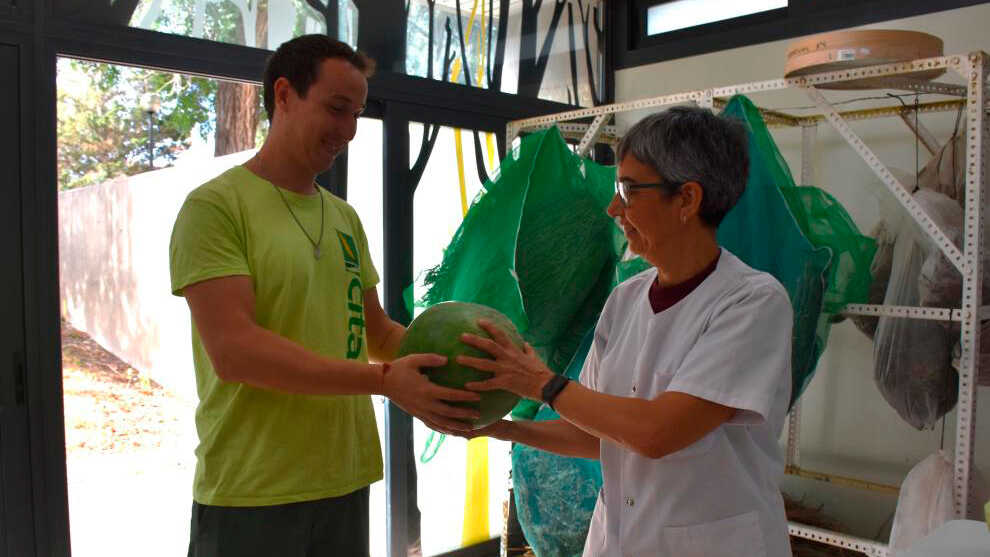
Until a few decades ago, it was still a common watermelon in the area, but its cultivation has declined considerably in recent years, partly due to the market’s growing preference for seedless varieties.
A WATERMELON ADAPTED TO THE MARKET GARDENS OF THE BAJO GÁLLEGO
The Gállego Watermelon produces large fruits and was traditionally characterized by very juicy, watery flesh that was somewhat less sweet than some commercial varieties. One of its main features is its large seeds, which were also once eaten like sunflower seeds. Knowledge passed down through Javier Burguete’s family highlights its rustic nature, good drought tolerance and ability to produce large fruits in the area’s soils. It is also considered an excellent pollinator.
The donation has also made it possible to document traditional cultivation practices. In the Burguete family, the seeds were usually prepared at the end of April to prevent the plants from emerging before the risk of late frosts in early May had passed. They were kept in water for around 24 hours and then between damp cloths until germination began.
The seeds were subsequently sown directly in the field in planting holes, eventually leaving two plants in each one. The variety was grown without pruning and irrigated through furrows, although at first it could require water to be applied directly to the plants. Under favorable conditions, the first fruits could be harvested in late July, while August was traditionally the period of peak production and quality.
CITA GROWS THE VARIETY DURING THE 2026 SEASON
Researcher Cristina Mallor, head of CITA’s Horticultural Germplasm Bank, received the seeds and all the information provided by the donor. The plants are being grown in CITA’s experimental plot during the 2026 season to multiply the available material and obtain primary characterization data to ensure its proper conservation.
The first three fruits of this season were harvested on August 24, 2026, with an average weight of 6.5 kilograms. They stand out for their sweet flavor and numerous large seeds. However, in San Mateo, they have already been harvesting watermelons for a month.
Adding the variety to the Germplasm Bank makes it possible to preserve plant material linked to the agricultural history of the area around Zaragoza and record the knowledge of those who have cultivated it. These banks safeguard genetic resources of interest for research, plant breeding and the development of more diverse and resilient agricultural systems, while also helping prevent the disappearance of varieties linked to the territory and to Aragonese horticultural culture.


