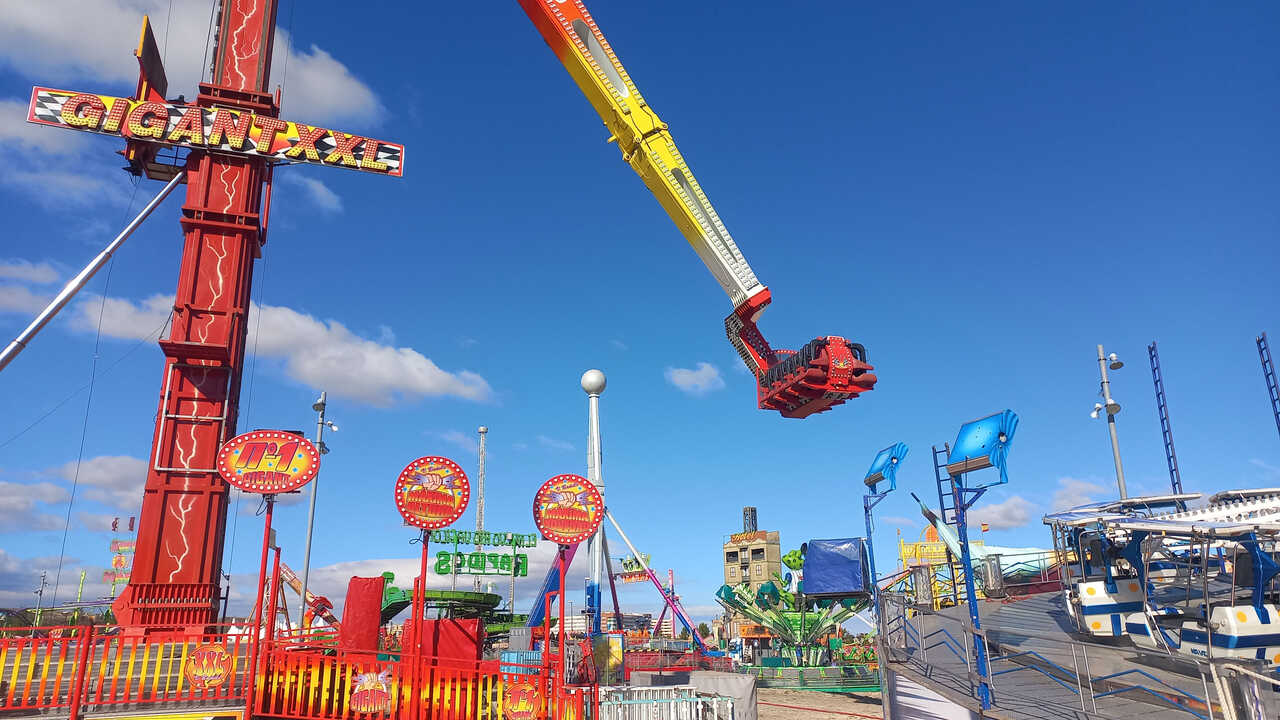
Residents stress that they are not “against the festivities, fairs, concerts or Zaragoza enjoying its main celebrations,” but believe it is unfair for the same neighborhood to bear “a disproportionate share of their impacts” every year. In this regard, they explain that the space intended for the everyday enjoyment of those who live there continues to be occupied by “concrete, gravel and cement.”
“How long will the fairgrounds continue to grow, and how far will we reduce the space residents can enjoy during all 365 days of the year?” ask residents of the South District. They are therefore calling for the Libro de la Selva park to be restored. It was planned for the area where the fairgrounds are located and was part of the neighborhood project when the first residents bought or rented their homes in Valdespartera. “It included a significant presence of green areas, public spaces, wide tree-lined streets and sports facilities,” they recall.
Finally, they say the park “was never built as it was presented to us.” “For those of us who live here, this is not a minor issue. We see it as a broken promise and as a change in the neighborhood model that has ultimately prioritized other uses over the needs of those of us who live here throughout the year,” residents complain.
“What we need is to recover space for the neighborhood, not continue losing it,” residents of the South District demand, adding that “we must move toward its renaturalization.” They also explain that Zaragoza already has “too many” urban areas degraded by concrete and cement. “We do not need to keep increasing impermeable surfaces, especially in a context of rising temperatures and extreme weather events,” they argue.
CONTRADICTION IN THE CITY MODEL
Residents of Valdespartera question Zaragoza’s ambition to become European Green Capital 2028 while, in their view, paved and poorly permeable surfaces continue to spread across neighborhoods. They believe there is a contradiction between the city model promoted to Europe, based on renaturalization, decarbonization and adaptation to climate change, and certain urban projects. “A green city cannot limit itself to talking about renaturalization while continuing to seal the soil,” they point out.
The neighborhood also recalls that Valdespartera is one of the areas that suffers most from high temperatures during extreme heat episodes and calls for municipal planning to prioritize green spaces and shaded areas. “A city prepared for climate change needs more trees, more shade, more vegetation, more permeable soil and fewer surfaces capable of storing heat,” they maintain, warning that “every square meter we make impermeable today” means losing space to adapt the city to increasingly higher temperatures.


