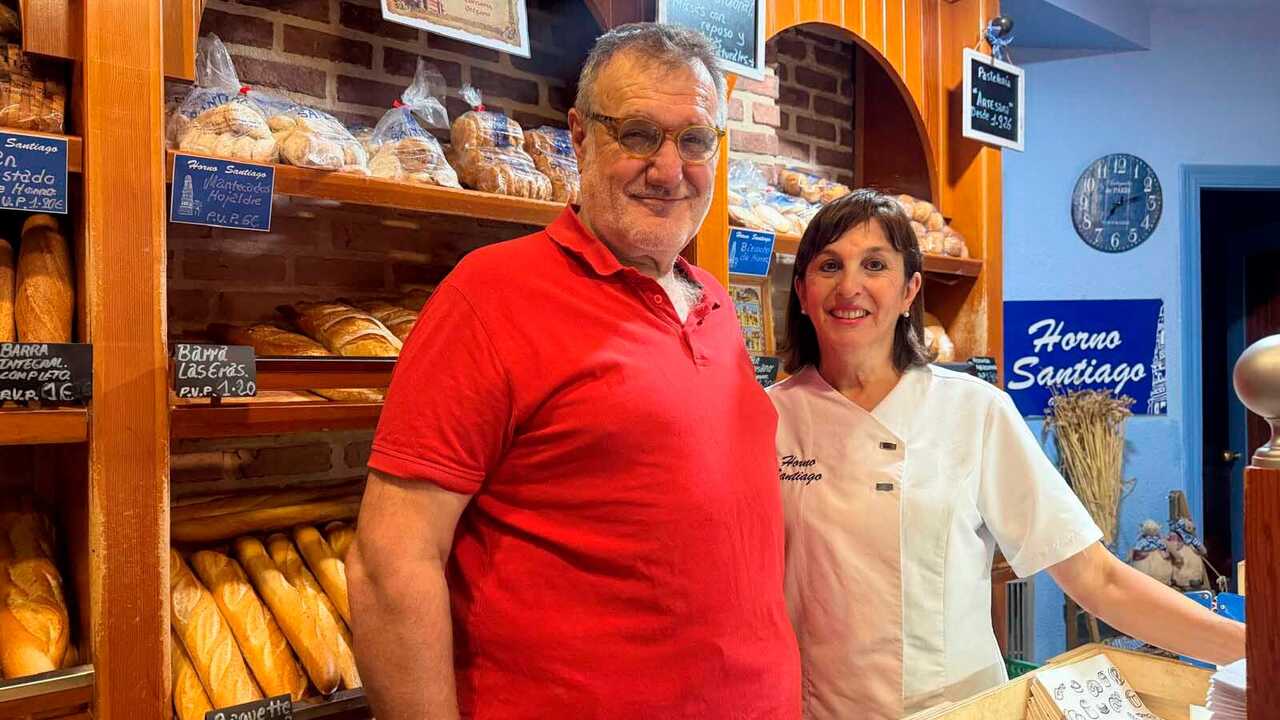
The story began in 1926, when José Sánchez, Vicente’s father’s uncle and a farmer from Utebo, decided to use the wheat he had left over to make bread. What began as a way to make use of the harvest eventually became a family business that has lived through a century of change. In its early years, the bakery and shop occupied the ground floor of the family home in the town’s old quarter, a space that still preserves part of the bakery’s history.
THE STORY OF A FAMILY BAKERY
Although Vicente has few memories of the early years, he does remember when he began helping his father make bread. “My brother and I were born in the house where the bakery was located. When we came back from boarding school at weekends, I would go downstairs to help my father make bread,” he recalls.
Although he initially studied chemistry, when he reached his third year he decided to abandon his degree and devote himself fully to what he had practically done all his life: working in the family bakery.
To mark the centenary, they have put up a banner on the old family home where the business was born, paying tribute to the place where it all began and to his parents. It reads, in large letters: Santiago Bakery Oven Centenary 1926-2026.
To commemorate the anniversary, they have hung a banner at the former premises, which also served as their home. Photo: NE / Actualidad Media
HOW THE BAKING PROFESSION HAS CHANGED
“We have always made sourdough at home. What happened was that in the past we only worked with one type of flour,” says the owner, who also works in the bakery. “Now we work with all kinds of flour: rye, spelt, wholemeal...”
The variety of flours is not the only thing that has changed the trade over the years. Technology has also transformed the way work is done in the bakery. “It has helped enormously. Cold temperatures are very useful because they allow the dough to ferment for 18 hours, which is what really gives bread its flavour. They didn’t have those possibilities before,” he explains. In the past, the dough was left to ferment in wooden cupboards. “If it was cold, it worked well; but if it was hot, the dough would over-ferment. Now, with controlled fermentation chambers, it’s wonderful.”
They have always worked with sourdough. Photo: NE / Actualidad Media
But Santiago Bakery does not only make bread. “We work the night before. We make the bread today, leave it to ferment and bake it the following day,” Vicente explains, a method that allows them to respect the timing of the process and produce a higher-quality product. Many of the recipes they prepare today are as old as the business itself. “Madeleines, mantecados, roscones...” he lists. All these products continue to be made by hand in the bakery, preserving the essence and recipes of the past.
GENERATIONS OF CUSTOMERS
“People constantly show you their affection. They appreciate your work and know how to value it,” Vicente says. “I think people have recognised our day-to-day effort, the reliability with which we have always worked: opening on time, keeping to our hours, making sure the bread is always in the best condition and offering alternatives when the one they are looking for has run out.” Merche says this emotionally; she has always worked on the other side of the business, serving customers.
When asked what she takes away from so many years, she barely needs to think. “I take away the recognition from people. The fact that they come into the shop and, if they get a phone call, reply: ‘I’m at Santiago.’” A daily gesture that, for her, sums up an entire century of trust, closeness and loyalty.
Because behind these 100 years lie not only thousands of loaves of bread, early mornings and generations of customers. There is one word that defines the history of Santiago Bakery better than any other: sacrifice. A quiet, constant and shared sacrifice that has made it possible to come this far with the affection and recognition of an entire town.


