One of its main attractions stands on top of a hill: Boltaña Castle, a fortification whose origins date back to the 10th century. Although it is now in ruins, it still retains part of its structure and, above all, offers one of the finest panoramas of the town and its surroundings. From here, visitors can see the old quarter, the Ara Valley and the mountains surrounding this village in the Aragonese Pyrenees.
Boltaña stands out as one of the most beautiful villages in Aragon
BOLTAÑA, THE VILLAGE THAT LOOKS LIKE IT CAME FROM A FAIRY TALE
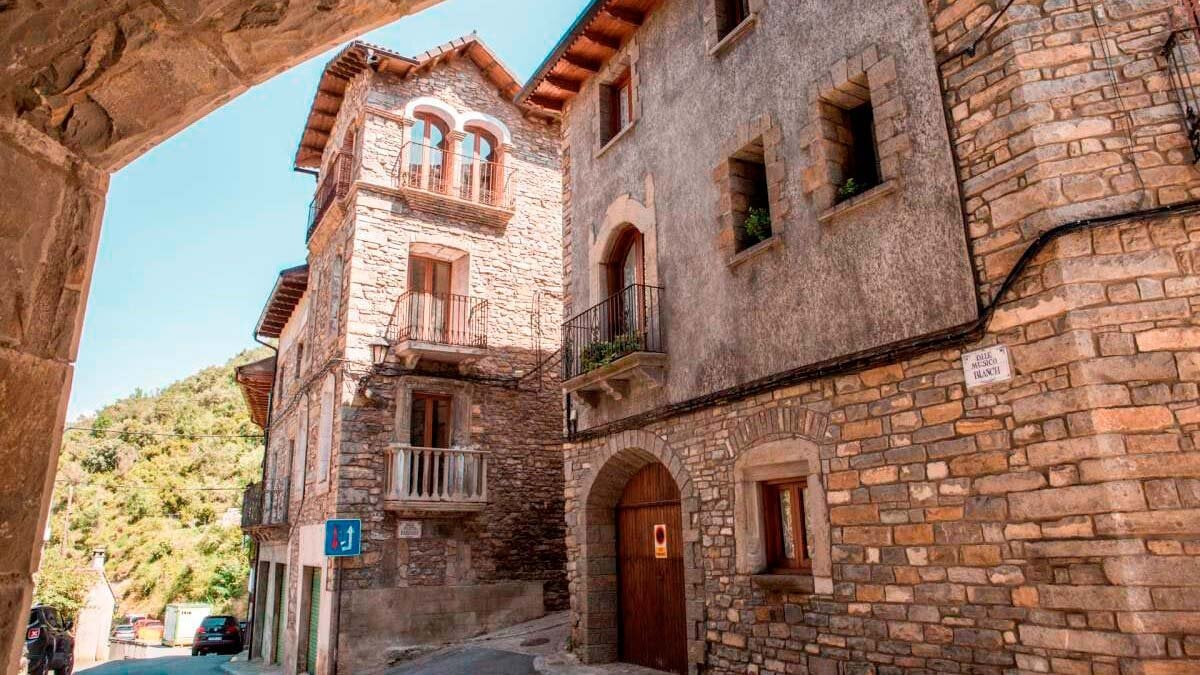
Located in the heart of the Aragonese Pyrenees, Boltaña stands out as one of the most beautiful villages in Aragon. Its medieval history, imposing castle and mountain-surrounded landscapes make it a destination that seems to have been taken from the pages of a fantasy book. Walking through its narrow streets is like travelling back in time, discovering old stone houses, balconies filled with flowers and the tranquility that characterizes this village in Huesca.
Boltaña Castle, located on top of a hill, is one of the area’s main attractions. From its summit, visitors can enjoy spectacular views of the Ara Valley and the old quarter, a sight that leaves those lucky enough to see it breathless. The village is also the perfect starting point for exploring Ordesa and Monte Perdido National Park, which has been declared a UNESCO World Heritage Site.
WHAT TO SEE IN BOLTAÑA
Boltaña offers a wide range of places of interest that make any visit unforgettable. Essential stops include:
Boltaña Castle: Built in the 10th century by craftsmen of Lombard origin, this castle is one of the earliest in the Kingdoms of Aragon, Sobrarbe and Ribagorza. Located on a hill, its military structure includes a wall, a watchtower and a cistern for collecting water. Although it is now in ruins, it remains fascinating because of the legends of witchcraft and covens surrounding it, as well as the panoramic views it offers over the Ara Valley.
The Collegiate Church of San Pedro: This monumental 16th-century building is one of the largest churches in the Aragonese Pyrenees. Its Aragonese Gothic exterior, featuring Renaissance details, conceals an impressive interior with a broad central nave and a ribbed vault. Highlights include its Romanesque doorways, bell tower and interior furnishings, such as the 18th-century Baroque walnut choir stalls, the Burgasé baptismal font and the altarpiece of San Lorenzo de Morillo.
This town is known for its cobbled streets. Photo: Turismo de Aragón
Boltaña’s old quarter: With a radial layout dating from the 15th to the 17th centuries, this old quarter is one of the most notable in the region. Its cobbled streets lead to small squares and alleyways, where visitors can admire courtyard houses, block houses and chimneys with “witch repellents,” traditional protective elements of the region. Do not miss the homes of Don Jorge and Carruesco, both dating from the 16th century, or the waterwheel opposite the Gorga de Boltaña natural pool, an ideal spot for unforgettable photographs.
The medieval Moscarales Bridge: It stands west of Boltaña in a spectacular natural setting. It is believed to date from the medieval period and to have formed part of the network of paths connecting different settlements in the area. Although it is no longer used as it once was, its beauty and location continue to captivate visitors.
HOW TO GET TO BOLTAÑA
Reaching this charming village in Huesca is easy and well worth the journey. From Zaragoza, take the A-23 towards Huesca, then continue along the N-260, which connects directly with Boltaña. The route offers spectacular scenery, ideal for those who enjoy the journey as much as the destination.
By car, the journey from Huesca takes an hour and a half via the A-23 and then the N-260. For those who prefer public transport, regular buses run from the main cities in Aragon to Aínsa, a nearby town from which Boltaña can be reached easily.
Walking through Boltaña’s streets will help you reconnect with nature and immerse yourself in the medieval era. From its cobbled alleyways to the imposing views from its castle, every corner of this place is worth discovering.


