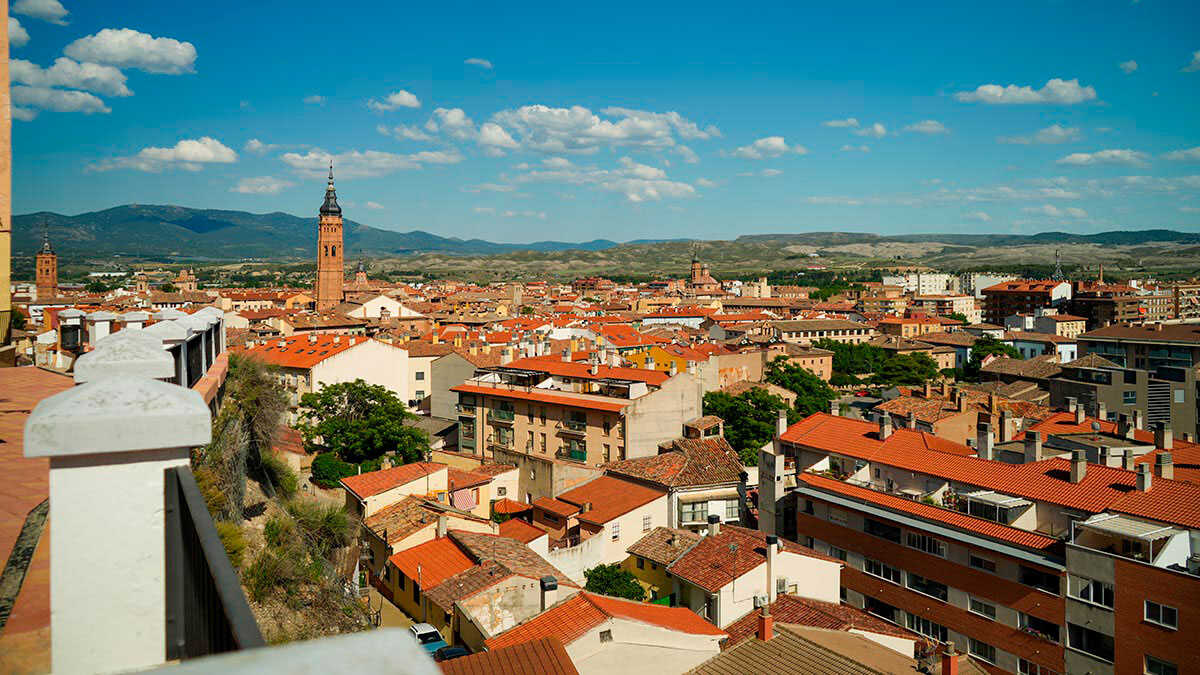
Aragonese Mudejar art is one of the most distinctive artistic expressions of this region. Developed between the 12th and 17th centuries, the style reflects the influence of the Christian, Muslim and Jewish cultures that coexisted for centuries, and was recognized by UNESCO as a World Heritage Site. Among the examples that can still be visited is the Santuario de Nuestra Señora de la Peña in Calatayud, a building that originated as part of a fortress and was transformed over time.
The shrine stands on the remains of the former Peña Castle
FROM MILITARY FORTRESS TO SHRINE
The shrine stands on the remains of the former Peña Castle, a fortification that occupied a strategic position for the city’s defense. The building we see today is the result of various transformations carried out over the centuries, especially after the damage suffered during the War of Independence. New structures were erected over the existing ones, a common practice in historic architecture that can also be seen in other major monuments across Aragon.
Important elements of the original Mudejar temple have survived, including the apse, several side chapels and the gallery. However, one space often leaves first-time visitors speechless: the side chapel dedicated to Saint Francis Caracciolo.
Its main attraction is a spectacular ribbed vault whose webbing is entirely covered with delicate carved plasterwork. The decorative motifs combine the Gothic artistic language with techniques and forms rooted in the Hispano-Muslim tradition, creating a unique ensemble that is one of the finest surviving examples of Mudejar art in Aragon. It is a corner that shows how some of the greatest heritage treasures are sometimes found much closer than we imagine.


